Know Any Literary Animal Lovers?

Hi there PureJeevan readers! We wanted to let you know that Jim's new novel CHROO is available on Amazon. It's a crazy adventure involving a billionaire heiress, her Chihuahua BFF ("Chroo") and a host of human and animal characters. Find out more on Amazon! Here are some links:

There is a certain irony that takes place when you launch a raw foods web site because, no matter how much you love and believe in what you do, no matter how solid the proof may be that the information you're providing is true and accurate, no matter how clearly it can be demonstrated by analyses of blood tests or tons of "before and after" photos that this lifestyle heals the human body, you're still pretty much bound by legal best practices to include a full disclaimer on your site. And, as much as you just write it once and kind of forget about it, it's always there. For practical reasons, of course we understand all of that. But beyond all of that, there's an implied message that "only a medical doctor" really knows what's best for you.
Well, in fact, we DO recommend working with a competent health professional. But what we do not endorse here is simply accepting whatever that professional has to say without question. So, the operative word would be "competent" in that recommendation.

Welcome to Pure Jeevan's "Juice-a-Day Jamboree"! You're probably wondering, "What IS Pure Jeevan's Juice-a-Day Jamboree, anyway "? Well, it's simple:? It's an ongoing, informal, loosely organized "event" centered around juicing. Think of it as an interim step between (1) any kind of diet or lifestyle, from SAD to full-on raw, that does not include much regular juice, and (2) an all out juice feast where that's ALL you'd consume for a period of time. Basically, we're saying, "Let's just make this simple and accessible for everyone. Let's just make a goal to simply drink more fresh juice!"
Wendi and I have been thinking a lot about incorporating more juicing into our lives lately (which is something we've done off and on over the years but never stuck with long-term). One thing holding us back from doing it more often is the time requirement. When we juice, it usually takes a half hour or so from start to finish. I know it doesn't seem that complicated, but I suppose it's just the whole process of setting up the juicer, washing and peeling the produce, juicing it, setting the juice aside while we clean the juicer, doling out the juice into glasses, cleaning up the mini-mess that makes, and then sitting down to actually enjoy the juice.

I was reminded about a video I saw some time ago, after seeing a similar video on my dear friend Bunny's blog. What you are about to see is AMAZING!!
Take the time to meet...

Happy Navratri!
DAY 1:
This recipe is an adaptation of one from "Rawvolution", by Matt Amsden. As of this point in time, "Rawvolution" is my favorite recipe book. Most of the recipes are high in sodium and fat, but very satisfying for those who are used to eating cooked foods.
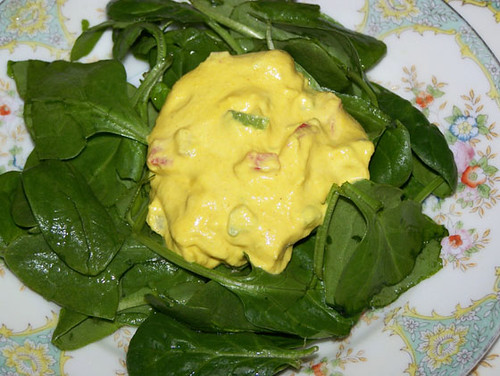
Egg-less Egg Salad
The Environmental Working Group publishes something really useful called the Shoppers Guide to Pesticides. In it, they offer two handy lists: (1) The Dirty Dozen -- conventionally grown produce items that contain the most residual pesticides, and (2) The Clean 15 -- conventionally grown produce items that contain the least residual pesticides.
While we believe that organic is always best, there nonetheless are times when most of us (for whatever reason) consider purchasing or consuming conventionally grown (meaning "sprayed with pesticides") produce.
Read more: Mnemonic for the "Dirty Dozen" Foods that You Should Only Buy if Organic!

Jim here... Yesterday, we talked about exceptions -- those non-raw food items that raw foodists sometimes allow themselves to eat. I listed mine, and a number of people here and on Facebook noted some of their own. (Seems a lot of us enjoy olives, by the way!) It struck me today that a natural follow-up to a list of exceptions would be a list of non-exceptions -- basically a list of things I personally never ever ever ever consume.
This makes sense, right? I suppose all people generally have three basic lists: (1) those things we eat regularly, (2) those things we eat sometimes, and (3) those things we never eat. Hopefully, none of us keep these lists etched in stone, as diets are dynamic things that tend to evolve over time. A few of the items I'll list below may only apply to my current practices, while others (like refined sugar) I hope to permanently exclude. So, let's see:
Read more: Yesterday: Exceptions. Today: Things I *Never* Consume

Ever since developing a personal conviction a few years ago that following a raw vegan existence was the best lifestyle for me, I've lived somewhat in conflict with the day-to-day corporate business environment in which I make my living at the moment. As we've directly stated many, many times, we're in the process of changing all of that. But, making such a huge change takes a long time because careers are in many ways very anchoring. We may write more about that process because it's true that going raw (or, really, adopting any kind of diet outside of what most other people eat) can lead to significant changes in your life. Between Wendi and me, I think we've gone through pretty much all of them, and there's certainly value and relevance in sharing most of those things here. Today, though, I thought I'd share what I call my "$75 Salad Story."
In the business world, "networking" is among the more prevalent activities anyone does. It's pretty much always going to involve food , right? It's always a breakfast briefing, meeting a client over lunch, or attending a dinner party (complete with a cocktail hour). ?The deck is more or less stacked against you at these things because, let's face it, they're usually set up to provide what most people perceive as a pleasant experience. And, quite often, that means a certain degree of culinary decadence / indulgence -- invariably at venues that have never heard of raw chocolate or raw apple pie (which, to me, is 10x more appealing and exciting than the ubiquitous "chocolate fountain").
Read more: Jim's $75 Salad: Staying Raw @ Haute Cuisine Destinations

Who's been making small changes and feeling a bit brighter lately, since we've been talking about brain health? Today, let's continue focusing on some things we can actively do to minimize our chances of developing memory problems like Dementia or Alzheimer's in the future.
Yesterday we focused on heart-healthy tips to increase brain function (since heart disease seems to be linked with Alzheimer's) and I shared a heart-healthy recipe with you. Today, we'll focus on inflammation.
Read more: Extinguish Inflammation: Anti-Inflammatory Recipe
This dish is amazing! We've served it to KDcat's friends before and they gobble it right up!
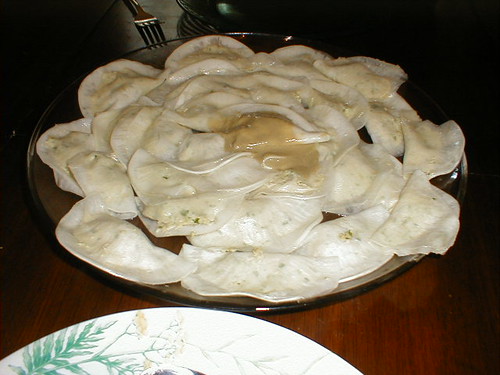
Rawvioli
We all know what "greens" are in general. For example, no one questions whether lettuce, kale, spinach, or chard are greens. But on the other hand, all of those items *are* also clearly green in color. With that in mind, what would you make of the following two questions I (Jim) recently pondered -- tagged as "reader questions" so they're easily found in the future by other equally inquisitive people ;-) -- that seem bizarre, but are really quite interesting?
1. Are non-green greens (e.g., purple kale) still considered greens2. Are vegetables with green skins (e.g., cukes, zucchini) considered greens? (After all, they're green!)