Know Any Literary Animal Lovers?

Hi there PureJeevan readers! We wanted to let you know that Jim's new novel CHROO is available on Amazon. It's a crazy adventure involving a billionaire heiress, her Chihuahua BFF ("Chroo") and a host of human and animal characters. Find out more on Amazon! Here are some links:
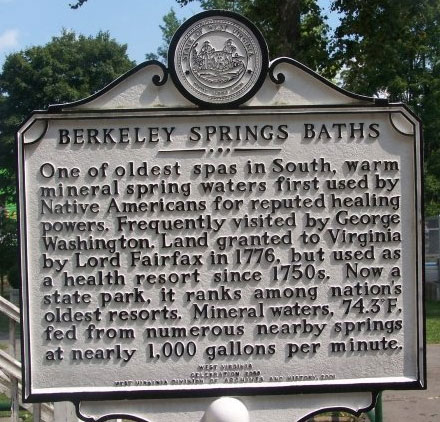
Hi everyone! ?We wanted to announce plans for a raw food picnic / potluck / meetup next Saturday, September 19th, at noon, in Berkeley Springs, WV at Berkeley Springs State Park (link to map), a wonderful natural healing destination about half-way between Pittsburgh and D.C. Wendi was just talking with Rawbin from the Capital Area (D.C.) raw food meetup and we all thought that a combo Pittsburgh / D.C. meetup might be fun. So, we all planned something right on the spot!
Berkeley Springs is a really nice (but small) public park in West Virginia about half-way between Pittsburgh and D.C.I traveled there a few weeks back with Melissa, Dave, Ella, and Bethany on the way to Raw Spririt East. We had a super time soaking in the spring water and checking out all of the cool alternative shops. (I did a write-up here on Pure Jeevan a few weeks ago and posted some video of the place).
Note: This entry is not meant for our regular readers. Search engines are directing people to our page when they enter "mono and headaches" and I want to take this opportunity to reach out to those who may not know about this amazing lifestyle the rest of you already know about! ;-) Plus, I want to help them with their headaches.
Mono and Headaches: Looking for Help
Mononucleosis (Mono) is a common viral illness. When children develop mono, it is usually not obvious since it seems like a normal cold. When teens and adults develop mono, however, the symptoms are much more severe. Most individuals will feel better within about three weeks, but fatigue can continue on for about three months! Who wants to feel ill that long? Who wants to feel tired for MONTHS ! Who wants to suffer from such severe headaches ! Not me, that's for sure.

Read more: Mono and Headaches: This Entry is Not For Our Regular Readers

Today we welcome an up-and-coming raw chef, Sam, from DebbieDoesRaw for the first of Pure Jeevan's new Makin' It Monday "Guest Raw Chef" editions. Sam will demonstrate how to make a simple Peach Pudding, which she tells us is the invention of her very good friend Anthony from Rawmodel.com. We think Sam did a super job! Don't you ! Sam, you're welcome to guest-host on our blog any time you like.
Read more: Makin' It Monday "Guest Raw Chef" Edition Welcomes Sam!
I have a need for hot food in winter to feel warm.
We hear this comment a lot from those trying to lose weight. Some joke that they thought their excess body fat would be keeping them warm, but they're still feeling cold and needing hot food in the winter months.
In the past, we've talked about reasons what's going on in the body when hot foods are consumed. Understanding this will help you realize that hot foods are actually not very good for our bodies. When we consume very hot foods, that heat is then inside our bodies, next to vital organs, while the body needs to maintain a temperature around 98.6 degrees. When we have temperatures higher than that right next to our vital organs, it must quickly work to remove that excess heat. It's the removal of this excess heat that causes us to feel warm. It's our bodies trying to stay in a healthy state. We are actually putting our bodies under stress when we do this (the same holds true for eating overly cold foods, like frozen desserts and icy drinks).
So, did you like Part One yesterday ? Pretty great, right ? Well, today we present Part Two, in which Wendi takes the interview into a more up-close and personal place. In this audio, Kevin shares details about:
-
the first interview he ever conducted
-
what he wanted to be when he grew up
-
what his family thinks of his raw lifestyle
-
his tattoo, Joseph Campbell, and thoughts on life and death
-
spirituality, religion, and guilt
-
the book that opened his mind to a deeper connection
-
running and spirituality
-
his typical day / routine
-
his business expanding
-
what "systems" are and how he uses them
-
the shocking truth about his teen years
-
recent personal development programs he's listening to
-
"taking 1%, applying it, and moving on"
-
mentors and influences
-
the books that shaped his life
-
making shifts in friendships
-
his thoughts on "The Secret"
-
whether he thinks he can do more push-ups than Gabriel Cousens
-
why there was a donkey at his wedding
-
his biggest wish (it's a beautiful one!)
So, what are you waiting for ? Listen NOW!!
Read more: Part *2* of a 3-Part Series Profiling the Multi-Talented Kevin Gianni!

On this Thankful Thursday I am feeling especially thankful for the Internet. Without the Internet I wouldn't be able to learn as much as I've learned about raw foods in such a short period of time. The Internet has connected me with people from all over the world who are also interested in natural health and raw food living. I am part of a larger community, one that would never exist without the Internet.
So, today I am especially thankful for the Internet. What are you thankful for today?
As raw foods enthusiasts for many years, Wendi and I have had the pleasure of patronizing raw food restaurants literally from coast to coast. Between us, we've been blessed to have sampled a more diverse spread of raw gourmet foods than have most people. (We hope that many others get to do this as well!)
From time to time in anyone's raw journey, it seems inevitable that thoughts crop up about opening a raw restaurant. For some, it's likely no more than a passing fantasy; for others, it may well become a firm business goal. We believe this is a fine and noble goal -- one that we'd like to see more people accomplish!
Read more: Some Thoughts on Opening a Raw Foods Restaurant -- Part I of II!

How does the following menu* sound for your Thanksgiving meal
Nut Loaf, Apple un-stuffing, Mac Mushroom gravy,

After making a 'batch' of green smoothies, what is generally considered an appropriate serving size?
Thanks for the question, Gary!? I don't think I can give an across-the-board answer to fit everyone, since we're all so wonderfully different. The answer would have to take into consideration various factors, such as:
I'm still sticking with my mono meal eating for Navratri. It's not as easy as I thought it would be, probably because I thought I wouldn't have any problems at all. Anyway, I'm sticking to it and we'll see if it makes me feel more energetic and healthy after the nine days are completed.
April 11, 2008
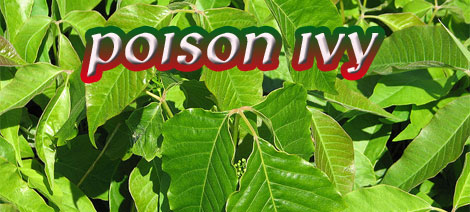
Jim here... Well, I may have lived 100% raw for nearly one year now (and mostly raw for a few additional years), and I have definitely witnessed the reversal of many physical ailments during that time, but I can say with certainty that, if raw actually cures people of allergies, it looks like I still have a ways to go before reaching that milestone. Here's a snippet from an article I published a few years ago in a book:
I believe I was roughly 12 upon learning of my allergy to poison ivy (the hard way, naturally). By age 14, I'd heard all of the poison ivy folk lore and "wisdom" out there -? that sensitive people like myself can inadvertently contract it via smoke from a nearby brush fire, that ingesting the plant's concentrated essential oil can reverse one's sensitivity to outbreaks (even, some said, to the point of complete immunity), that scratching spreads the rash, that scratching does not spread the rash, that going to get the shot and the steroids makes it fade more quickly, that calamine is best, that it's not, et cetera.