Know Any Literary Animal Lovers?

Hi there PureJeevan readers! We wanted to let you know that Jim's new novel CHROO is available on Amazon. It's a crazy adventure involving a billionaire heiress, her Chihuahua BFF ("Chroo") and a host of human and animal characters. Find out more on Amazon! Here are some links:

We at Pure Jeevan enjoy eating salads. Each of us has our own way of dressing our individual salads, but we all thoroughly enjoy very large bowls of them at least once a day.In the past, salads were those "diet" meals that I'd consume when I was trying to lose weight. I'd sit at the table staring at my small plate of greens, feeling like I was missing out on the "great" food everyone around me was eating. I'd feel hungry after my meal and extremely unsatisfied.


I am extremely thankful for sleep. I can't imagine striving to sleep only four hours a night. Jim always says he wishes he didn't have to sleep, that he's wasting his life when he sleeps. For me, I've always loved sleeping. I feel so great after I wake up. Not only that, I thoroughly enjoy dreaming. I wouldn't want to miss out on the amazing dream life I've been able to enjoy while I sleep.
Wow, what a strange episode we have for you tonight! As you'll see, it was a really bizarre day here at Pure Jeevan. Wendi's out of town with her friends Rawbin and Jeff (owner of NaturalZing) helping NaturalZing with their booth at the Green Festival in Washington, DC. Too bad she's away; she missed opening the mail today and seeing a highly unusual letter from the Department of Homeland Security! The topic? Well, it turns out Pure Jeevan is under governmental surveillance -- and our chief surveillor, one "Larry Ferguson," actually decided to introduce himself and make some comments about our Bananas episode (which we hadn't even released yet!). Sounds highly unusual, I know. But, he was actually doing us a favor. Take a look (vid shows me reading part of his letter, then the banana episode proper):
As you heard, Larry writes: "I believe your viewers deserve to know, for example, that bananas have roughly 100 calories each, are high in Vitamin C, and fiber. You might also want to mention that they contain considerable levels of B6, which is good for metabolic functions as well as nervous and immune systems. B6 also helps you produce antibodies to fight diseases and plays a strong role in brain function and even maintaining hormonal balance. Your body can't store B6, btw, so you need to get it every day. Of course, most people will know already about the great potassium levels in bananas. Potassium is great for controlling blood pressure and certainly reduces risks of heart problems. Bananas also contain manganese, which your viewers probably already know about after your persimmons video."

Jim here... I thought it might be interesting to spend the rest of this week looking at some quotations we've come across that discuss obesity entirely outside of the context of diet. ?While these quotes focus on obesity, it's likely (in my opinion) that the authors' intentions pertain to almost any health challenge (obesity or otherwise).
Today, we're going to quote a well-known author, Marion Woodman. Tomorrow, we'll hear from Rhonda Byrne, Thursday Dr. Gabriel Cousens, and Friday I'll recap with something I posted on Facebook a while back from Tony Robbins.It should be an interesting week -- and, by the way, I'll tie all of this back into raw foods on Friday, and discuss then why the raw food diet makes a lot of sense for healing obesity and other health challenges even if, as these authors imply, one's diet may not be the sole or ultimate cause of one's health challenges.
 Wendi's initial observation about Santa Rosa was that, at first glance, it seemed similar to many of the places they'd visited in Oregon. However, once the sun came out, she said you could feel that California sunshine starting to warm up your body. This is Northern CA, so it's not overly hot; it is, however, much sunnier and a bit warmer than the parts of Oregon they visited.
Wendi and KDcat were hosted by a lovely couple, Shea Lynn Baird and Stephen Barlow (and their adorable dog, Bella, pictured above). You might be familiarwith Shea already, as she and her husband launched the popular Monday Night Live series, broadcast Monday nights from Cafe Gratitude. Shea is a long-term raw foodist, so Wendi interviewed her and asked some questions about what she's been doing. It's a really great, highly interesting interview. Wendi also asked Shea to offer some helpful advice for our Pure Jeevan family members. I think everyone will enjoy the video:
Read more: Santa Rosa with Shea Lynn Baird, Stephen Barlow, and Bella -- And More!
So, what did you think about there being snow in New Mexico? Were many of you thinking it was more of a consistant hot climate like I used to think?
We left New Mexico, renewed, and headed to Oklahoma. Here's where we left off yesterday:
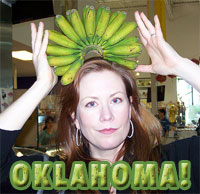
Read more: Visiting Penni Shelton & Russell James in OK: Pics and Vids!

We're here to inspire you...that's our overall focus here at Pure Jeevan. So, when we ask you what you'd like us to do more of, less of, or to consider doing here on the blog ... we take your responses to heart. Of course, it's impossible to please every single person since we all have different personalities and needs. However, we'll always do our best to create a balance in order to inspire as many individuals as possible.
Below are suggestions for what some of you'd like to see happening here on the blog, along with some responses from us. If you have more suggestions, please send them our way anytime. We read everything that comes in and will always give your suggestions serious consideration.
Here's a letter from Wendi to the Pure Jeevan family. I prettied it up a little with some color and graphics. -Jim

Hi there, lovely Pure Jeevan family! I'll be away from the computer for a month, working on some deep healing. It's time to go within and really hear what my body and spirit are saying.
Read more: Wendi's Taking a Break... A Peek Into How She's Been

Last week for Take the Time Tuesday, I introduced you to a resource for meeting others in your local community. Today, I'd like to introduce you to an amazing place to meet others all over the world who are interested in raw foods!
Take the time to meet...
We're loosley going to be picking up some of the ongoing themes we used to cover here on the blog. For the Take the Time Tuesday theme, we asked our readers to take the time to meet or learn about an individual, product, company, etc., that we think may be of interest to you. For today's entry, I'd like you to:
Take the time to meet...

Many people have asked us about the Raw Spirit Festival (RSF): What is it? When is it? Where is it? Will we be going ? So, we wanted to take a moment to answer those questions.
-
What Is It ? Well, as any long-time reader of this blog is likely aware, RSF is a very special event! Not only does it have its own web site, which we encourage you ti visit in order to learn more, but we've also devoted an entire category of the All Raw Directory to "Raw Spirit Festival Memories," a place where people can post links to blog entries, photo sets, and videos from various RSF events.
?