Know Any Literary Animal Lovers?

Hi there PureJeevan readers! We wanted to let you know that Jim's new novel CHROO is available on Amazon. It's a crazy adventure involving a billionaire heiress, her Chihuahua BFF ("Chroo") and a host of human and animal characters. Find out more on Amazon! Here are some links:
Hey Everyone- Just a quick note, in case you're reading our blog and thinking, "Wow, Wendi and Jim usually update daily! What's up ?!!" We'll get back to it pronto, I promse -- maybe even later today! Turns out it's just a TON of work orchestrating a tour like this, especially across a three-hour time zone. But, now that we're getting used to it, I think we can look for some more timely updates. The latest is from Corvallis, Oregon. But, we're also going to talk about Portland a lot more soon! So, stay tuned! -Jim
Original Comments
Below, we have included the original comments from this blog post. Additional comments may be made via Facebook, below.
On March 4, 2010, wrote:
I hear ya. I do keep checking in though, and I'm looking forward to when you get your groove.
I really feel for you, Jim. Your girls gone, having to keep track of their movement, run a household on your own and still work that stupid job. Poor baby. Just know that I am thinking of you, and sending you love from New Mexico.
And Wendi, AAAaaaaaaaaaaaaaah! I can hardly wait 'til you get here!
Terri
On March 5, 2010, wrote:
We are getting all ready here for W and K! so far we have the following guests for Cru:
Bueller of Bueller's Kitchen, Lori of Inspire2Act, Ingrid of Raw Epicurean, Dianna Harrelson, LA Raw meetup organizer and raw teacher, Puki (friend of Courtney Pool), and a few other folks .. and ME!
xoxoxo deb

Pizza Delivery at Pure Jeevan s home ! Yep, and it s not raw pizza, either. Maybe sometime in the not-so-distant future we ll be able to order delicious, life-giving raw pizzas for delivery to our home, but that time hasn t come. Even if it was possible today, I have a feeling we d still be ordering the greasy pizza that s going to be arriving here later today.
 You see, today is KDcat s 14th birthday. As much as she knows about health, nutrition, and the harms of consuming dairy, she has made a decision that she wants to order a pizza for her birthday and have it delivered. When she told me of her birthday wish, a very big part of me wanted to review how unhealthy such food is, but the other part didn t want to bring guilt to her decision of eating pizza on her birthday. I know she completely understands about foods and health, especially about how harmful dairy can be for her body. She was determined to have pizza, so I d rather she enjoy it than to eat while feeling guilty about it the entire time.

I'm makin' nothing today, or for the next eight days! Think of all the time I'm saving myself by consuming only mono meals for nine days. What will I end up doing with that extra time? So far, today, I've spent a long time outside soaking up the sun's beautiful rays that I've missed far too much this Winter. I have no idea what the rest of this mono journey is going to be like, but I'm up for the adventure!
I've started a little journal on my desktop to track my nine days of mono meals, so I'll share what I've written from time-to-time. Here's what I have, so far...

How does the following menu* sound for your Thanksgiving meal
Nut Loaf, Apple un-stuffing, Mac Mushroom gravy,
As promised, here's our interview with Leigh Crizoe, Rhio's partner and co-host of the Hooked on Raw Internet radio program. We think you'll love this interview, as it shows another perspective on raw foods and also gets into an interesting detox program that you may not have heard about. After 9/11, the New York City residents and workers close to ground zero breathed in highly toxic particulate matter for a long span of time. Rhio and Leigh live just blocks from the site, and both experienced respiratory troubles as a result -- especially Leigh, whose sweat began to stain his white t-shirts black! (Yep, you read that right: You'd actually sweat black! This happened to many ground zero workers, in fact.)
Who had the detox answer for them ?... Would you believe L. Ron Hubbard and Tom Cruise ? Apparently, detoxification was an area of high interest to Hubbard, the founder of scientology, who developed an intense regimen of saunas, vitamin supplements, and oils, all specifically for the purpose of ridding the body of toxins. According to Leigh, Tom Cruise personally funded and co-founded the New York program (which has proven highly successful!) after 9/11. (The official site for that detox program is here.)? Super-interesting stuff -- be sure to watch the video.
In this special five-part series, Joanna Steven uncovers where some top vegetarian athletes get their protein. Here's part three, focusing on Robert Cheeke's take on this issue.
YELLOW PEA POWDER
In the spring of 2005 this natural body builder became a champion bodybuilder - all on a strict? vegan diet. Robert Cheeke, an activist/athlete raised on an Oregon farm, went vegan when he was 15 years old and transitioned to full on vegan only two months later. Winning titles in Portland, OR and competing at the Natural Bodybuilding World Championships held in California, Robert maintains his intense mass building workout regime on a 100% animal-free diet.
Read more: Vegetarian Athletes Share: Top 5 Sources for Animal-free Protein (Part 3 of 5)
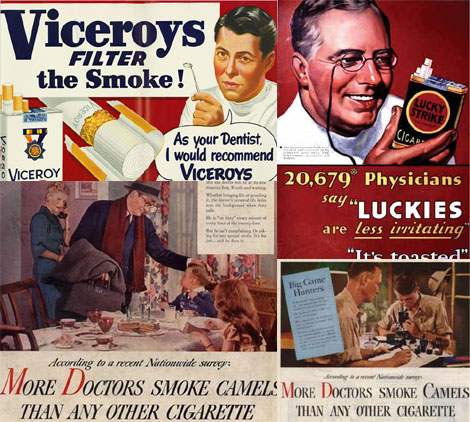
Jim here again... What do you think of that montage of vintage cigarette advertisements ! Knowing what we now know about cigarettes, it's tough to believe that such ads could have existed only 50 years ago, but the campaigns were real. Did doctors actually see no harm in cigarettes? Were there no pulmonary specialists back then who thought that habitually inhaling smoke might not be such a healthy idea Who knows... ?As I like to believe when it comes to doctors, even though they're quite oblivious to the harmful effects that chemicals have on our bodies, they do seem to mean well (in their own deluded ways). So, I don't hold it against them so much as I now hold it against individuals to think for themselves and challenge healthcare practitioners.
In any case, whether or not there is an advertising campaign attached to a new consumer product, it stands to reason that when a product is introduced into the marketplace, manufacturers should have a responsibility to ensure that the product is safe, and consumers should likewise have a reasonable expectation that the product is safe. Only, it doesn't always work that way, does it?
You thought our "Know Your Food" series was dead ?!!? (Or, if you're a new reader, maybe you don't know what "Know Your Food" is yet!) Well, we've been poking around in the archives this week and discovered THREE lost episodes. This is HUGE... It's like one of those stories you hear every few years about some rare Hollywood film being discovered in a vault somewhere (laughing so hard)!
Over the next week or two, we'll be posting these three episodes. Today's episode is PUMPKIN, starring Wendi and her guest Ella (daughter of Melissa and Dave, who run the FoodUnderFoot blog we linked to recently). Once these missing episodes have been aired, this will usher in the dawn of a never-before seen level of production values for the Know Your Food series. The new stuff will totally win every major award available to YouTubers (continues laughing...).
Sure, we know pumpkins aren't in season right now. However, this video is sweet because of our special guest. So, enjoy the Pumpkin episode:

Let's have a bit of fun today here on the blog. All week long we've been focusing on brain health and minimizing our chances of developing memory loss as we age. So, how sharp is *your* brain right now? What can you remember as the key highlights of ways to increase memory, ways to eliminate memory loss? What else can you remember reading over the past week here on Pure Jeevan's blog about having a sharp mind?
Share your resp0nses in the comments (and don't read those left by others until you've left your own!).


On this lovely Valentine's Day, I am focusing on how thankful I am for LOVE! I'm not into the whole this-is-the-day-you-are-supposed-to-show-love thing, though. I think love is something that should always be around, felt, and shared. Every day is a new day to express the love you have in so many varied ways, why hold it back for one special day a year?
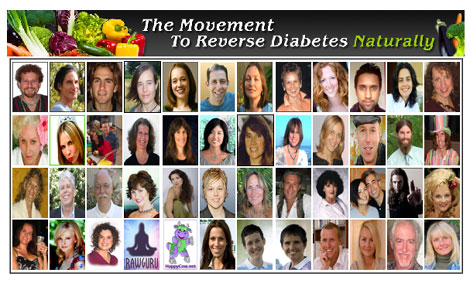
Wow, what an amazingly informative week here at Pure Jeevan. We've been featuring some great "My Raw Story" installments focusing on diabetes reversal via raw foods (and have more to come!). We've also been actively trying to encourage you to step forward and join the movement to reverse diabetes naturally.
Why are we dedicating an entire week to diabetes?
- 8% of the US population has diabetes. That s 23.6 million adults and children. 17.9 million are diagnosed. 5.7 are undiagnosed.
- There are 57 million people with pre-diabetes in America. That s 19.3% of the population!
- Heart Disease & Diabetes: Adults with diabetes have heart disease death rates about 2 to 4 times higher than adults without diabetes.
- ... and MANY more alarming statistics. See our diabetes page for more!
Many individuals have no idea that diabetes can not only be reversed via a raw food diet, but a person's life can be filled with health and vitality again. This Saturday, April 25 (Wendi's birthday!), is Reversing Diabetes Naturally Awareness Day. Together, we can spread this important and life-changing news.