Know Any Literary Animal Lovers?

Hi there PureJeevan readers! We wanted to let you know that Jim's new novel CHROO is available on Amazon. It's a crazy adventure involving a billionaire heiress, her Chihuahua BFF ("Chroo") and a host of human and animal characters. Find out more on Amazon! Here are some links:

Jim here... About an hour ago, I purchased $68 worth of ice cream from a local supermarket. Bet you thought you'd never read something like that here, eh ? Well, don't worry -- Wendi and I haven't suddenly decided to binge on dairy products. You see, in my corporate job, I'm often the event organizer; today that meant ice cream gopher.
For some raw foodies, that scenario might seem rather cruel. You may be thinking: Isn't it tough to have to go purchase nine tubs of ice cream, two jars of maraschino cherries, two bags of marshmallows, four containers of flavored syrups, two cans of whipped cream, and numerous boxes of waffle cones ? No, it's not cruel at all. To me, it's now the same as running out for, say, office supplies.
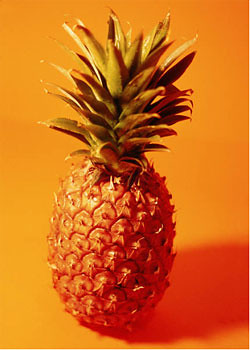
Eating only mono meals is going pretty well. I'm on my third food, so far, and have ended day two. This evening I've started my third fruit: Pineapples!

In a previous Take the Time Tuesday entry, we introduced you to three fantastic raw food snack companies who have offered to donate samples of their products for our upcoming retreat. If you haven't heard about the 3-Day Raw Food Spiritual Retreat, yet, there is still some space for you to join us from May 23-25, 2008! We ve set this retreat up so that it s as affordable as possible. There s a significant savings if you sign up early, too, so be sure to check it out!
Each individual attending the retreat will receive a gift basket filled with delicious raw food treats from some truly fantastic companies. Keep an eye on the retreat page to see other companies that will be sharing delicious raw food snacks with those attending the retreat! Today, we'd like you to...

Before we moved to Portland, Oregon, land of all things fresh and organic within walking distance, we had to drive quite a distance to reach the food co-op (the only place that had a good selection of organic produce and other raw food necessities). So, we only went shopping about once a week. It took a lot of trial and error to find ways to keep our weekly produce fresh for about a week.
We learned which fruits and vegetables stay fresh the longest, and which go bad the fastest. Based on this, we stocked the refrigerator accordingly (and used up the produce accordingly, as well). The fruits and veggies that stayed fresh the longest were stored in the backs of the shelves (things like carrots, beets, broccoli, cauliflower, apples, etc.). Next we stored the greens that lasted a pretty good amount of time (like kale and collards). And in the front of the shelves and in the door, we stored the more delicate greens (like lettuces and herbs).

KDcat and I returned from the ashram last night filled with peace and motivation to move forward with our current goals (more about this in the upcoming newsletter). However, we also returned to a home with next to no produce in it (well, compared to what we normally have available). What to do? There's no way to run to the co op today (only one car in our home) or this evening, so it's time to be creative. Let's take a look at what Pure Jeevan has in the fridge and on the counter, and we'll see what we can create!
 On March 6, Wendi and KDcat arrived around dinner time at their next location, Grants Pass. We've known their hosts as online friends, so it was a real treat to meet them in person. Rebecca Leaverton, her hhusband Dominic, and their twins Aubrey and Sebastian live in a beautiful home in one of the more beautiful places W&K have visited in Oregon (and that's saying something, as EVERY location in Oregon has been absolutely beautiful). Grants Pass is surrounded by the most breathtakingly gorgeous mountains, close and ever-present no matter where you are in the city. If we ever do decide that city living isn't for us, Wendi said she'd love to live in the mountains surrounding Grants Pass!
Here's some video... In the first clip, Wendi shares a raw traveling trick she came up with -- kind of a high-energy, super-fast sandwich. Then Rebecca (aka SuperfoodGirl -- from www.SuperfoodGirl.com) demonstrates one of her favorite pieces of kitchen equipment, the V Slicer. (Wendi loved it and says we need to save up and get one when she returns from the trip.) And then we couldn't resist a few moments of footage of Rebecca's twins out exploring the kale and wheat grass in? theback yard.
Read more: Grants Pass' Great People, Giant Peaks, & General Pleasantry
Here's a video demonstrating a technique for making super-fast, vibrantly beautiful, tasty salads! If you frequently find yourself in a rush, but also want a healthy meal, definitely check out this mandoline technique. (Further commentary below, after the video...)
Mnemonics for the "Clean 15" -- Or, "Conventional" Produce That Tests Lowest for Residual Pesticides
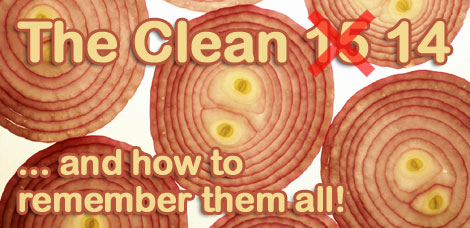
Following up on yesterday's post, today we're going to take a look at the "Clean 15." These are the 15 produce items that, according to research done by the Environmental Working Group, contain the least amount of residual pesticides (even though they're still grown using pesticides).
What this boils down to is: IF you're going to eat conventionally grown produce, these items will harm you much less than those we covered yesterday. So, here's the list, and then we'll try to come up with a sentence to help you (and us) remember everything:
Today we welcome Leela Mata from the Peaceful Valley Ashram (www.LeelaMata.com) for another episode of Pure Jeevan's Makin' It Monday "Guest Raw Chef" edition. In this episode, Leela demonstrates how to make a delicious summertime chutney.
Since Marigolds are seasonal, and likely available only in certain areas, please consider them optional. Perhaps substitute another edible flower of your choice (and let us know if you do!). Aside from making this tasty recipe (which we later enjoyed on a salad), Leela also makes some important points about intuitive eating and intuitive recipe creation. Here's the vid:
Read more: Leela Mata Makes Mint Marigold Chutney on Makin' It Monday "Guest Raw Chef" Edition

To help keep all of you inspired, we ve asked some
remarkable individuals to share their raw food stories with you. Enjoy!
***** DISCLAIMER: As with all of our posts here at Pure Jeevan, and particularly those tagged with a new term, "Nadi Balance," please refer to the disclaimer that runs at the bottom of all Pure Jeevan pages. Wendi and Jim are health researchers, educators, and extreme self-experimenters, not doctors. ******
Nadi Balance: Part V