Know Any Literary Animal Lovers?

Hi there PureJeevan readers! We wanted to let you know that Jim's new novel CHROO is available on Amazon. It's a crazy adventure involving a billionaire heiress, her Chihuahua BFF ("Chroo") and a host of human and animal characters. Find out more on Amazon! Here are some links:
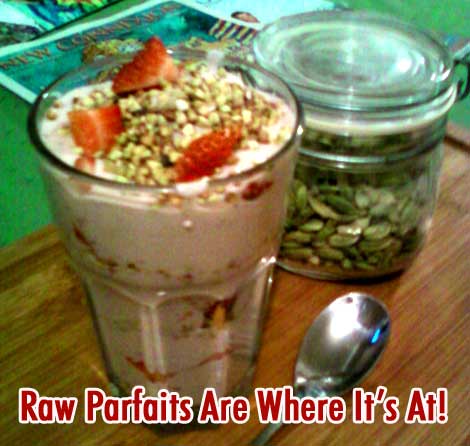
Above is a quick camera-phone pic I posted to our Facebook group lately. I did talk about making raw parfaits on that page, but want to talk a little more about them today, as it's just the perfect time to be talking about delicious raw parfaits (at least here in America, in any case, where many of the fresh berries you'll probably want are cheap and in season). I'll share a brief story about them, and then share my own basic recipe, and then we'll make some plans for MORE parfait talk really soon, okay?
I'm almost hesitant to talk about raw food parfaits here because, well, if the government found out how unbelievably healthy and ENJOYABLE parfaits are, I'm sure they'd make them illegal. But, I'll take a chance...

Thank you, thank you, thank you! Today for Thankful Thursday, we wanted to say a special THANK YOU to our readers. It means so much to us that you come to visit our blog. With every new comment (both here on the blog and through email) it fills us with great happiness!
Is there something you'd like to see more of here on our blog? Something you'd like us to discuss? We know you are looking for more recipes, since you've told us (be sure to check out our recent posts where we've linked to some fantastic sites offering recipes!). What else would you like to read about or have us share with you?

Wow, is it Friday already !? Time flies when you're powered by 100% raw organic goodness! Today, we wanted to share an audio interview with you. Last night, Alex Ortner from the Movement to Reverse Diabetes Naturally interviewed us about our recent work helping them spread their message. We were honored to hear him introduce us as "two people that hold a special place in my heart right now, and I'll tell you why that is: They are probably the two most active people that we've had in the movement to reverse diabetes naturally."
Well, Alex, it was our pleasure! We met scores of new people during our work for RDN, generated major awareness about the movement, and spread the word about the raw food lifestyle as well. To listen to or download the interview, just visit their site, here. Topics covered include:


Our friend Kevin Gianni is turning 30 this weekend. When you do the math, that means he was born December 7, 1978, which was pretty much the apex of the disco era in America.It's no wonder the man struck the above pose in our back yard; dude's got the Village People in his blood! So, it would be really nice if you boogied down to his site, www.RenegadeHealth.com, and wished him a happy birthday. He's also on Twitter -- cast a shoutout to: @KevinGianni.
Read more: Hey, What Happened to the "Know Your Food" Series?

Pure Jeevan hosts the Pittsburgh Raw Food Meetup this Sunday, November 2, at 3:00 p.m.! Click here for details and a map link. We hope you can make it. We'd love to spend time with you!
Original Comments
Below, we have included the original comments from this blog post. Additional comments may be made via Facebook, below.

Jim here with a weird little story for today... I was at a business seminar early this morning and someone I know came up behind me at the buffet and said, "I'm getting in line behind you to see what you eat. You've lost weight and I want to lose weight, too."
"Well, it's no secret," I replied. "Just chow down on all of this great fruit they have." (I'd already piled my plate high with honeydew, cantaloupe, pineapple, and strawberries.)

In Part 5 of this 5-Part series, Wendi talks with Leela Mata about meditation and diet. After discussing what meditation is and why people practice it, Mata Ji talks about diet and its effects on the mind. She then gives a brief explanation of how to meditate for those who are new to the practice, and demonstrates how to use a simple mantra (word or phrase) to aid in entering a meditative state.

Let's stay sharp by learning about brain power! Did you know that the less exercise your brain receives through reading, learning new things (like you do here on our blog!), playing games, and contemplating puzzles the more it is likely to become weak and not serve you well into your centenarian years? Scientists have been trying to figure out ways to improve the brain's function and have learned a lot, but are still uncertain what causes Alzheimer's Disease, or any other form of Dementia.
If you ve ever known someone who suffers with a loss of mental capabilities, you know how sad and sometimes scary that can be. Last week, Jim posted a blog that touched a bit on the subject of Alzheimer s Disease. He wrote in that article, ?I want better than just a small chance that I ll live healthfully for a full lifespan. I want to stack the aging deck in my favor. ?Eating a healthy, raw food diet is something Jim was hoping to use in order to stack the deck in his favor of a life free of memory loss and full of vibrant health.

And you thought Apple Cider Vinegar was tough to pin down ? Ever come across the whole fluoride controversy
A Google search on "fluoride" returns 6,300,000 results.A Google search on "fluoride toothpaste" returns 246,000 results.
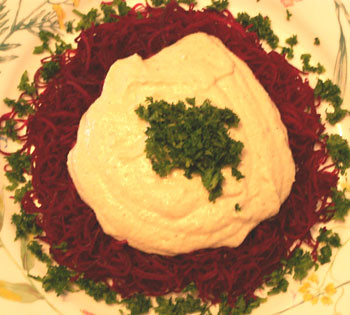
The mono meals ended and I did create that beet pasta with alfredo sauce that I was dreaming about. So, here's the recipe:
BEET PASTA

As promised, here's today's herbal installment, a video on Oregano Oil! Verdict: It's strong, for sure, but it's not as bad as I thought it was going to be!