Know Any Literary Animal Lovers?

Hi there PureJeevan readers! We wanted to let you know that Jim's new novel CHROO is available on Amazon. It's a crazy adventure involving a billionaire heiress, her Chihuahua BFF ("Chroo") and a host of human and animal characters. Find out more on Amazon! Here are some links:


This Thursday I want to give a special "Thank You" to Kevin Gianni. He was on my list for a Take the Time Tuesday introduction, but I didn't want to wait until then to tell you about him. I've been following Kevin's work on the Internet since he hosted The Raw Food World Summit last year. You can tell when you hear him speak that he's a genuinely nice, intelligent, caring person. He's honestly listening to what people are saying, trying to absorb the plethora of health information that's available. He asks a lot of interesting questions, too. He then takes what he has learned, condenses it, and shares the knowledge with the rest of the world. He does all of the hard work for us! For this, I wanted to give a special thanks to him.

In our Mnemonics for the ?Clean 15? ? Or, ?Conventional? Produce That Tests Lowest for Residual Pesticides blog post last week, we put an asterisk next to "sweet corn" and took it off our list of foods to eat. Even though sweet corn tests relatively low for pesticides, Pure Jeevan still feels the vegetable isn't a safe choice for a healthy diet. There are primarily two reasons for our decision to completely remove corn from our diets. First, of all the vegetables that have undergone genetic modification (GM), GM corn is one that has been proven to cross-pollinate with non-GM corn. Second, since corn is so plentiful and easy to grow, it has been modified to become all sorts of flavors, sweeteners, fillers, etc., in food products and many individuals have developed sensitivities to it.
Read more: Is Corn Safe to Eat? No, and Neither is Most Papaya!

Jim here... About an hour ago, I purchased $68 worth of ice cream from a local supermarket. Bet you thought you'd never read something like that here, eh ? Well, don't worry -- Wendi and I haven't suddenly decided to binge on dairy products. You see, in my corporate job, I'm often the event organizer; today that meant ice cream gopher.
For some raw foodies, that scenario might seem rather cruel. You may be thinking: Isn't it tough to have to go purchase nine tubs of ice cream, two jars of maraschino cherries, two bags of marshmallows, four containers of flavored syrups, two cans of whipped cream, and numerous boxes of waffle cones ? No, it's not cruel at all. To me, it's now the same as running out for, say, office supplies.
Continuing on, today, with Wendi's San Francisco travelogue:
 While on our walk, Pete pointed out that in the building on our right there are some amazing kale chips being produced. Kale chips ! I asked if he was referring to raw food kale chips and he nodded. Of course, I had to investigate and find out who was producing them and possibly meet the person. Well, what a treat we were in for!
One of the workers directed us to an office nearby where we met a lovely woman named Blessing. It turns out, Blessing is the producer of the kale chips we received from our Official Snack Sponsor during our tour, Natural Zing. Not only does Blessing produce some of the most popular kale chips in the raw community, her company is also the manufacturer of the famously delicious "Raweo" cookies (which you can find on Natural Zing's site)!
Read more: Part 2 of 4: Glowing Gypsy Gals Glimpse the Glorious Golden Gate's Gastronomical Goodness
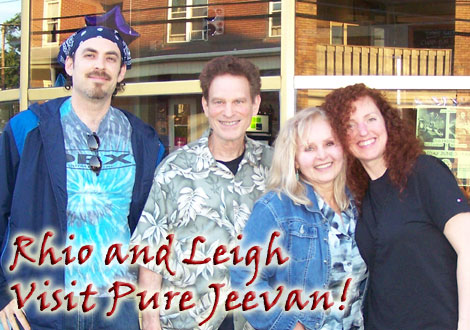
Jim here... We had a whirlwind weekend last weekend when the uber-talented couple Rhio and Leigh came to Pittsburgh for a three-day visit. As many of you probably know, Rhio is a well-known pioneer of the raw food movement, having written one of the definitive books on raw foods, Hooked on Raw. She's also the host of a popular Internet radio show of the same name, for which Leigh serves as primary engineer and co-host. Both have extensive backgrounds in music, as well, which is fitting for such a colorful, vibrant couple.
Saturday, Rhio gave a two-part presentation to a capacity crowd at a local coffee shop / art gallery.Part One was a demonstration on making raw dairy-free yogurt using almonds (a technique demonstrated, I believe, on her new DVD, "What's NOT Cookin' in Rhio's Kitchen " -- available soon on her web site at www.rawfoodinfo.com). According to the yogurt eaters in the crowd (of which I'm not one -- never went in for much dairy), the recipe mimics yogurt perfectly! So, if you're a raw foodie who misses dairy yogurt, you're definitely going to want to connect wth Rhio to learn the technique.
Okay, so here's a recipe that may make you raise an eyebrow. "Baked " "Rice " Well, it's not really baked and there isn't really rice in it, but it tastes like a baked rice and veggies dish! I created this one day by mistake and we all loved it.
Baked Rice and Veggies
2 cups pureed sunflower seeds
A few of my friends have recently reached some special personal milestones in the raw food world. Congratulations go out to...

Sam: ONE YEAR RAW!!!
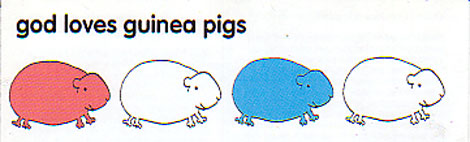
So, we've been building up to something exciting all week long -- and here it is! As it turns out, Kevin Gianni is not only a "renegade health" expert, motivational speaker, and all-around great guy; he's also a singer/songwriter!? And he even has his own CD called "God Loves Guinea Pigs" (original songs and artwork by Kevin).
During the past few days, we shared some great interviews with Kevin. In addition to all of the material covered so far, both Jim and Wendi had asked Kevin some musical questions. So, we saved those parts of the interviews for today. Here are the bonus sections from those interviews, including the funny story about Kevin dropping his pants in public!

To help keep all of you inspired, we ve asked some
remarkable individuals to share their raw food stories with you. Enjoy!
I receive many questions from our readers, and I am very happy to respond. I truly love helping others, but I don't do it just for them.When I was younger, many times I thought I was performing selfless acts of kindness whenever I'd help others. However, now I realize I am experiencing pleasure by helping others. I find it very rewarding, as though I am fulfilling my purpose in life.
Do you know what your life's purpose is? Do you believe there is such a thing These aren't rhetorical questions; I'm really interested in hearing your response. Well, I've known my life's purpose (actually, I have more than one) from a very young age, but it wasn't until recently that I began living it more fully. My purpose in life is to love others---to connect with others through an immensely deep and genuine love.One way I've found for spreading my love and realizing my purpose is by helping others.
When I answer questions for our readers, I speak from my heart. I think it's important to realize, however, that the answers we receive from others are *their* answers to similar questions. Maybe their answers will work for us, but maybe they won't.I've stressed this many times, but it never hurts to repeat it: Listen to others, hear what they have to share, but mostly listen to your own inner voice. We all have the answers deep within ourselves, even if we can't always hear them very well.
Read more: Life's Purpose and Reader Questions: Emotional Eating
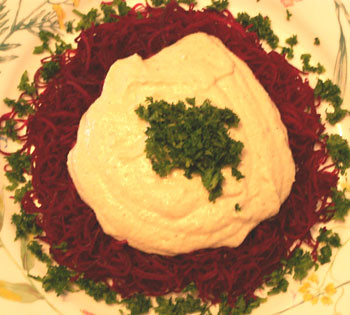
The mono meals ended and I did create that beet pasta with alfredo sauce that I was dreaming about. So, here's the recipe:
BEET PASTA