Know Any Literary Animal Lovers?

Hi there PureJeevan readers! We wanted to let you know that Jim's new novel CHROO is available on Amazon. It's a crazy adventure involving a billionaire heiress, her Chihuahua BFF ("Chroo") and a host of human and animal characters. Find out more on Amazon! Here are some links:
This pie is amazing and exactly like a traditionally cooked pumpkin pie! I took a few different pie recipes and altered them until I came up with this recipe.
Pumpkin Pie
Filling:
Welcome to Episode FIVE! Today we're focusing on our old friend the WALNUT. Since it's officially fall, walnuts are in season right now. What better time to enjoy one of nature's tasty, heart-healthy treats?
Some health/nutrition summary info: Walnuts provide a great source of protein, fiber, B vitamins, Vitamin E, anti-oxidants to help prevent cancer, and Omega 3s to help your heart and vascular system. They also help lowering your cholesterol and blood pressure, and contain numerous beneficial amino acids and polyphenols (compounds linked with reduced risk of heart disease and cancer).

Let's have a bit of fun today here on the blog. All week long we've been focusing on brain health and minimizing our chances of developing memory loss as we age. So, how sharp is *your* brain right now? What can you remember as the key highlights of ways to increase memory, ways to eliminate memory loss? What else can you remember reading over the past week here on Pure Jeevan's blog about having a sharp mind?
Share your resp0nses in the comments (and don't read those left by others until you've left your own!).
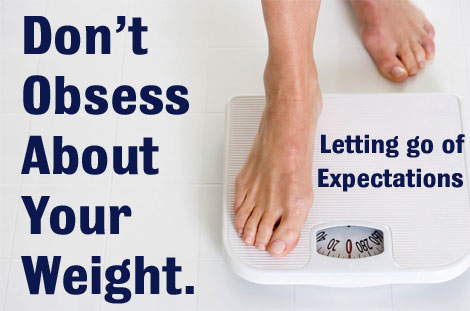
Jim here... While browsing a thrift shop for a smaller belt yesterday, I was reminded to make a few quick points here at our blog about the raw food diet and weight loss.
Many people are initially drawn to raw foods for the weight loss aspect of this lifestyle. Where most other diets ultimately fail in this area, raw foods usually brings wild success. So, for anyone considering a raw foods diet specifically for the purpose of weight loss, here are a few quick tips centered around the theme of "letting go of your expectations."? You may be wondering, "Why should I let go of my expectations for weight loss " Well, here are two big reasons:
Read more: Letting Go of Expectations For Raw Food Weight Loss

Jim here... Well, I may have lived 100% raw for nearly one year now (and mostly raw for a few additional years), and I have definitely witnessed the reversal of many physical ailments during that time, but I can say with certainty that, if raw actually cures people of allergies, it looks like I still have a ways to go before reaching that milestone. Here's a snippet from an article I published a few years ago in a book:
I believe I was roughly 12 upon learning of my allergy to poison ivy (the hard way, naturally). By age 14, I'd heard all of the poison ivy folk lore and "wisdom" out there -? that sensitive people like myself can inadvertently contract it via smoke from a nearby brush fire, that ingesting the plant's concentrated essential oil can reverse one's sensitivity to outbreaks (even, some said, to the point of complete immunity), that scratching spreads the rash, that scratching does not spread the rash, that going to get the shot and the steroids makes it fade more quickly, that calamine is best, that it's not, et cetera.

Happy Navratri!
DAY 1:

Just a quick post on what may or may not be considered "weird" for our inaugural "Weird Wednesday" post. According to a few web sites I checked, around 3% of the population (and I'm assuming this means U.S. population) is vegetarian. It looks like maybe 1% (possibly a little more) is vegan. Of every 100 vegans, how many do you suppose are raw foodists? (Actually, I'm asking; I didn't find any solid answer to that.) Maybe 1 of every 100 vegans? What do you think?
Here's a painfully unscientific, yet still slightly educated guess:

Jim here... Of the many lessons 2008 brought to our household, one standout was certainly the importance of having patience. That s because we set some lofty goals, and lofty goals are often vital teachers.
For example, imagine sitting in your living room one day and deciding: "I'm going to scale Mt. Everest."? (For the purposes of this example, imagine also that no political, administrative, or financial restrictions exist to prevent you from doing this immediately if you really wanted to -- things like passports, entry visas, transportation costs, etc.)
Read more: Acknowledging Changes and Growth: 2008 / 2009, Part 2

I suppose that, when you buy more produce than the average consumer, you come to observe a thing or two about that produce. We can't say for sure that our assertion is 100% true, but it sure does seem true to us. You see, we've noticed that produce we purchase at farmers' markets tends to keep longer than store-bought. Give it a try yourself, and see if your produce stays fresher longer!
Of course, there are many other benefits to shopping at farmers' markets. Aside from the produce being able to stay fresh longer, you're getting it in a much fresher state than store-bought. So, the things you eat first will be "extra" fresh tasting.
Read more: Produce Buying Tip: Farmers' Market Produce Lasts Longer!

Here's a video demonstrating a technique for making super-fast, vibrantly beautiful, tasty salads! If you frequently find yourself in a rush, but also want a healthy meal, definitely check out this mandoline technique. (Further commentary below, after the video...)

When I first decided to try a raw food diet again (I had sampled it for about three months a few years before going completely raw), I wanted to do it in a way to prove that it either does or doesn t work. The best way to do that, I figured, was through consistent blood tests. So, that s what I did. I have continued to document my path to health with regular blood tests. Many of you know that the results have been remarkable. My dramatic shift in weight is the most obvious to others, but there were equally impressive changes going on inside my body, as well.
It has been about a year since my last blood work was done, so I knew I should schedule an appointment to get the testing done soon (since I want to keep the tests somewhat yearly). I tend to always put the testing off, however. As much as I m curious about the results, the truth is that I m terrified of needles. Over the past few months, I was continuing to put this yearly testing off, but something has spurred me to get it done sooner than later.
Read more: Raw Food and Measurable Health: Does Wendi Have Lyme Disease?