Know Any Literary Animal Lovers?

Hi there PureJeevan readers! We wanted to let you know that Jim's new novel CHROO is available on Amazon. It's a crazy adventure involving a billionaire heiress, her Chihuahua BFF ("Chroo") and a host of human and animal characters. Find out more on Amazon! Here are some links:
I like this "travelogue" format, so let's continue! Here's Wendi's comments from their adventures in San Luis Obispo, checking out the raw vibes along the CA Central Coast!
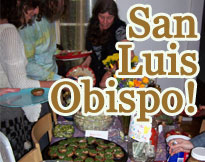 After a very active visit in the San Francisco / Berkeley area, we headed down the coast to San Luis Obispo, CA. There's a pretty active raw food meetup there and we were asked to stop in their town to give a talk to their group.
It was a nice drive south, but the sun is a bit brighter than we're used to (especially when driving long distances). When we arrived in the town, we were overcome by the beauty of the place. It's one of the most beautiful places we've seen in California, so far!
Read more: The Friendly, Mellow, Raw Groove of San Luis Obispo

Yesterday's post was a little "heavy," don't you think In it, we shared a bit of the stress we were experiencing related to our pending move. There was just so much data to pore through (and yes, we're still feeling that stress)!?
At times like these, it's often good to step back, breathe, and make sure you're not ...well, freaking out -- which makes today's "Take the Time Tuesday" installment absolutely fitting, for we would like you to meet a raw foodie who goes to great lengths to ensure that your "Vitamin L12" levels stay well into the superhero range. Without further adieu, then...

Finally, some super news to share!? On Monday, after a l-o-n-g wait, Wendi finally had her appointment with a actual LLMD. (That stands for "Lyme Literate Medical Doctor."? If this and the news of Wendi's Lyme Disease is new to you, check out this post.)
I'll cut straight to the good part: Her prognosis is excellent! Yes, she's still in a world of pain and misery at the moment, but he believes (based on her blood work and her symptoms) that we've caught this early enought to fully eradicate the Lyme. (At least, that's how I understand it. I'm actually not clear on whether Lyme is ever 100% eradicated, or if it's just forced into dormancy or irrelevancy. Perhaps Wendi can clear that point up later.)
Jim here... While browsing a thrift shop for a smaller belt yesterday, I was reminded to make a few quick points here at our blog about the raw food diet and weight loss.
Many people are initially drawn to raw foods for the weight loss aspect of this lifestyle. Where most other diets ultimately fail in this area, raw foods usually brings wild success. So, for anyone considering a raw foods diet specifically for the purpose of weight loss, here are a few quick tips centered around the theme of "letting go of your expectations."? You may be wondering, "Why should I let go of my expectations for weight loss " Well, here are two big reasons:
Read more: Letting Go of Expectations For Raw Food Weight Loss
It's been a while since we offered an update on Wendi's health challenge. So, I asked if she felt up to writing a blog post to let everyone know what she's going through, highlighting a few new directions taken of late. As usual, I added some color splashes and graphics here and there, just for aesthetics. But, the following post is from Wendi. -Jim

Many thanks and lots of love go out to all of you for the love and support you ve been sending my way. I can t spend much time at the computer, but Jim has been trying to keep up with my email and he s been passing along your love, concern, advice, and healing energy. Thanks so much for everything, including the things that have arrived through the postal service. I definitely feel the love from all of you and I want you to know that each and every one of you means so much to me! * blows kisses *
In a recent post, I answered part of a message I received from Violet, one of our blog readers. Below is the continuation of my response to Violet (much briefer than my last one!).
Following my response to Violet is a response to Sarah, who has a fantastic raw food blog that I enjoy reading.
Violet's message continued:
Read more: Reader Questions: Raw Transition Support, Identify Peas
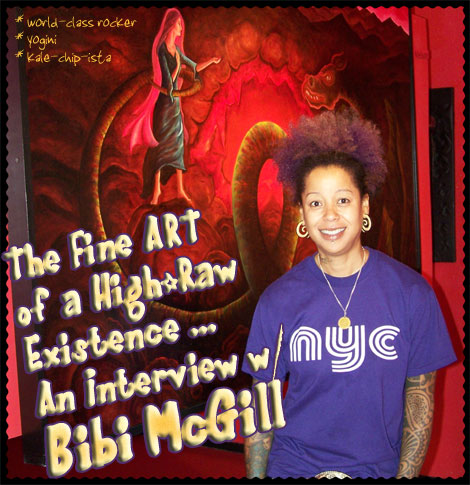
Hi there, Pure Jeevan family! ?Jim here... A few weeks ago, I'd been reading about Bibi McGill, the guitarist and musical director for Beyonce. It was a fascinating piece (linked to below, actually) and, to my complete surprise at the time, touched on her fairly serious interest in raw foods -- and, wouldn't you know, she also lives right here in sunny Portlandia!
Soon, I realized that I'd seen her name around town before -- and Wendi did, too! There are these absolutely addictive kale chips, you see... (We like to get them at our local food co-op from time to time because they're truly something special.) ?But, until recently, we didn't piece it all together -- that one person manages to produce this distinctive brand of raw snacks, teach yoga classes here in Stumptown, AND somehow also tour the entire globe as lead guitarist ?for world-class acts like Beyonce and Pink!
Jim here... Happy Sunday morning, everyone!? We don't normally post on weekends, but we're sharing this video as a special gift for my mom on Mother's Day.As Wendi likes to say, "Every day is mother's day!"? But, I do like to do something a little special for my own wonderful mom. So, check out this video of a recipe Wendi (mostly) and I created for her. If you remember my reaction to the soup we made recently, it may not surprise you to hear me say that this sauce is the "best #$%^&*^%! sauce I've ever tasted!"
We're typing up and formatting this recipe for Pure Jeevan family members (you know, those who subscribe to our mail list). So, once it's ready, we'll be adding it to the queue of mailings we sent out to keep everyone inspired. This recipe is a keeper!
There's SO much to celebrate lately! Check it out:
 Our dear friend Robin (aka Rawbin) celebrates her birthday today. We created a fun video for Rawbin, who has the ability to make anyone laugh! Rawbin blogs here and you can read her "My Raw Story" installment here.She's also the east coast Raw Spirit Festival representative. (RSF east happens August 29-30, 2009 in Maryland. More info here.)

Here's a rare question a Pure Jeevan family member recently asked:
I eliminated 100lbs on raw food, but I've been "stuck" for the last year. I feel absolutely amazing when I can stick to raw food, but it's sooo hard when time is limited!
First, congratulations on your success with the raw food lifestyle! You must be feeling like a new person, even though you feel a bit stuck right now.
Continuing on, today, with Wendi's San Francisco travelogue:
 While on our walk, Pete pointed out that in the building on our right there are some amazing kale chips being produced. Kale chips ! I asked if he was referring to raw food kale chips and he nodded. Of course, I had to investigate and find out who was producing them and possibly meet the person. Well, what a treat we were in for!
One of the workers directed us to an office nearby where we met a lovely woman named Blessing. It turns out, Blessing is the producer of the kale chips we received from our Official Snack Sponsor during our tour, Natural Zing. Not only does Blessing produce some of the most popular kale chips in the raw community, her company is also the manufacturer of the famously delicious "Raweo" cookies (which you can find on Natural Zing's site)!
Read more: Part 2 of 4: Glowing Gypsy Gals Glimpse the Glorious Golden Gate's Gastronomical Goodness