Know Any Literary Animal Lovers?

Hi there PureJeevan readers! We wanted to let you know that Jim's new novel CHROO is available on Amazon. It's a crazy adventure involving a billionaire heiress, her Chihuahua BFF ("Chroo") and a host of human and animal characters. Find out more on Amazon! Here are some links:
In a recent post, I answered part of a message I received from Violet, one of our blog readers. Below is the continuation of my response to Violet (much briefer than my last one!).
Following my response to Violet is a response to Sarah, who has a fantastic raw food blog that I enjoy reading.
Violet's message continued:
Read more: Reader Questions: Raw Transition Support, Identify Peas

In this special five-part series, Joanna Steven uncovers where some top vegetarian athletes get their protein. Here's part three, focusing on Robert Cheeke's take on this issue.
YELLOW PEA POWDER
In the spring of 2005 this natural body builder became a champion bodybuilder - all on a strict? vegan diet. Robert Cheeke, an activist/athlete raised on an Oregon farm, went vegan when he was 15 years old and transitioned to full on vegan only two months later. Winning titles in Portland, OR and competing at the Natural Bodybuilding World Championships held in California, Robert maintains his intense mass building workout regime on a 100% animal-free diet.
Read more: Vegetarian Athletes Share: Top 5 Sources for Animal-free Protein (Part 3 of 5)

We've got three incredible posts coming your way this week, and we're going to get started right here and NOW with a one-hour interview with the incredible Kevin Gianni. As most of you know, we postponed our RV Tour recently.As part of that, we'd planned to stage a fun event related to the All Raw Directory.We'd planned to air this interview with Kevin (conducted back in December 2008) for that event.
Fast-forward to today and we realize that, like our raw RV Tour, our All Raw Directory promotion will have to wait. It's funny how things trickle down like that. But, all is not lost. This is still an incredible interview -- and guess what ! It's only part one of a two-part interview, as well as a special super-fun surprise we'll be announcing on Friday. We promise: No one in the raw food community will want to miss Friday's post. All we'll say now is that it's a truly unique, limited opportunity unlike anything you've seen here before! Trust us: You couldn't possibly guess what it is!
Read more: Part 1 of a 3-Part Series Profiling the Multi-Talented Kevin Gianni!

Yahoo recently ran a photo series on their "omg!" channel entitled "Celebrity Slim-Down Secrets." It actually has a nice set of before and after photos of celebrities who have lost weight. The set is here.Featured are Kelly Osbourne, Seth Rogen, Jennifer Hudson, Jerry Ferrara, Kirstie Alley, John Goodman, Jordin Sparks, Jason Segel, Drew Carey, Sara Rue, amd Kevin James. ?Most reported using personal trainers, changing up their diets, and getting more exercise (or some variation of those three).
We didn't read any reports of raw food diets in the story, but looking at before and after pictures is probably always a good idea, if only for visual inspiration. It's nice to see a broad range of people turning their health around, too. Some are younger celebs; others in their 40s, 50s, and 60s. So, it's nice to know that major changes are possible at any age.

Welcome to the very first Take the Time Tuesday entry! What's Take the Time Tuesday, you may ask? Well, it's a time to meet someone special. Each Tuesday we'll introduce you to an individual or business we think might be of interest to you. So, who's in the spotlight for this very first Take the Time Tuesday entry? Pure Jeevan, of course!
Take the Time to Meet...

Let me take you down,'cause I'm going to
Strawberry Fields.

Last night I dreamed of meandering through an unfamiliar cityscape, following some lonely sidewalk next to a river at night, feeling particularly sad and miserable beneath dim yellow street lights. I wore a black suit, carried a highball glass, and was absolutely drunk!
Having crossed the river, I soon realized (even in my dream-drunken state) that I'd been wandering aimlessly. Feeling rather pathetic, I decided to walk back across the river and sober up in a casino that I knew was there. Drunk and depressed, I figured I'd just sit in front of a slot machine for a few hours.

Jim here... Anyone else like a good funky beat ? Who's familiar with Kool & the Gang's 1973 classic, "Jungle Boogie"? Surely a lot of people know that awesome tune. If you do, recall some of the main lyrics: "Get Down Get Down, Get Down Get Down!" That's the tune I want you to keep in mind as you read this post. Hear the drums, the bassline, the electric guitar, the horn section, the voices, the phrasing, the overall dynamics of that distinctive groove. Consider how magically it all comes together.
So, Wendi called me this morning and said, "Why don't you put a blog post up about your new challenge "
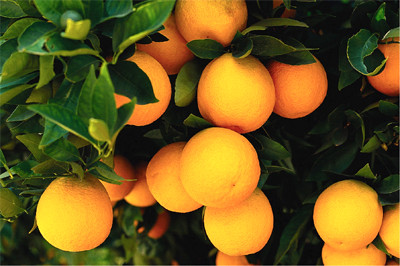
I ordered a case of organic, fresh-picked, perfectly ripe oranges!! Yay! They were shipped in less than 24 hours of my order and they should arrive soon! I asked for some grapefruits in there, too, even though I haven't really liked the taste of them in the past. I'm thinking that fresh ones will taste a lot better--not to mention that I never tried an organic one before. If I still don't like them, Jim and KDcat will eat them. ;-)
If you want to check out the grove from where I ordered them, here's a link: http://www.flnaturalcitrus.com/. I emailed with Dave, who was very nice. It's fun to get to know the people you are getting your food from, isn't it? This past spring, summer, and fall we were members of a CSA (community supported agriculture) farm. The produce was amazing and it was so fun to actually see pictures of the farm workers and hear about the daily ins and outs of life on the farm. If you've never heard about a CSA, maybe you'll want to see if you have one in your local area this coming spring.
***** DISCLAIMER: As with all of our posts here at Pure Jeevan, and particularly those tagged with a new term, "Nadi Balance," please refer to the disclaimer that runs at the bottom of all Pure Jeevan pages. Wendi and Jim are health researchers, educators, and extreme self-experimenters; not doctors. ******

If you've been following this Nadi Balance series, you're probably as fascinated as we are with the body and the myriad ways in which we can peer into our physical health through observation and experimentation. Yesterday, we learned about a blanace being necessary in the human body between fatty acids and sterol fats. (This is but one of the many balances we'll eventually talk about under the larger umbrella of Nadi Balance.) We shared how Wendi's body was in an an extremely unbalanced state, with her fatty acids far outweighing the amount of sterol fats.
This past weekend we had the pleasure of Rhio and her partner, Leigh, visiting with us. Rhio was in town for a presentation on Genetically Engineered foods (more about that here) and she took the opportunity to spend some time with us. It was a lovely weekend and we talked about all kinds of things (yes, even non-raw food things!), laughed a lot, enjoyed delicious raw foods, and got to know each other better.
While they were here, Rhio and Leigh agreed to allow us to interview each of them for this blog. Since we needed to keep the interview under ten minutes (the maximum time allowed on most video sites), we decided to ask questions about topics we had already touched on with Rhio and Leigh during their stay--things we thought might be interesting for all of you to hear about.