Know Any Literary Animal Lovers?

Hi there PureJeevan readers! We wanted to let you know that Jim's new novel CHROO is available on Amazon. It's a crazy adventure involving a billionaire heiress, her Chihuahua BFF ("Chroo") and a host of human and animal characters. Find out more on Amazon! Here are some links:

As promised, here's another question I'd like to openly address here instead of via Wendi's email system. This one also comes up from time to time, and I told this person to watch out for my two cents on this issue. So, here it is. The reader asks:
... During your transtioning to a raw food diet & the loss of so much weight, what if any exercising were you doing along the way

Greetings, everyone! ?We've been away from regular blogging for what seems an *eternity*. When we left the airwaves, the raw food world was at total peace with itself -- bliss, harmony, sister- and brotherhood. Aside from rare, gentle disagreements among raw vegans on issues such as whether raw chocolate was mineral-rich or potentially taxing to your body's store of minerals, things were pretty much business as usual.
And then we moved away and took a little time off to regroup .. ?and NOW look at the state of the raw food zeitgeist: (1) long-term raw foodists just about everyhwere are now "eating a little bit of cooked food," (2) an enormous schism has emerged after the seemingly improbable development of many long-term vegans returning to meat eating, (3) informational summits and online meetings have been replaced by debates, and (4) let's face it, the supplements being discussed and sold are getting, well, much *weirder* than ever!
Hey, where the heck is Pure Jeevan this week ??? Sorry for the silence on our end; we're actually in Portland, Oregon, closing on our new digs -- the new HOME of Pure Jeevan!!! Exciting stuff, but we're SO busy that we may not be able to blog again until the week of June 7. But, we'll definitely return by then, and maybe even post a thing or two from here. It all depends on our internet situation. In any case, it's SO wonderful to be taking direct action on the future on Pure Jeevan. It's a huge leap of faith on our part, but it seems right by all accounts. So, see you soon when we return! -Jim & Wendi
Original Comments
Below, we have included the original comments from this blog post. Additional comments may be made via Facebook, below.
On May 28, 2010, wrote:
There's an old saying that "What Happens in Vegas, Stays in Vegas." But we're not ones for keeping secrets. So, here's the low-down on Wendi and KDcat's time in Sin City -- straight from Wendi's travelogue, once again!
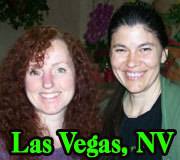 We drove to Las Vegas from California, and loved seeing the change as our surroundings became a desert. The snow-capped mountains are such a beautiful contrast in CA, but especially here in Nevada where it's so dry and hot!
This stop was longer than expected, since we decided to change our schedule a bit in order to get some more relaxing time in--and also to allow KDcat to have some fun that didn't involve raw foods or Pure Jeevan activity. ?We decided to hold off on visiting a date farm and the grand canyon (two activities we'd had planned for this leg of the trip) until Jim could do those things with us as a family. We especially missed him during this part of the trip, because he's always wanted to see what Vegas is like in person.
Read more: Las Vegas, Nevada: Relaxing Times and the Raw Scene at Go Raw Cafe
***** DISCLAIMER: As with all of our posts here at Pure Jeevan, and particularly those coming up over the next week and a half (which will all be tagged with a new term, "Nadi Balance,"), please refer to the disclaimer that runs at the bottom of all Pure Jeevan Pages. Wendi and Jim are health researchers, educators, and extreme self-experimenters. ******
With this post we launch what is perhaps the most important series of posts in the history of Pure Jeevan's blog, and indeed within the entire field of natural health. This series covers ground-breaking health science education that we've been immersed in, and which will form the basis for much of the direction in which Pure Jeevan will be heading in the coming years. You know we're all about helping others, about educating others about what we've learned, and about inspiring you to take your health into your own hands and blossom into your most vibrant selves. But, ?this time you're in for some never-before talked about, mind-blowing health science information. This has changed our lives, and continues to do so, and it will more than likely change yours (and others'), as well. [Jim says: The ultimate question is not "What is the matrix "; it is: "What is Nadi Balance "]
Nadi Balance: Part I


Rita Romano, author of the widely available book Dining in the Raw and executive chef for many years at the Hippocrates Health Institute, is a true pioneer of the raw movement. We were thrilled to have the opportunity to visit with her and her two lovely Boston Terriers, Angel and Oreo. Here's PART TWO of our talk with her:
Well, we've finally done it -- made the move westward to our new hometown, Portland, Oregon! It's been nothing but the kind of high adventure befitting such a move, not the least of which was a wheel literally flying off of our car while driving (don't worry, no one was hurt) just days before we were scheduled to leave. And, of course, everything during the past few weeks wound up costing about 10x what we'd planned. ?But, we're here! ?And, we're beginning to get settled.
As always, we've got some great things on deck for this blog in the coming near term, including many interesting articles and some fun video experiments we did involving live blood and electrical grounding. We also have some new exciting web site features to roll out, one completely new raw food site to unleash upon the raw foods community, and a whole new Pure Jeevan web site design to launch. For now, though, we'll probably remain off-line for a bit longer, as we organize and unpack things.
Our Pittsburgh home remains for sale. Naturally, we'd hoped to have sold it before making this move. But, we realized that we didn't necessarily have to wait for it to sell in order to move to Portland. So, we took the great leap of faith and moved here without that step completed. (It'll certainly be a happy day when that lovely home finds its new owners and caretakers!).
Read more: Greetings from PDX, Pure Jeevan's New HQ!! (Post #756)

I know this is our Fun-Filled Friday post, but I have to admit that most of today isn't going to be all that much fun. But, this weekend should be very enjoyable! We have some very special guests arriving tomorrow for a SUPER SPECIAL evening tomorrow night! Leela Mata, a beautiful spiritual teacher, has offered to visit my home and hold Satsang here. One of her extremely talented students, Devaki, will be joining her (and bringing a harmonium to play at Satsang!).


Ever since developing a personal conviction a few years ago that following a raw vegan existence was the best lifestyle for me, I've lived somewhat in conflict with the day-to-day corporate business environment in which I make my living at the moment. As we've directly stated many, many times, we're in the process of changing all of that. But, making such a huge change takes a long time because careers are in many ways very anchoring. We may write more about that process because it's true that going raw (or, really, adopting any kind of diet outside of what most other people eat) can lead to significant changes in your life. Between Wendi and me, I think we've gone through pretty much all of them, and there's certainly value and relevance in sharing most of those things here. Today, though, I thought I'd share what I call my "$75 Salad Story."
In the business world, "networking" is among the more prevalent activities anyone does. It's pretty much always going to involve food , right? It's always a breakfast briefing, meeting a client over lunch, or attending a dinner party (complete with a cocktail hour). ?The deck is more or less stacked against you at these things because, let's face it, they're usually set up to provide what most people perceive as a pleasant experience. And, quite often, that means a certain degree of culinary decadence / indulgence -- invariably at venues that have never heard of raw chocolate or raw apple pie (which, to me, is 10x more appealing and exciting than the ubiquitous "chocolate fountain").
Read more: Jim's $75 Salad: Staying Raw @ Haute Cuisine Destinations

Thanks to Bitt, yesterday, for pointing out that one possible misinterpretation of yesterday's post (on celebrity weight loss) could be that "thin = healthy." I'm sure that, while there are countless wonderful benefits to being a famous actor, one of the less wonderful aspects of that life must be the pressure to remain young, thin, attractive, etc. It would seem realistic to me to assert that, additionally, women are held to even more objectified standards than are the men out there (although, in fairness, note that 6 of the 11 stars profiled in the Yahoo feature linked to yesterday were in fact men).
In any case, the post's intention was never to imply that one's weight is necessarily the best indication of one's overall health. After all, we all know thin people afflicted with serious health challenges.

"An ounce of action is worth a ton of theory." ~ Friedrich Engels
When people talk about goals and planning, two distinct camps tend to emerge, in my experience:? (1) the "aim then fire" types, and (2) the "fire then aim" types.? I've used those specific terms for a reason, and will return to them in a bit. But, let's look at the two types, and relate them to the way in which one might approach raw foods.