Know Any Literary Animal Lovers?

Hi there PureJeevan readers! We wanted to let you know that Jim's new novel CHROO is available on Amazon. It's a crazy adventure involving a billionaire heiress, her Chihuahua BFF ("Chroo") and a host of human and animal characters. Find out more on Amazon! Here are some links:

To keep all of you inspired while we are away, we've asked some
remarkable individuals to share their raw food stories with you. Enjoy!
***** DISCLAIMER: As with all of our posts here at Pure Jeevan, and particularly those tagged with a new term, "Nadi Balance," please refer to the disclaimer that runs at the bottom of all Pure Jeevan pages. Wendi and Jim are health researchers, educators, and extreme self-experimenters, not doctors. ******
Nadi Balance: Part V

Jim here... Wow, it's May 1st already! May is an exciting month for me because that's usually when my running kicks in more regularly. There's nothing like hitting the pavement and being in motion, MP3 player in hand. Whether it's an intense half hour of intervals powered by the Foo Fighters, or a longer moving-meditative outing accompanied by Michael Hedges, I do enjoy being out there (even if I'm distracted now and again when my canine running companion? -- aka "the Jooge" -- chases after something she shouldn't)!
But, as I was getting at:? Ever since I lost the weight, I simply can't abide cold. I've heard many raw foodies talk about this phenomenon, and have heard numerous explanations for it. My suspicion is that all of the "why raw foodies are always cold" theories are partly correct -- or, better put, that the theories cumulatively contribute to our slightly lowered body temperature.

We may never fully comprehend the mysteries of life and death. One thing is for certain, however, with both we experience tremendous amounts of emotion.
At this moment, we are experiencing extreme sorrow after the still birth of our niece, Elizabeth Marie. She was named after my mother who died a few years ago. During this period of tremendous grief, we will be spending time with my dear sister and her family, offering our love and support.
I don't have time to write a real blog post, but wanted to pass along this information for anyone who eats Halloween candy, or knows of others who do. Please note that I am not the kind of person to spread false warnings. I completely trust Mike Adams as a Health Reporter and all around wonderful person. He would not spread false news...he looks into every bit of information available before sharing what he's learned with everyone else.
Mike has issued a warning about Halloween Candy. Please go to his site to find out more about it: NaturalNews.com
?
I'll leave you with an old Halloween picture of me before I started eating raw foods. Halloween used to be the day I'd dress up and feel okay being myself, because I was in costume. It's funny to me that this year I feel no need to cover up in order to be myself. Halloween is still my favorite holiday, however!

Wow, I just took a gander at the "Best of Raw" web site and saw that Pure Jeevan is nominated for all sorts of great things -- singling out Wendi, me, Pure Jeevan, this blog, and the All Raw Directory over at least eight different categories!
We really appreciate the nominations, so thanks so much to those who took the time to do that. We'd love it if you would vote for us for "Favorite Raw Blog." (You can do that now by going here.) Of all the things we were nominated for, that's probably the one we've really put the most effort into.

Q. I recently read the following on Dr. Micahel Eades' (dr. protein power) blog & would appreciate your opinion:
Have you any comments on the RAW FOOD movement and particularly Dr. Cousens claim of a ?cure ?Dr. Eades' response:
I don t know anything about Dr. Cousens. I do know that people in the raw food movement seem to believe the raw foods deliver ?natural? enzymes unaltered by cooking to the GI tract to help it do its work. Problem is these ?natural? enzymes are made of protein and are denatured (the same alteration process as cooking does with heat) as soon as they hit the stomach acid. The fact that proteins can t make it through the stomach without being completely altered is why diabetics can t take insulin pills and have to get their insulin via injection. Insulin is a protein, just as enzymes are, and it can t make it through the stomach without being denatured.

This is the first installment of a new series that we plan to run occasionally here on the Pure Jeevan blog. The series is called "Raw Foods 101" (the same name as our free eBook that has now been read by more than 5,000 people around the world!). Raw Foods 101 will become the latest addition to our category list (available along the right side of our sidebar). In time, clicking on Raw Foods 101 will deliver a plethora of raw food tidbits.
So, where should we start? ... How about the topic of soaking nuts and seeds ! This is a question that comes up repeatedly in emails sent to Pure Jeevan.
Read more: Raw Foods 101: Why Should You Soak Nuts Before Eating Them?
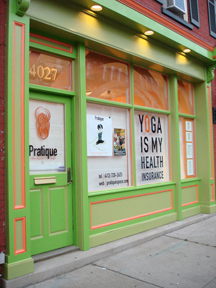 This morning as I was driving from the beautiful Carnegie Mellon University campus to a business meeting outside the city, I had to take a detour at one of Pittsburgh's many bridges. It was a little frustrating because I had hoped to arrive at my destination early enough to grab a green tea at a coffee shop. But, these little delays happen. I'm glad this one did, though, because I soon passed a small yoga studio (called Pratique) where an interesting window decal hangs. It reads: "Yoga is my health insurance."
Many kudos to the clever people at Pratique who apparently crafted this catchy and spot-on message. While this is a raw foods site, not a yoga site, the message is equally apropos here. It essentially means, in my view, that we all have the opportunity to profoundly affect our own health and well being.
In our family, we're currently facing the realistic prospect of taking a literal approach to this concept, dropping formal health coverage! Quite literally, we feel that maintaining a health plan is (almost) a complete waste of money. I'm not posting this to start a debate as to whether those who follow a healthy diet should or should not buy into a plan. (I know all of the related arguments already: Yeah, but what if you cut your arm and need stitches Save that for Facebook or, at least, some other time.) I'm more concerned with reiterating one of our key messages here at Pure Jeevan -- our unwavering ?conviction that physical health and diet are tightly connected. Wendi knows this, I know this, our child knows this, YOU know this... But why doesn't everyone acknowledge it?

KDcat and I returned from the ashram last night filled with peace and motivation to move forward with our current goals (more about this in the upcoming newsletter). However, we also returned to a home with next to no produce in it (well, compared to what we normally have available). What to do? There's no way to run to the co op today (only one car in our home) or this evening, so it's time to be creative. Let's take a look at what Pure Jeevan has in the fridge and on the counter, and we'll see what we can create!

Jim here... Whenever I want to learn how to do something new, here's how I go about it:
>>> I practice. <<<