Know Any Literary Animal Lovers?

Hi there PureJeevan readers! We wanted to let you know that Jim's new novel CHROO is available on Amazon. It's a crazy adventure involving a billionaire heiress, her Chihuahua BFF ("Chroo") and a host of human and animal characters. Find out more on Amazon! Here are some links:

Jim here... Yesterday, we talked about exceptions -- those non-raw food items that raw foodists sometimes allow themselves to eat. I listed mine, and a number of people here and on Facebook noted some of their own. (Seems a lot of us enjoy olives, by the way!) It struck me today that a natural follow-up to a list of exceptions would be a list of non-exceptions -- basically a list of things I personally never ever ever ever consume.
This makes sense, right? I suppose all people generally have three basic lists: (1) those things we eat regularly, (2) those things we eat sometimes, and (3) those things we never eat. Hopefully, none of us keep these lists etched in stone, as diets are dynamic things that tend to evolve over time. A few of the items I'll list below may only apply to my current practices, while others (like refined sugar) I hope to permanently exclude. So, let's see:
Read more: Yesterday: Exceptions. Today: Things I *Never* Consume

Jim here... Allow me to think out loud, philosophically, for a few moments, will you? I have a gut suspicion about something, but need to think it through a bit here. I'll start with a quote:
"There have also been a number of traditions around the world that describe a divine confusion of the one original language into several, albeit without any tower [referring to the well known story of the Tower of Babylon from the Christian Bible]. Aside from the Ancient Greek myth that Hermes confused the languages, causing Zeus to give his throne to Phoroneus, Frazer specifically mentions such accounts among the Wasania of Kenya, the Kacha Naga people of Assam, the inhabitants of Encounter Bay in Australia, the Maidu of California, the Tlingit of Alaska, and the K'iche' of Guatemala. ... The Estonian myth of "the Cooking of Languages" has also been compared."
Even though it's not time to share everything with you about the life-changing events going on with us here at Pure Jeevan, I'm going to try harder to squeeze in a few minutes once in a while to update this blog with other information. I miss coming here and connecting with all of you. Thank you for so many lovely emails that you've been sending to me. I will be responding to all of you very soon. Please forgive me for taking so long to respond, but once we fill you in on everything that's been going on, I think you'll understand that it's difficult to find time to keep up with email and blog writing, among other things.
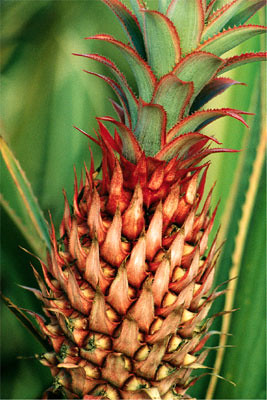
The latest news, as far as raw foods go, is that I'm having a love affair with a particular fruit. When I was transitioning to raw foods over two years ago, and also during the first few months of eating 100% raw foods, I was in love with young Thai coconuts. I couldn't get enough of them and they did some amazing things for my body---the most amazing was lowering my cholesterol to a healthy range within one month! After many months of consuming at least one coconut per day, however, my love affair ended. I still loved those Thai coconuts, but they just weren't as attractive to me anymore.


Jim here... We had a whirlwind weekend last weekend when the uber-talented couple Rhio and Leigh came to Pittsburgh for a three-day visit. As many of you probably know, Rhio is a well-known pioneer of the raw food movement, having written one of the definitive books on raw foods, Hooked on Raw. She's also the host of a popular Internet radio show of the same name, for which Leigh serves as primary engineer and co-host. Both have extensive backgrounds in music, as well, which is fitting for such a colorful, vibrant couple.
Saturday, Rhio gave a two-part presentation to a capacity crowd at a local coffee shop / art gallery.Part One was a demonstration on making raw dairy-free yogurt using almonds (a technique demonstrated, I believe, on her new DVD, "What's NOT Cookin' in Rhio's Kitchen " -- available soon on her web site at www.rawfoodinfo.com). According to the yogurt eaters in the crowd (of which I'm not one -- never went in for much dairy), the recipe mimics yogurt perfectly! So, if you're a raw foodie who misses dairy yogurt, you're definitely going to want to connect wth Rhio to learn the technique.
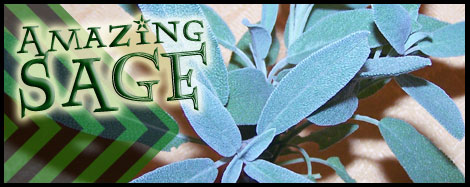
Well, we've always found the herb SAGE to be delightful in so many ways. That's why we've grown it here and elsewhere for years. Such a lovely, fragrant, sturdy, resilient herb, it's truly one of the easiest plants to communicate with -- and YES!, it truly IS a meaningful dialogue when you step out into the garden and sit among a patch of sage. All you need to do is listen carefully, and sage will speak its sage herbal wisdom to you.
I was wondering how sage came to be known as "sage" -- when all of the sources I had handy simply listed its technical name, salvia, along with its common name. Enter the great Wiki for an answer:
Read more: Please Tell Everyone: "I Read Some *Sage* Words at Pure Jeevan Today"

On March 1st we started a Juice-a-Day Jamboree, to challenge ourselves (and our readers) to include more fresh juice into our diets. We knew we weren't ready for an all-out juice feast, but a juice a day seemed like something we could commit to in our daily lives. So, the Juice-a-Day Jamboree was born. We've been posting periodic updates on our original post about the Jamboree, but figured we'd post periodic juice updates in the main part of our blog, as well, to encourage others to add some more fresh juice to your diets, as well.
We've missed one day of juice since we started the Jamboree. Our original goal was to have our juice first thing in the morning, but we weren't always successful with that. So, we told ourselves that any time of the day is fine, but if we can start the day with a juice we'd prefer it that way. The changes we've been feeling are more pronounced when we begin the day with fresh juice, rather than when we have our juice later in the day.

Here's Part Two of our interview with Hatice Yavuz, co-owner of Cousin's I.V. raw restaurant in Chicago. Yesterday we talked a lot about Cousin's restaurant and the stories behind that (as well as some interesting notes about European and Turkish culture and attitude toward raw foods). Today we'll get into some of the effects experienced by many after going raw -- things like raw food detox and the strengthened connection between mind and body. Interesting stuff!

To help keep all of you inspired, we ve asked some
remarkable individuals to share their raw food stories with you. Enjoy!

Hi there, everyone!
We've been getting a lot of emails and comments about two subjects since we posted our itinerary, so we thought we should respond in a way to help answer the questions/concerns that maybe more of you may be having as well.

We all know what "greens" are in general. For example, no one questions whether lettuce, kale, spinach, or chard are greens. But on the other hand, all of those items *are* also clearly green in color. With that in mind, what would you make of the following two questions I (Jim) recently pondered -- tagged as "reader questions" so they're easily found in the future by other equally inquisitive people ;-) -- that seem bizarre, but are really quite interesting?
1. Are non-green greens (e.g., purple kale) still considered greens2. Are vegetables with green skins (e.g., cukes, zucchini) considered greens? (After all, they're green!)