Know Any Literary Animal Lovers?

Hi there PureJeevan readers! We wanted to let you know that Jim's new novel CHROO is available on Amazon. It's a crazy adventure involving a billionaire heiress, her Chihuahua BFF ("Chroo") and a host of human and animal characters. Find out more on Amazon! Here are some links:

"Only somebody who really takes the time to understand [Pure Jeevan's Salsa's*] potential can then coax it into its fullest expression. Then, I mean, oh its flavors, they're just the most haunting and brilliant and thrilling and subtle and ... ancient on the planet." ~ Miles Raymond in "Sideways" (2004) (*slightly modified).
Jim here... Over the weekend, I'd made a string of videos for Pure Jeevan using my handy-dandy new phone. To my great surprise, when I went to post them to YouTube, they all came out sideways! So, I'm sorry, friends... you'll have to endure (if you so choose) a somewhat disorienting video, below. But, hey, at least it reminded me of that wondrous quote from the movie Sideways! I imagine Paul Giamatti describing one of my own recent creations this way -- a sort-of half-raw, yet still very healthy delight that I like to make sometimes.
 My reason for featuring a less than 100% raw recipe is two-fold. First, I'd been discussing transitioning to raw (see yesterday's post). And, adding more raw into your non-raw diet is a great way to transition. I believe that raw sauces are an excellent way to achieve this, as I'll explain in the video. Second, if you do prefer a 100% raw dish, then you can simply replace the beans with something else -- perhaps sprouted beans, or maybe your own invention from the dehydrator.


Our weekend is going to be filled with Spring cleaning. Many may not think of any type of cleaning as fun, but there's something special about Spring cleaning. Maybe it's because when we do Spring cleaning in our home, we tend to make it a family event. When we do things together as a family, even though there may be a little bickering here and there, but for the most part we have fun. There's something truly rewarding about working together as a team for something that is going to benefit everyone.
Hey Everyone- Just a quick note, in case you're reading our blog and thinking, "Wow, Wendi and Jim usually update daily! What's up ?!!" We'll get back to it pronto, I promse -- maybe even later today! Turns out it's just a TON of work orchestrating a tour like this, especially across a three-hour time zone. But, now that we're getting used to it, I think we can look for some more timely updates. The latest is from Corvallis, Oregon. But, we're also going to talk about Portland a lot more soon! So, stay tuned! -Jim
Original Comments
Below, we have included the original comments from this blog post. Additional comments may be made via Facebook, below.
On March 4, 2010, wrote:
I hear ya. I do keep checking in though, and I'm looking forward to when you get your groove.
I really feel for you, Jim. Your girls gone, having to keep track of their movement, run a household on your own and still work that stupid job. Poor baby. Just know that I am thinking of you, and sending you love from New Mexico.
And Wendi, AAAaaaaaaaaaaaaaah! I can hardly wait 'til you get here!
Terri
On March 5, 2010, wrote:
We are getting all ready here for W and K! so far we have the following guests for Cru:
Bueller of Bueller's Kitchen, Lori of Inspire2Act, Ingrid of Raw Epicurean, Dianna Harrelson, LA Raw meetup organizer and raw teacher, Puki (friend of Courtney Pool), and a few other folks .. and ME!
xoxoxo deb

Let me take you down,'cause I'm going to
Strawberry Fields.
My nine days of mono meal eating are over! I'll write about the final day tomorrow.
April 14, 2008
Today I have even more energy. My tongue is coated more, however. It s not horrible, but it s definitely less red and more of a light pink. My eyes have continued to feel dry and my eyelids are heavy. What causes that, I wonder? My nails are whiter and harder, but they still break and rip when I m working around the house.
 What fun it is to share a fun day with like-minded people at a special location, sharing good times, laughter, and delicious, nutritious raw food wonderment. Here are some pics from our outing -- hopefully the first of many such unique outings blending the Pittsburgh raw group with the D.C. one.
We hope this also provides some inspiration for other meetup groups to consider holding joint meetups in some geographically central location.
If you're new to raw foods, you're probably aware that eating this way isn't exactly mainstream. And, while we've talked here before about the importance of connecting with others for inspiration and support, it's true that a lot of that lends itself to participation in virtual worlds such as Twitter, Facebook, Give It to Me Raw, and other communities, blogs, and sites where raw foodies hang out.
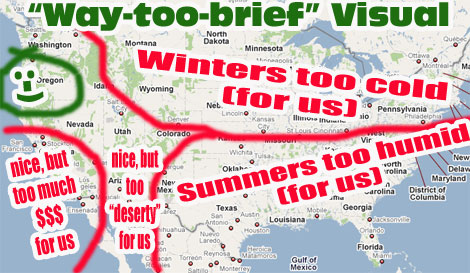
Well, I hope we're finally approaching the true end-game of our whole move. We now have our home listed with a new realtor (no longer going it alone as a "for sale by owner" scenario), so we're hoping that a renewed effort (and a lower price) will attract a buyer. The market seems to be perking back up a little as well, which certainly can't hurt anything.
Thanks to everyone who sent in suggestions for places we should consider moving to. I assure you that we researched each and every one to an almost ridiculous degree. There are more amazing places to live than we ever knew, and we were delighted to learn about some areas with which we weren't very familiar -- funky little enclaves in Texas, Tennessee, New Mexico, etc. I think we've hinted as to our inclinations before, but I can tell you that, after so many months of intense deliberation, we believe the best domestic home for Pure Jeevan is probably in Oregon.
 After our Oklahoma stop, we had back-to-back visits with family. During our 40-day tour, we had a great time at every place we stayed. There's something extra special about being with family, however. KDcat especially loved this part of the trip, where she could stay up late and sleep in every morning.
Our first stop was St. Louis, Missouri, to see Grandma and Grandpa Dee, and Aunt Jeanne. We did some shopping at Whole Foods, bought lots of organic produce, and prepared some raw dishes to share with everyone. We purchased a young coconut and KDcat used Grandpa's hatchet to show everyone how to open a young coconut. Jim's mother learned to make raw hummus, without chickpeas, and even agreed to be a guest chef for a Makin' It Monday raw food recipe video! So, we'll be sharing that with all of you in the near future! Aunt Jeanne loved the hummus, as well as the raw tacos we created. She seems to have a liking for raw foods, so who knows...you may be seeing another Dee online sharing info about raw foods in the future ! Grandpa is always a fan of apple pies, so he thoroughly enjoyed the pie we created during our visit. Grandpa and KDcat also spent some time talking about music, a passion for both of them.
Our second stop was Geneseo, Illinois, to visit with Aunt Cindy, Uncle Ray (who had to work during our visit), and cousin Destiny. KDcat and Destiny don't see each other very often, so this was a real treat. Destiny's a sweet girl who became a vegetarian over a year ago (she's the only vegetarian in her home)! That's a huge thing to do when you're just a young teenager and we're proud of her for taking her health into her own hands (and for saving the animals!). We took a lot of pictures while visiting. In the photoset, you'll see that somehow a monkey crawled onto KDcat's back and hung around with her most of one day (in which she was dressed up in quite the outfit!). That monkey found its way into all kinds of interesting places (in a park, playing on the slide, swing, etc., and even in the house playing the piano -- and I caught him trying to steal some of my bananas!). The weather was beautiful during our visit, so we spent a lot of time outside, walking and enjoying the beautiful time together. At this stop we created a raw apple crumble, which Aunt Cindy later modified with blueberries. We're gently nudging her to make a video of the recipe she created, so we can all see how it's made! It sounded delicious.
Read more: Family Visits During Our 40-Day Tour: St. Louis, MO, and Geneseo, IL
There's SO much to celebrate lately! Check it out:
 Our dear friend Robin (aka Rawbin) celebrates her birthday today. We created a fun video for Rawbin, who has the ability to make anyone laugh! Rawbin blogs here and you can read her "My Raw Story" installment here.She's also the east coast Raw Spirit Festival representative. (RSF east happens August 29-30, 2009 in Maryland. More info here.)
Jim here... Happy Sunday morning, everyone!? We don't normally post on weekends, but we're sharing this video as a special gift for my mom on Mother's Day.As Wendi likes to say, "Every day is mother's day!"? But, I do like to do something a little special for my own wonderful mom. So, check out this video of a recipe Wendi (mostly) and I created for her. If you remember my reaction to the soup we made recently, it may not surprise you to hear me say that this sauce is the "best #$%^&*^%! sauce I've ever tasted!"
We're typing up and formatting this recipe for Pure Jeevan family members (you know, those who subscribe to our mail list). So, once it's ready, we'll be adding it to the queue of mailings we sent out to keep everyone inspired. This recipe is a keeper!
Wow, is it really Episode 3 already? How time flies! Remember way back when we started this informative, informational, nutrition-oriented "Know Your Food" series? Seems like ages ago, doesn't it? (Oh, wait... It WAS ages ago. It's just taken us a while to get up to speed with this video stuff!) Anyway, here's the video, followed by some camera/video editing news -- oh, and of course some highly urgent celery information. (Okay, it isn't really urgent at all; we just needed to add a dash of drama.) So, see what you think. You might even learn a thing or two about our stalky green friend.
Not TOO bad, right? We're getting to our goal of roughly 3-minute episodes. Of course, this is still one of our first attempts, shot last Sunday. We thought it was decent enough to not entitle it "salvaged" as we did the previous installment.