Know Any Literary Animal Lovers?

Hi there PureJeevan readers! We wanted to let you know that Jim's new novel CHROO is available on Amazon. It's a crazy adventure involving a billionaire heiress, her Chihuahua BFF ("Chroo") and a host of human and animal characters. Find out more on Amazon! Here are some links:
Jim here... Wow, we haven't posted in a few days. That calls for some action! Hmmm... how about taking a look at some delicious mini pizzas Wendi whipped up the other day:
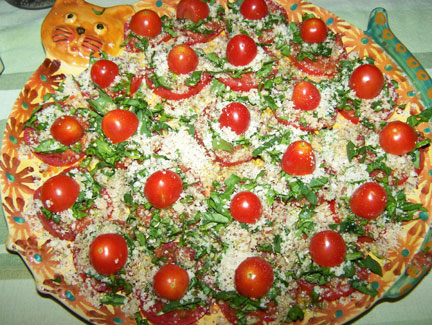
We went absolutely nuts for these little "pizzas." They were both tasty and fun. If memory serves, I believe she made them by taking slices of firm roma tomatoes, spooning on some improvised pesto sauce that she whipped up, sprinkling on some chopped basil leaves, sprinkling on some "cheese" that she made with ground Brazil nuts, garlic, and salt, and then topping each "pizza slice" off with a half cherry tomato. No recipes necessary here; just take a look at the picture & go try it!
Note: This entry is not meant for our regular readers. Search engines are directing people to our page when they enter "mono and headaches" and I want to take this opportunity to reach out to those who may not know about this amazing lifestyle the rest of you already know about! ;-) Plus, I want to help them with their headaches.
Mono and Headaches: Looking for Help
Mononucleosis (Mono) is a common viral illness. When children develop mono, it is usually not obvious since it seems like a normal cold. When teens and adults develop mono, however, the symptoms are much more severe. Most individuals will feel better within about three weeks, but fatigue can continue on for about three months! Who wants to feel ill that long? Who wants to feel tired for MONTHS ! Who wants to suffer from such severe headaches ! Not me, that's for sure.

Read more: Mono and Headaches: This Entry is Not For Our Regular Readers
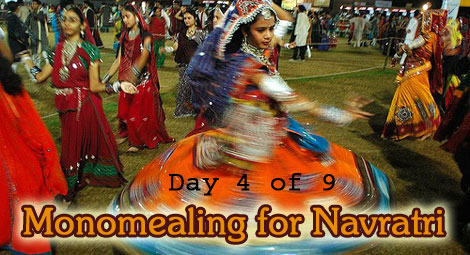
Today is the beginning of the second three-day focus on the attributes of a different Goddess who is most worshiped during the Hindu celebration of Navratri. She is Goddess Lakshmi, bringer of wealth and good luck. Let's focus on the idea of wealth. When we first hear the word, many of us think about monetary wealth. However, there is a much deeper meaning ... that of abundance. Feminine energy has the ability to bring forth, to birth, abundance that is beyond the imagination, in every aspect of our lives. Female energy is fertile, able to create a beautiful life and future, shine forth and bring wisdom into view, all with grace and beauty. All of these are attributes of Goddess Lakshmi, qualities we all have within us. Qualities I celebrate within myself and within all of you (male and female, alike).
 End of Day 3:

I hear the question all the time: "Don't you miss eating out at restaurants " My answer is always, "No. I prefer the fresher organic foods I can create for myself in my own home. I can pay the same amount for better food if I stay at home to eat." It's true, too. I don't miss eating out at restaurants. Sometimes I miss the convenience of someone else doing my food prep and cleaning up afterward, but as far as the actual food that I consume, I prefer the foods we eat at home. Besides, when you eat out as a raw foodist, your choices are limited to only a salad if you live in an area with no raw food restaurants.
Sometime last year, as a treat for Jim, we went to a restaurant. I got a huge salad that I used to love when I ate cooked foods at that particular restaurant. I remembered the greens were always dark, the onions were nice and flavorful, and the dressing was a simple oil and vinegar with salt. Well, after consuming only fresh foods in our home for quite some time, the salad that I used to think tasted so great now seemed to be lifeless and limp. It wasn't enjoyable to eat, and I sure didn't like paying so much for a nonorganic salad that didn't even taste good to me. So, we didn't eat out again after that.

An online friend of mine, Kevin Gianni (see previous blog entry introducing him), has been producing a terrific series of videos and blog posts. At the end of each post, he asks questions of his readers. In his recent post, he asked his readers:
What struggles have you been through

For today's Makin' It Monday, we're not really making something, but rather sprouting something! We tend to go through periods of time when we are sprouting a lot, consuming sprouts on salads, sandwiches, and inside whatever dishes we can add them to at the time. It seems appropriate for this time of year to start sprouting, again.
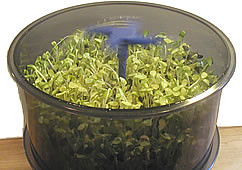
Have you ever sprouted seeds? The first time I ever sprouted, I used a nut milk bag that I kept dangling over the kitchen sink. I put some seeds into it, let them soak overnight in a bowl of water, and then rinsed them in the morning. Every time I was in the kitchen, I rinsed them again and let them drip into the sink until the next rinsing. It's important to keep the seeds moist and rinsed. It was thrilling to see the tiny little sprouts when they first began emerging from the seeds!
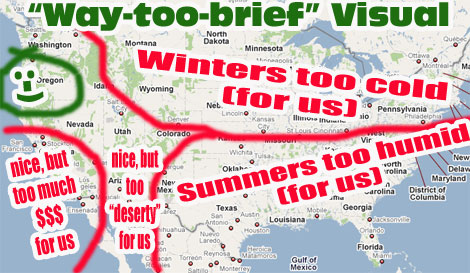
Well, I hope we're finally approaching the true end-game of our whole move. We now have our home listed with a new realtor (no longer going it alone as a "for sale by owner" scenario), so we're hoping that a renewed effort (and a lower price) will attract a buyer. The market seems to be perking back up a little as well, which certainly can't hurt anything.
Thanks to everyone who sent in suggestions for places we should consider moving to. I assure you that we researched each and every one to an almost ridiculous degree. There are more amazing places to live than we ever knew, and we were delighted to learn about some areas with which we weren't very familiar -- funky little enclaves in Texas, Tennessee, New Mexico, etc. I think we've hinted as to our inclinations before, but I can tell you that, after so many months of intense deliberation, we believe the best domestic home for Pure Jeevan is probably in Oregon.
"Should you eat when you're not hungry "
That was a question I asked myself a lot when I was first transitioning to the raw food diet. Just about everything I ever read said that people shouldn't eat if they aren't hungry. We need to listen to what our bodies are telling us in order to be as healthy as possible.
What if your body is telling you it's not hungry, however, while your instinct is telling you that you still need to eat That's what was happening to me in the beginning of my raw journey. My digestion was very slow and food would sit in my stomach for most of the day, especially if the food I ate was processed or heavy. It didn't matter how much I ate, either. My portions were always very small compared to those that my fit-looking friends were eating. I always wondered how I was the obese one when my meals were so minimal in comparison.
Read more: Inner Guidance: Should You Eat When You're Not Hungry?
 Jim thought it was important for me to update everyone about my health, especially since so many of you have been sending emails, etc., and I haven't responded.
I do appreciate all the love and concern (thank you all so VERY much!), but it's painful for me to type for very long. This update is going to most likely bring about some more pain, but I don't want you to keep worrying about me and my health. So, I'll share what's been going on.
There's an antibiotic that will decrease the pain temporarily if you have Lyme disease (it won't help the pain if it's caused by anything else), and I was able to obtain some of it. So far, today is day five on it. And here's some great news: The pain started lessening on day three -- the aches completely gone, leaving only sharp pains when I move my joints in certain ways. I'll be on this antibiotic (and possibly some others for "co-infections" that sometimes come with Lyme, but I won't know until more blood tests are done and the Lyme specialist reviews the results).
***** DISCLAIMER: As with all of our posts here at Pure Jeevan, and particularly those coming up over the next week and a half (which will all be tagged with a new term, "Nadi Balance"), please refer to the disclaimer that runs at the bottom of all Pure Jeevan Pages. Wendi and Jim are health researchers, educators, and extreme self-experimenters -- not doctors. ******
Nadi Balance: Part II
Even though this ground-breaking information we're sharing is not necessarily about Lyme disease, the story of Wendi's contracting, suffering, and healing from it is essential background information. So, we're going to talk about Lyme disease frequently here and in the next few posts, but know that the real, underlying story is about so much more than Lyme disease. (In fact, it's about overall health for everyone!)