Know Any Literary Animal Lovers?

Hi there PureJeevan readers! We wanted to let you know that Jim's new novel CHROO is available on Amazon. It's a crazy adventure involving a billionaire heiress, her Chihuahua BFF ("Chroo") and a host of human and animal characters. Find out more on Amazon! Here are some links:
Today we thought we'd introduce you to a common wild edible known as Purple Deadnettle (or, more dramatically, the Purple Archangel). Watch the video and let us know if it grows in your area, and if you've tasted it!

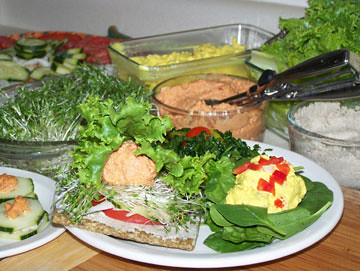
I'm still working on the dishes that will be served at the upcoming 3-Day Raw Food Spiritual Ashram Retreat (only 2 spots left!). Today, I worked on the Sandwich Fixin's that will be served for lunch on one of the retreat days.
Today I'd like to do something different for Makin' It Monday. I'll tell you what we've eaten today, but I want to hear what's been happening in YOUR kitchen!
This morning I sliced up three bananas, drizzled them with some agave, sprinked a bit of Himalayan crystal salt on them, and then topped them with hemp seeds and sprouted flax seeds with cranberries and gogi berries. I love this breakfast because it feels like I'm eating something a bit complex and more filling than simply eating the bananas plain (which is how I almost always eat them). KDcat had a bowl of oatmeal (not raw), and Jim had a few pieces of fruit.
Read more: Makin' It Monday: What's Happening In YOUR Kitchen?

Jim here... About an hour ago, I purchased $68 worth of ice cream from a local supermarket. Bet you thought you'd never read something like that here, eh ? Well, don't worry -- Wendi and I haven't suddenly decided to binge on dairy products. You see, in my corporate job, I'm often the event organizer; today that meant ice cream gopher.
For some raw foodies, that scenario might seem rather cruel. You may be thinking: Isn't it tough to have to go purchase nine tubs of ice cream, two jars of maraschino cherries, two bags of marshmallows, four containers of flavored syrups, two cans of whipped cream, and numerous boxes of waffle cones ? No, it's not cruel at all. To me, it's now the same as running out for, say, office supplies.
I started writing on a raw food forum about the oranges coming in today. But, I was on my way out the door and I had more to say about them than I realized, so, I figured I'd paste what I wrote, so far, and add to it here in our blog. ;-)
?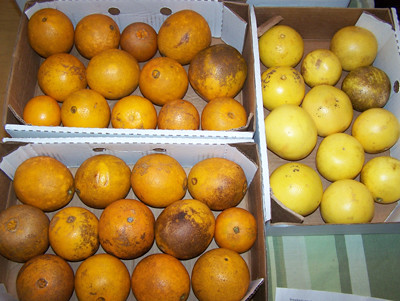
(organic oranges and grapefruits)

Wow, who knew so much work goes into meeting up with people all across the country ! It's going to all be worth it, though, to meet so many of you!! Below are the definite meetups happening. There are more being planned that we'll share once things are finalized. If you don't see your town/city here, but it's on our list of places we'll be visiting, maybe you'd like to help us put together a little gathering If so, just let us know! We'll be updating later next week with a more finalized plan for the trip and various meetups taking place.
Read more: Meetups Across the Country: Want to Meet Wendi in Your Town/City?
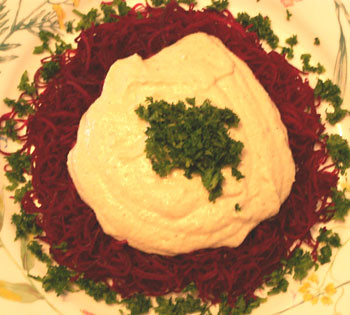
The mono meals ended and I did create that beet pasta with alfredo sauce that I was dreaming about. So, here's the recipe:
BEET PASTA

Wow, so much happened in Chicago that it's taking literally weeks to show it all to you!? But, hey, it's also a lot of fun to share this stuff. Wasn't that a great talk yesterday with Kathy and Danny Living !? If you haven't seen it, definitely scroll down and watch!
Here's another one for you. Meet Hatice Yavuz, co-owner along with Chef Mehmet Ak of Cousin's Incredible Vitality, another great raw destination in the Windy City. "Hatice" is a Turkish name, in case you're wondering. The "c" is pronounced like a "j" -- so, her name sounds like "huh-TEE-jay." Our interview with her ran a little long, so I'm going to have to break it into two parts. Here's part one:
Read more: Pure Jeevan Visits Cousin's I.V., Interviews Co-Owner Hatice Yavuz (Part 1)
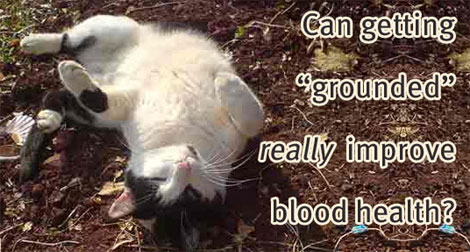
Jim here... A week or two ago, there were some videos floating around in raw food circles that seemed to indicate that one's blood health (and, by extension, one's overall health) can be quickly and dramatically improved through a practice known as grounding. I realize that, metaphorically, people commonly use the term "grounded" to indicate a kind of level-headedness -- e.g., a "down to earth" attitude. But, in the literal sense, it's an electrical term used to describe a physical connection to the earth. I'm no engineer, but my understanding is that these connections basically discharge things or people from any static electricity build-up (as in those bracelets that computer repair techs wear), or serve as a conduit through which other electricity may pass (as in lightning rods).
 That the idea of "grounding oneself" should take root so strongly in natural health circles is unsurprising. In theory, it seems to make a lot of sense. I'm just as intrigued by it as the next person, I suppose. If we spend most of our lives wearing rubber-souled shoes, walking on shag-carpeting, sitting suspended off the ground on static-filled things like couches and office chairs, often running various electrical equipment, basking in EMFs from radio waves and Dish-network signals and cell phone radiation... sure, it makes sense that we're probably all experiencing some heretofore unprecedented (evolutionarily speaking) human body exposure to significant electrical phenomena. My car reminds me of this daily with a (friggin' annoying!) shock each time I get out and close the door. But, as the "double-rainbow guy" so succinctly put it: ?What does it mean
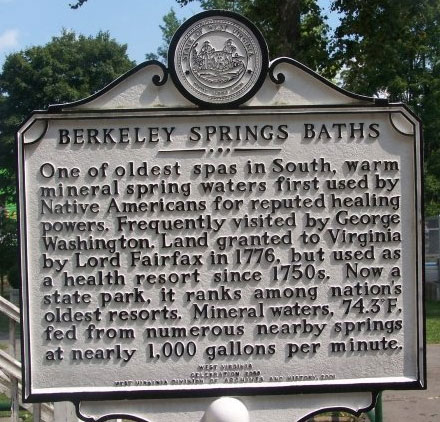
Hi everyone! ?We wanted to announce plans for a raw food picnic / potluck / meetup next Saturday, September 19th, at noon, in Berkeley Springs, WV at Berkeley Springs State Park (link to map), a wonderful natural healing destination about half-way between Pittsburgh and D.C. Wendi was just talking with Rawbin from the Capital Area (D.C.) raw food meetup and we all thought that a combo Pittsburgh / D.C. meetup might be fun. So, we all planned something right on the spot!
Berkeley Springs is a really nice (but small) public park in West Virginia about half-way between Pittsburgh and D.C.I traveled there a few weeks back with Melissa, Dave, Ella, and Bethany on the way to Raw Spririt East. We had a super time soaking in the spring water and checking out all of the cool alternative shops. (I did a write-up here on Pure Jeevan a few weeks ago and posted some video of the place).
We're taking a very short break from our Nadi Balance series to announce that once again it's a special time of the year for diabetes awareness. As you may recall, we spent Wendi's 25th birthday last year doing public outreach on this very topic, as it's an issue close to our hearts. Pure Jeevan even maintains a special page, here, for diabetes information. So, if you know of anyone suffering from diabetes, and feel that they may be receptive to some really eye-opening information on the topic, please direct them to: