Know Any Literary Animal Lovers?

Hi there PureJeevan readers! We wanted to let you know that Jim's new novel CHROO is available on Amazon. It's a crazy adventure involving a billionaire heiress, her Chihuahua BFF ("Chroo") and a host of human and animal characters. Find out more on Amazon! Here are some links:

To keep all of you inspired while we are away, we've asked some
remarkable individuals to share their raw food stories with you. Enjoy!

We've promised many of you that we'd share some ideas for the whole family (especially the children), so here's one idea that might prove particularly popular. In a household of two former English majors, it's only natural that we've always adored and admired alliteration. So, we may be biased to believe that these "Breathtakingly Bejeweled Blueberry Banana Breakfast Bowls" will be as beloved by your beauteous bellies as they are by ours. See what you think!
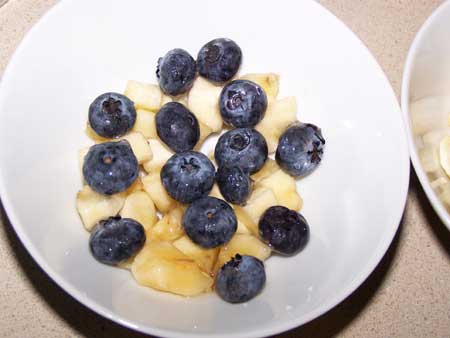
Read more: Breathtakingly Bejeweled Blueberry Banana Breakfast Bowls
 As we promised yesterday, we're featuring a wonderful (and LONG!) video interview today with the incredible John Kohler of Santa Rosa, CA. You may be familiar with John from some of his popular web sites, most notably his "Living and Raw Foods" community site at www.RawFoods.com. Below are parts one, two, and three of Wendi's interview. They're roughly 10 minutes each. (That's a lot of time, I realize, but at least check out Part 1 if you're short on time, as it offers an amazing look at John's front yard.)
Wendi said she was at a loss for words when interviewing John at his home (and you'll soon see why!), because what he has done on his 1/10th of an acre lot is *phenomenal*. He told Wendi off the video that it's all a matter of trial and error--finding what grows easily and well, and working with those plants the most. If something takes a lot of effort, or is difficult to easily grown, he skips it and focuses on what can give the most yield for the least work. Almost everything grown on John's land is edible!
PART TWO:
PART THREE:
The video of John's garden and the pictures (see yesterday's post) are enough to inspire ANYONE to plant even a small garden for themselves! WOW!
John has a lot going on, including a monthly potluck. Wendi and KDcat happened to be in town on the night of the March potluck, so Wendi was invited to speak at the event. It was a nice, laid-back group of people, Wendi said, and they sat at a long table talking about the raw lifestyle, health issues / concerns, what children are fed in school, and so much more -- a really nice group of people, Wendi said, noting she'd love to visit them all again. To connect with John Kohler is pretty easy. He's on the internet at:
- RawFoods.com -- John's main community site
- GrowingYourGreens.com -- John's YouTube channel
- BeRaw.com -- Santa Rosa Meetup Group
- RawHealthExpo.com -- Annual Raw Foods Conference
Once again, we d love to thank our generous trip snack sponsor, Natural Zing, for helping us to make this possible on our budget!

Original Comments
Below, we have included the original comments from this blog post. Additional comments may be made via Facebook, below.
On March 19, 2010, wrote:
fantastic, thank you so much Wendi, very informative, what a guy and energy bomb he is, hope you are well again, you seem so
love to you
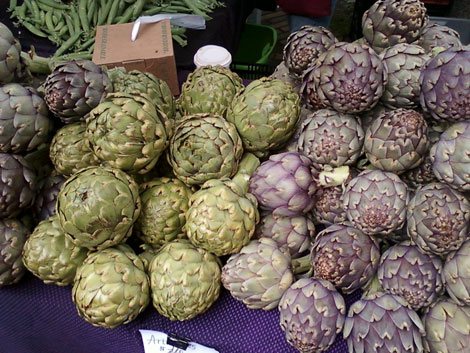
Here's a picture I took at Portland's Saturday Market last week. We've been pleasantly surprised to find that artichokes grow rather well here in the Pacific Northwest. We don't recall seeing them much back East, but many of our neighbors grow them (both for the artichokes and, I suspect, as ornamental plants).
I suspect that some raw foodists tend to overlook artichokes because they're so traditionally linked with the image of something steamed, stuffed with breadcrumbs, and drizzled in butter -- so, "cooked," "breaded," and "dairy" all together in one recipe! Being half Italian, I grew up eating them this way. My mother almost never said "artichoke"; she always called them an Italian word that sounded like "ga-GO-che-lee." ?She made them just a few times per year, and they were always a huge treat (and we'd often fight over the hearts -- by far the best part!).
On this page, we'd like to share some information about vegetable juicers. There are a number of different kinds, and we'll try to offer some background on many of the leading ones. We're affiliates for some, so if you're in the market for one of the ones we discuss, please follow the links we provide (or click the juicer pics) and you'll help support Pure Jeevan. But, either way, we certainly encourage you to consume fresh, delicious, nourishing veggie juices regularly!
The Jay Kordich Juicer -- The PowerGrind
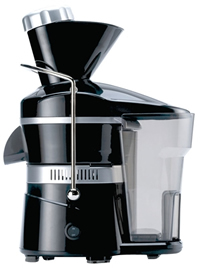 The PowerGrind Pro is a juicer put out by Jay Kordich, commonly known as the "father of juicing" by many in the raw food / living food world. In fact, our very first juicer was a "JuiceMan" model, purchased back in the early 1990s! But this is an entirely new machine, retooled from the ground up recently. At $289, it's a fairly high-end juicer (as compared with, say, department store models). However, it's certainly got the power and features to back up that level of investment. ?Head on over to the Jay Kordich web site for full details on the latest models.
The Hurom Slow Juicer
 A year or two ago, when we still lived in Pittsburgh, we hosted the Monarch's (Matt & Angela) during one of their speaking tours. I remember Angela firing up their juicer in the morning and I thought (or possibly even said), "Wow, your juicer is broken!" I swore that something was wrong because it didn't sound like anything I'd heard before. But they then told us about what was then the newest juicer on the market -- the Hurom Slow juicer. It's garnered a lot of positive testimonials over the past few years, from quite a lot of juicing enthusiasts. While many of the features are nice, we imagine the the most important potential benefit would be the slower speed, which theoretically means less oxidation, less processing, and thus healthier juice. If we were in the market today, I've no doubt we'd try one of these, too (even at $359)! These juicers are available through our good friends at Natural Zing!
Do you need to be 100% raw to release excess weight and regain your health There's no difinitive answer for that question because we are all unique. Sure, our bodies function pretty much the same way, but there are still enough differences that make it difficult to answer a question like that for it to be true for every single individual.
Most of us have heard of, or know, someone who doesn't eat a healthy diet, who smokes cigarettes and/or drinks alcohol, doesn't get enough rest, and also lives a stressful life---yet that person still has a healthy body and is over 80 years old. People like that seem to have resiliency built into their genes. Sure, who knows how long a person with such resilient genes could live or how vibrant a life that person could enjoy with a healtheir lifestyle. But, the fact remains that it seems no matter what a person's lifestyle is like, if you are born with resilient genes you are pretty much invincible to most illnesses.
A majority of the population isn't born with such impressively hardy genes, however. Most bodies can withstand the stresses of an unhealthy lifestyle until middle age. At that point, however, the body begins to show signs of ill health (excess weight gain, aches and pains, and the start of many diseases such as diabetes or high blood pressure). For a majority of those individuals, some healthy lifestyle changes can make a huge difference. Many individuals regain their health simply by changing their diets to include less fat and more vegetables, and by increasing their amount of exercise. Sure, it's a bit of work to make such changes, but if many people are committed to improving their health those simple changes can make a drastic difference in their lives.
 What fun it is to share a fun day with like-minded people at a special location, sharing good times, laughter, and delicious, nutritious raw food wonderment. Here are some pics from our outing -- hopefully the first of many such unique outings blending the Pittsburgh raw group with the D.C. one.
We hope this also provides some inspiration for other meetup groups to consider holding joint meetups in some geographically central location.
If you're new to raw foods, you're probably aware that eating this way isn't exactly mainstream. And, while we've talked here before about the importance of connecting with others for inspiration and support, it's true that a lot of that lends itself to participation in virtual worlds such as Twitter, Facebook, Give It to Me Raw, and other communities, blogs, and sites where raw foodies hang out.
To help keep all of you inspired, we ve asked some
remarkable individuals to share their raw food stories with you. Enjoy!
Beginning today and running all through next week (and even spilling into the following week!), we'll be running videos from the Raw Spirit Festival (RSF East 2009) held in Upper Marlboro, MD, last weekend. If you've never attended a RSF event, you absolutely must. They're the best ever!

Wow, I just took a gander at the "Best of Raw" web site and saw that Pure Jeevan is nominated for all sorts of great things -- singling out Wendi, me, Pure Jeevan, this blog, and the All Raw Directory over at least eight different categories!
We really appreciate the nominations, so thanks so much to those who took the time to do that. We'd love it if you would vote for us for "Favorite Raw Blog." (You can do that now by going here.) Of all the things we were nominated for, that's probably the one we've really put the most effort into.
Jim here... A health-conscious friend of mine was feeling sick today. And, while I certainly do not advocate harping on the sick, I did have a very mild discussion with her when she phoned me for some advice. I asked, "Do you know what cognitive dissonance is "
"I'm not sure," she replied.