Know Any Literary Animal Lovers?

Hi there PureJeevan readers! We wanted to let you know that Jim's new novel CHROO is available on Amazon. It's a crazy adventure involving a billionaire heiress, her Chihuahua BFF ("Chroo") and a host of human and animal characters. Find out more on Amazon! Here are some links:

In August of 2007, I was on the verge of an emotional breakdown. My entire world had changed since I adopted the raw food lifestlyle. My body had released nearly 100 pounds of unhealthy weight, my health had dramatcially improved, I ended unhealthy friendships, I released a lot of stored emotional memories from childhood abuse, I realized that I wasn't living in a location that met my needs anymore, and so much more. I can't think of any aspect of my life that hadn't changed, in one way or another, over the year and a half that led up to my urgent need for a retreat.
Read more: Take Time for Yourself: Peaceful Valley Ashram (video)
I've been holding on to some things to share here on the blog, and today feels like a good day to share this particular inspirational gem, below. I hope it speaks to some of you in a way that brings about a deeper love for yourself. Many times I have a feeling, based on emails I receive, that I love some of you more than you love yourselves (and I deeply love all of you). That's okay, though. Your time will come to blossom into the self-loving individual that you know you are at your core. Perhaps today what I share will trigger a deeper sense of self-love for you, as it did for another friend.
Back in October, a friend in an online raw community sent me a message about how she was having a tough time with cravings. I responded to her, as follows:
... You CAN do it, too! For me, it took finally loving myself to make the change. I had to KNOW that NOTHING was going to stop me from loving myself. And loving myself meant never putting harmful things into my body EVER AGAIN! So, once I made that decision, I moved forward. I'm not saying I didn't have cravings, but I loved myself through them! ...
Many times in the online communities, the messages you share with others will also be read by individuals stopping by the pages of your friends. That was the case with what I wrote, above. I received a lovely message from another friend in that community, who had read the message I left for someone else. Here's what she wrote to me:
Note: This entry is not meant for our regular readers. Search engines are directing people to our page when they enter "mono and headaches" and I want to take this opportunity to reach out to those who may not know about this amazing lifestyle the rest of you already know about! ;-) Plus, I want to help them with their headaches.
Mono and Headaches: Looking for Help
Mononucleosis (Mono) is a common viral illness. When children develop mono, it is usually not obvious since it seems like a normal cold. When teens and adults develop mono, however, the symptoms are much more severe. Most individuals will feel better within about three weeks, but fatigue can continue on for about three months! Who wants to feel ill that long? Who wants to feel tired for MONTHS ! Who wants to suffer from such severe headaches ! Not me, that's for sure.

Read more: Mono and Headaches: This Entry is Not For Our Regular Readers

Since Pure Jeevan specializes in raw food weight loss, we receive a lot of questions about what is required in order to lose excess weight. Many individuals want to know if they need to go on a 100% raw food diet in order to release excess weight.
The answer is, "No, you do not need to switch to a 100% raw food diet in order to lose weight." If you're asking if a 100% raw food diet works better for losing weight than slowly transitioning and increasing your raw food intake, the answer is still, "No."

Here's Part Two of our interview with Hatice Yavuz, co-owner of Cousin's I.V. raw restaurant in Chicago. Yesterday we talked a lot about Cousin's restaurant and the stories behind that (as well as some interesting notes about European and Turkish culture and attitude toward raw foods). Today we'll get into some of the effects experienced by many after going raw -- things like raw food detox and the strengthened connection between mind and body. Interesting stuff!

There are many things to be thankful for in this life, but for our very first Thankful Thursday entry we'd like to stress how thankful we are for the vibrant health we now have. Consuming only fresh, organic raw fruits, vegetables, nuts and seeds has allowed our bodies to heal from the inside out. For this we will forever be thankful. In fact, we are so thankful that we are here, as Pure Jeevan, to spread the word about how raw, life-filled foods can bring you renewed health!
I started jumping up and down last night with excitement when I received a call saying that the bellydancing class I've been wanting to take at Khafif Studios has an opening! Yay!!!

(This will be my teacher, Berna!)

To help keep all of you inspired, we ve asked some
remarkable individuals to share their raw food stories with you. Enjoy!
Just a quick update for those in the Pittsburgh area:
My dear friend Melissa has planned some fun raw food gatherings that you may be interested in checking out. The first is a raw food dinner and demo, the second is a wild herb walk.
Raw Foods Demo and Dinner?

We've promised many of you that we'd share some ideas for the whole family (especially the children), so here's one idea that might prove particularly popular. In a household of two former English majors, it's only natural that we've always adored and admired alliteration. So, we may be biased to believe that these "Breathtakingly Bejeweled Blueberry Banana Breakfast Bowls" will be as beloved by your beauteous bellies as they are by ours. See what you think!
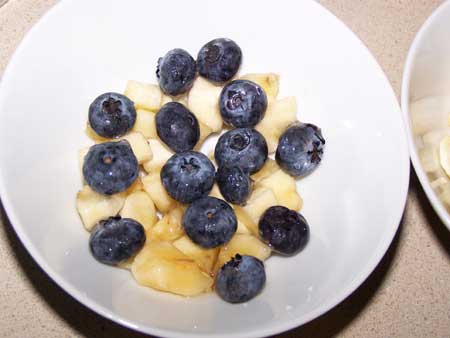
Read more: Breathtakingly Bejeweled Blueberry Banana Breakfast Bowls

Announcing: Pure Jeevan's Halloween Raw Pot Luck - A Costume Party for All Ages!!
When:? October 31, 2009, 6:00 p.m. - ? ?
Read more: Pure Jeevan's Raw Halloween Bash -- You're Invited!