Know Any Literary Animal Lovers?

Hi there PureJeevan readers! We wanted to let you know that Jim's new novel CHROO is available on Amazon. It's a crazy adventure involving a billionaire heiress, her Chihuahua BFF ("Chroo") and a host of human and animal characters. Find out more on Amazon! Here are some links:
I've been holding on to some things to share here on the blog, and today feels like a good day to share this particular inspirational gem, below. I hope it speaks to some of you in a way that brings about a deeper love for yourself. Many times I have a feeling, based on emails I receive, that I love some of you more than you love yourselves (and I deeply love all of you). That's okay, though. Your time will come to blossom into the self-loving individual that you know you are at your core. Perhaps today what I share will trigger a deeper sense of self-love for you, as it did for another friend.
Back in October, a friend in an online raw community sent me a message about how she was having a tough time with cravings. I responded to her, as follows:
... You CAN do it, too! For me, it took finally loving myself to make the change. I had to KNOW that NOTHING was going to stop me from loving myself. And loving myself meant never putting harmful things into my body EVER AGAIN! So, once I made that decision, I moved forward. I'm not saying I didn't have cravings, but I loved myself through them! ...
Many times in the online communities, the messages you share with others will also be read by individuals stopping by the pages of your friends. That was the case with what I wrote, above. I received a lovely message from another friend in that community, who had read the message I left for someone else. Here's what she wrote to me:
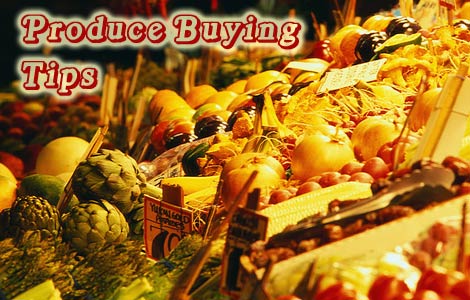
I suppose that, when you buy more produce than the average consumer, you come to observe a thing or two about that produce. We can't say for sure that our assertion is 100% true, but it sure does seem true to us. You see, we've noticed that produce we purchase at farmers' markets tends to keep longer than store-bought. Give it a try yourself, and see if your produce stays fresher longer!
Of course, there are many other benefits to shopping at farmers' markets. Aside from the produce being able to stay fresh longer, you're getting it in a much fresher state than store-bought. So, the things you eat first will be "extra" fresh tasting.
Read more: Produce Buying Tip: Farmers' Market Produce Lasts Longer!

Wow, I just took a gander at the "Best of Raw" web site and saw that Pure Jeevan is nominated for all sorts of great things -- singling out Wendi, me, Pure Jeevan, this blog, and the All Raw Directory over at least eight different categories!
We really appreciate the nominations, so thanks so much to those who took the time to do that. We'd love it if you would vote for us for "Favorite Raw Blog." (You can do that now by going here.) Of all the things we were nominated for, that's probably the one we've really put the most effort into.
I started writing on a raw food forum about the oranges coming in today. But, I was on my way out the door and I had more to say about them than I realized, so, I figured I'd paste what I wrote, so far, and add to it here in our blog. ;-)
?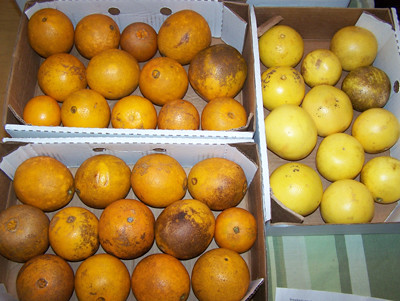
(organic oranges and grapefruits)

So it's time to continue that discussion on the aforementioned fringe one percent -- those people who will not accept your conscious intention to pursue your own health via this path. Please keep in mind during this discussion that we're only discussing just that one percent, not people in general. So, this is, I hope, relatively rare.
To begin, I'd like to stress a few points:

Q. I recently read the following on Dr. Micahel Eades' (dr. protein power) blog & would appreciate your opinion:
Have you any comments on the RAW FOOD movement and particularly Dr. Cousens claim of a ?cure ?Dr. Eades' response:
I don t know anything about Dr. Cousens. I do know that people in the raw food movement seem to believe the raw foods deliver ?natural? enzymes unaltered by cooking to the GI tract to help it do its work. Problem is these ?natural? enzymes are made of protein and are denatured (the same alteration process as cooking does with heat) as soon as they hit the stomach acid. The fact that proteins can t make it through the stomach without being completely altered is why diabetics can t take insulin pills and have to get their insulin via injection. Insulin is a protein, just as enzymes are, and it can t make it through the stomach without being denatured.
Jim here... Wow, it's Monday, April 27! Let's do something different today: Let's celebrate Monday instead of bemoaning this day that represents the taditional start of the dreaded work week. Why? Because it's our sincere hope that whatever you do in your work week is a labor of love. And, if you're not quite there yet, then celebrate the fact that you WILL be there sometime soon. For us, it means another week of working to inspire you to achieve optimal health -- and that's not "work" at all; it's actually FUN!
So, without further adieu, let's jump into this week's fun. Our good friends Melissa and Dave Sokulski have launched a site recently called FoodUnderFoot ("unleash the energy of wild edibles"). Even in it's young seedling state, I think it's already a fascinating site, and promises to become an encyclopedic web destination for anyone interested in foraging wild edibles. So, check them out for some informative info and valuable freebies, too!

It turns out that planning a 40-day/40-night cross-country trip is a LOT of work! (Who knew ??!) Wendi and I seem to be spending every waking moment planning this thing, which may explain why we've missed a day or two's posts here on Pure Jeevan. But, we're gearing up for something absolutely amazing -- and it all starts next week!? So, if there is a quiet day or two this week, just keep in mind that the rawsome content is going to be absolutely insane here starting late next week and continuing through March into early April!
Today, we wanted to extend a huge thanks to Jeff and Helen Rose, owners of Natural Zing, for offering to sponsor the snack portion of Wendi and KDcat's trip. Jeff and Helen understand that, being a raw foodie, it can be a little tough to be on the road for such a long time. Sure, Wendi and KDcat will probably be snacking on a lot of fresh fruit, but it's also nice to have some packaged raw goodies as well while you're traveling. So, Wendi and KDcat will be loading up on some of their favorites -- botija olives, Love Force breads, Gopal's power wraps, some nut butters, some raw chocolates, and more. So, in thanking Natural Zing, we'll be running banners and so forth along with our content during Pure Jeevan's trip.
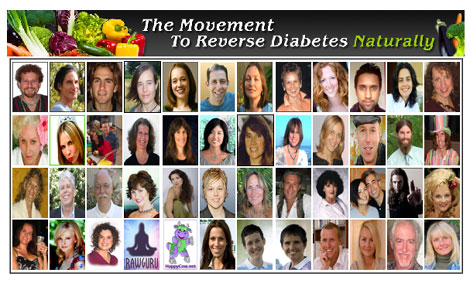
A few weeks ago, we hosted a Diabetes Awareness week here at Pure Jeevan. This was our contribution to the larger Reversing Diabetes Naturally movement that we blogged about. We wanted to let you know that the package of bonus materials offered to people who purchase the Simply Raw DVD is quite amazing! (See this post for details.) We reviewed all of the materials ourselves, and it's just a ton of great information.
The original deadline for receiving the free bonus materials was the end of April. However, the deadline has been extended through Friday, May 8. So, if you know anyone who has diabetes who could benefit from either the ?Simply Raw? documentary and/or the companion film, ?The Ultimate Enyclopedia of the Raw Food Listyle," simply point them to http://tinyurl.com/pj-diabetes.
Read more: Two Days Left for Raw Food Bonus Materials for RDN Movement

Jim here... It's not often that we're able to recommend a movie that's perfectly relevant to the raw food lifestyle. But, if you're a raw vegan and haven't seen The Curious Case of Benjamin Button, we highly recommend this film. Not only is it wonderful, but it's also, for much of the film, a nice metaphor for living the raw foods lifestyle.

As this is a holistic web site, it's important that we take time every so often to feature pieces on other aspects of human health besides diet. So, today's subject is unrelated to raw foods, but is directly related to your health. (Don't worry: We'll get back to raw foods on Monday!)
Today I want to share a super-valuable lesson I learned when I was just 21 years old. Back then, Wendi worked within the advertising department of a large newspaper. She helped me meet the paper's photography editor who, in turn, approved an internship for me during my senior year of college. So, several days per week for one semester, I hung out with professional newspaper photographers. It was a lot of fun -- and with real darkrooms, too (as this was way before the age of digital cameras).