Know Any Literary Animal Lovers?

Hi there PureJeevan readers! We wanted to let you know that Jim's new novel CHROO is available on Amazon. It's a crazy adventure involving a billionaire heiress, her Chihuahua BFF ("Chroo") and a host of human and animal characters. Find out more on Amazon! Here are some links:

Jim here... We're at an interesting juncture here at Pure Jeevan. For the moment, we're still living a little more "in the box" than we plan to in the near future. One example of this is my personal excitement about Fridays. Oh, I suppose Fridays will always seem special to me somehow. But after years of the corporate routine, Friday remains the most welcome weekday.
Friday signifies the end of the five-day stretch during which most people do whatever they happen to do to pay the bills, to keep (raw!) food on the table, and a roof over their heads. While I know of and admire many people for whom the work week is generally meaningful and rewarding, I suspect that the majority of people go through it simply for the money. Sure, many "like" their job (or, perhaps more aptly, "don't hate it"), but I have met too few who absolutely love their jobs. (Come to think of it, I've met quite a number who actually do hate their work!)
Read more: TGIF!, and a Recap of Major Pure Jeevan Activities


Our friend Kevin Gianni is turning 30 this weekend. When you do the math, that means he was born December 7, 1978, which was pretty much the apex of the disco era in America.It's no wonder the man struck the above pose in our back yard; dude's got the Village People in his blood! So, it would be really nice if you boogied down to his site, www.RenegadeHealth.com, and wished him a happy birthday. He's also on Twitter -- cast a shoutout to: @KevinGianni.
Read more: Hey, What Happened to the "Know Your Food" Series?

Q: How Long Do Smoothies Last?
I responded to a similar question a while ago in an online forum. This issue comes up a lot, acually, so I figured I'd provide our response here on the blog rather than simply through an email reply. Here's that response, reworked a bit for our blog:
Optimally, I suppose we'd all just eat things whole, most of the time, instead of blending/juicing ...

Jim here... Many people write to us asking whether we own pets and, if so, whether they are raw, too. Well, I wish I had a straight answer for you, but I think the answer is better told via a dedicated blog post.
As I'm writing this, part of me is tempted to include this post in our "My Raw Story" series. You see, Julia (pictured above) had some serious health issues just after we adopted her from a local rescue shelter, and we're still relatively early-on in our attempt to understand and reverse these issues.

Today's Jim's birthday!
This photo is from Saturday night. We had a sleepover birthday party to celebrate Jim's big day. The Pure Jeevan home was filled with loving friends, amazing raw food dishes, and vibrations from some fun group drumming!
Happy, happy birthday, Jim! May all your wishes come true and your life always be filled with health, love, laughter, and friendships! I love you!

In August of 2007, I was on the verge of an emotional breakdown. My entire world had changed since I adopted the raw food lifestlyle. My body had released nearly 100 pounds of unhealthy weight, my health had dramatcially improved, I ended unhealthy friendships, I released a lot of stored emotional memories from childhood abuse, I realized that I wasn't living in a location that met my needs anymore, and so much more. I can't think of any aspect of my life that hadn't changed, in one way or another, over the year and a half that led up to my urgent need for a retreat.
Read more: Take Time for Yourself: Peaceful Valley Ashram (video)

Man must cease attributing his problems to his environment, and learn again to exercise his will - his personal responsibility. ~Albert Einstein.
Jim here with another wonderful edition of Weird Wednesday. Here's something I find a little weird about food (and, I apologize in advance if this comes off a little preachy).
See, I work in an office and sit rather close to the corporate kitchenette. Routinely, people bring in junk food to set out for everyone -- cookies, donuts, cakes, pastries, pies, candy bars, nut rolls, cheesecakes, summer sausages, cheese cubes, fondues, etc. The thought seems to be that, in putting these things out for everyone, you're showing you care for them.Offering large servings of concentrated fats and refined sugar is viewed as a favor, as an altruistic service for your fellow coworkers. But this odd fact isn't even the weird aspect of my post (although, now that I think of it, that is pretty weird).
Jim here with another exciting installment of Weird Wednesday. (What, you thought that just because Wendi is out of town this week, we'd have no Weird Wednesday )
In any discipline, I think it's important to consider the entire argument in taking a stance on a given issue. Examine each issue from both sides (pro and con) -- and then make the best choice you can. That makes sense, right?
***** DISCLAIMER: As with all of our posts here at Pure Jeevan, and particularly those coming up over the next week and a half (which will all be tagged with a new term, "Nadi Balance,"), please refer to the disclaimer that runs at the bottom of all Pure Jeevan Pages. Wendi and Jim are health researchers, educators, and extreme self-experimenters. ******
With this post we launch what is perhaps the most important series of posts in the history of Pure Jeevan's blog, and indeed within the entire field of natural health. This series covers ground-breaking health science education that we've been immersed in, and which will form the basis for much of the direction in which Pure Jeevan will be heading in the coming years. You know we're all about helping others, about educating others about what we've learned, and about inspiring you to take your health into your own hands and blossom into your most vibrant selves. But, ?this time you're in for some never-before talked about, mind-blowing health science information. This has changed our lives, and continues to do so, and it will more than likely change yours (and others'), as well. [Jim says: The ultimate question is not "What is the matrix "; it is: "What is Nadi Balance "]
Nadi Balance: Part I
We at Pure Jeevan are making MAJOR life changes!
Did you think our lives solely revolved around raw foods---that once we went raw, there were no more major life changes to be experienced? Well, maybe it's true that our lives do, in a way, revolve around raw foods---they give us the health and vitality necessary for living a truly vibrant life! However, we are each (Jim, KDcat, and Wendi) unique and interested in many different things. Somehow, we pull all of our differences together and stand united as a loving family. It will be together, as a family, that we embark on an amazing MAJOR life change.
A few of you may already know what I'm talking about, but the rest of you are about to find out all about it, too! You may have noticed that we've temporarily discontinued many of our raw food services---for those of you who have written to ask for help, I am still responding to your emails. If I can't help you at this time, I'll do everything I can to assist you in finding the help you need. This was a necessary part of preparing for the change that is about to take place. In addition to cutting back on our services, we may not always be consistent here with our blog postings, and our email responses may not be very timely (as some of you may have already noticed). We will answer your emails, however, so please don't stop sending them to us. Hearing from all of you makes my heart fill with love and happiness!
?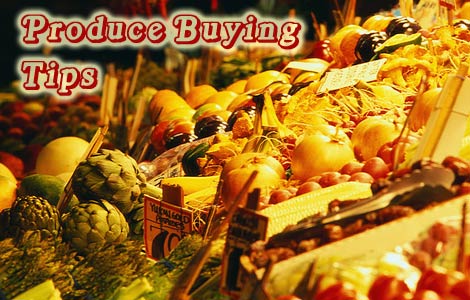
Wow, it's been four months since we've run an article in our "Produce Buying Tips" series! Well, in today's installment, we want to remind you that our tips don't stop at the grocery store; you want to make sure you store your produce properly once it is at home to keep it fresh for as long as possible. After all, what good is your amazing organic produce going to do you if it goes bad? (That would be some super-expensive compost!)
Since Wendi has a difficult time right now with many motions involving her shoulders and wrists, I've taken over the responsibility of putting our groceries into the refrigerator. (I'm usually the "carry it all into the house" person, and then she likes to put away the refrigerated stuff.) But, wow, who knew so much went into storing vegetables and fruits I had no idea some things required air circulation, while others needed to be kept in sealed bags. Over the years, Wendi has fine tuned a system for keeping our fridge produce as fresh as possible and for maximizing storage time.
Read more: Pure Jeevan's "Produce Buying Tips" Series, #3: Produce Storage