Know Any Literary Animal Lovers?

Hi there PureJeevan readers! We wanted to let you know that Jim's new novel CHROO is available on Amazon. It's a crazy adventure involving a billionaire heiress, her Chihuahua BFF ("Chroo") and a host of human and animal characters. Find out more on Amazon! Here are some links:
April 12, 2008
Today we are doing some Spring cleaning and getting rid of stuff that has been collecting that we don t really need or use. I just finished the bananas (eight of them) and later I ll start eating the oranges that we have. I have plenty of oranges to get me through the day and into tomorrow until we go shopping. I m hopeful that there will be cantaloupes at the food co-op tomorrow. It would be fun to have a cantaloupe day!
How many days do I have left? I guess three? Overall, it hasn t really been all that difficult.

 Here it is: Putting it all together. Here you'll see what we use for our taco shells and how we build up our taco. Quite often, we also make a raw sour creme using cashew nuts and lemon juice. But, for these tacos, it'll just be meat, salsa, and guac. Enjoy!
EXCITING ANNOUNCEMENT!
Kevin Gianni Wants to Meet
Pittsburgh Raw Foodists This Saturday!
UPDATE: Location is set for my home in the South Hills
Kevin and Annmarie Gianni will be in Pittsburgh for the Steeler's game on Sunday. They'd love to meet Pittsburgh raw foodies while they're here! So, if you can make it to meet up with them, let Wendi Dee know as soon as possible. We'll either be meeting at the East End Food Coop (if I can reserve the space at the last minute) or at my home (South Hills/Brentwood). Please respond by Friday at 5:00 p.m. about your availablity.
All this week on the Pure Jeevan blog, we'll be focusing on diabetes and the movement to naturally reverse it. We're working up to April 25th (my birthday!), which has been selected as the official Reversing Diabetes Naturally Day.
A warm, intelligent, and loving individual named Dr. Gabriel Cousens has been doing ground-breaking work and research on diabetes and diet. What he has found is so surprising that many people dismiss what he is saying, believing it to be false. But, I (along with many others in the natural health movement) am here to tell you that what Dr. Cousens has discovered is TRUE! You probably already know what he has discovered, of course: a change in diet (particulary including raw foods) can reverse diabetes!
Dr. Cousens did a small study on some diabetic individuals, documenting his work and findings. The resulting documentary is remarkable. We hosted a viewing of the movie at our home and the room was packed. Everyone sat silently, absorbing the truth of what they were seeing: diet CAN make a difference in a disease that is thought to be permanent and debilitating. Many of us had tears silently streaming down our faces, touched by the moving stories that were shared in the documentary. We were filled with a sense of excitement that there IS hope for those with diabetes!
Read more: Our Focus This Week: Reversing Diabetes Naturally

Hi everyone. Did you miss me on Friday? Was your entire day absolutely hinging on evaluating the quality of the raw salad dressing recipe that you very rightly expected to see demonstrated right here? ... and then I posted nothing at all! Well, missing one day isn't so bad, really. I think it's the first one I've missed since Wendi stepped away from the blog temporarily. Anyone want to guess what happened? ... Yep, a nasty case of the flu took me down!?
O, my raw friends, I thought I was a goner Friday -- thought for sure I had th' deadly swine. But, being the resilient, nearly infallible raw foodie that I am, I totally kicked it's porcine rear end, and am now supercharged and ready to rock and roll once again here on Pure Jeevan's blog!
Read more: One for Lucy: Raw Thai Coconut Curry Salad Dressing!
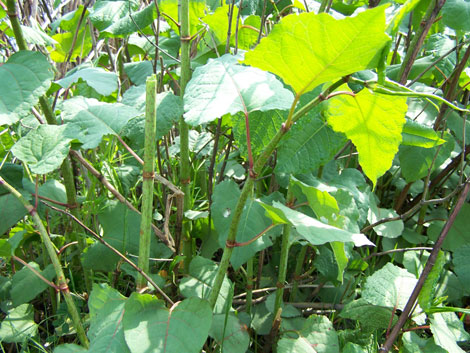
Jim here... Wow, it's Monday, April 27! Let's do something different today: Let's celebrate Monday instead of bemoaning this day that represents the taditional start of the dreaded work week. Why? Because it's our sincere hope that whatever you do in your work week is a labor of love. And, if you're not quite there yet, then celebrate the fact that you WILL be there sometime soon. For us, it means another week of working to inspire you to achieve optimal health -- and that's not "work" at all; it's actually FUN!
So, without further adieu, let's jump into this week's fun. Our good friends Melissa and Dave Sokulski have launched a site recently called FoodUnderFoot ("unleash the energy of wild edibles"). Even in it's young seedling state, I think it's already a fascinating site, and promises to become an encyclopedic web destination for anyone interested in foraging wild edibles. So, check them out for some informative info and valuable freebies, too!

Welcome to the very first Take the Time Tuesday entry! What's Take the Time Tuesday, you may ask? Well, it's a time to meet someone special. Each Tuesday we'll introduce you to an individual or business we think might be of interest to you. So, who's in the spotlight for this very first Take the Time Tuesday entry? Pure Jeevan, of course!
Take the Time to Meet...

What a fun weekend we'll be having! We leave later today to visit some friends in Virginia. Sweet little Rhia (a niece's daughter) will be turning one year old and there will be a huge party for her. I'll be wearing a sari, there will be lots of Indian food to tempt me back to the cooked side of life (but, never fear, I am strong!), and we'll be staying up very late enjoying the party Saturday evening.
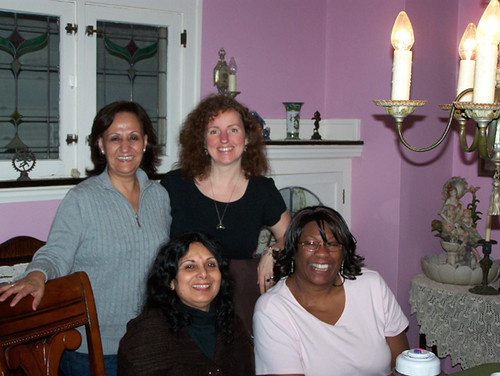
Mohtarama, Wendi, Mamta, Deborah

Thank you, thank you, thank you! Today for Thankful Thursday, we wanted to say a special THANK YOU to our readers. It means so much to us that you come to visit our blog. With every new comment (both here on the blog and through email) it fills us with great happiness!
Is there something you'd like to see more of here on our blog? Something you'd like us to discuss? We know you are looking for more recipes, since you've told us (be sure to check out our recent posts where we've linked to some fantastic sites offering recipes!). What else would you like to read about or have us share with you?
***** DISCLAIMER: As with all of our posts here at Pure Jeevan, and particularly those coming up over the next week and a half (which will all be tagged with a new term, "Nadi Balance"), please refer to the disclaimer that runs at the bottom of all Pure Jeevan Pages. Wendi and Jim are health researchers, educators, and extreme self-experimenters; not doctors. ******
Nadi Balance: Part III
 To summarize yesterday's post, even though this sounds dramatic, the truth is: Wendi was dying. The first doctor essentially sent her home saying there was nothing wrong. The second doctor confirmed she had Lyme disease, but was too late for his method of healing, since the Lyme had already become chronic at that point. He could only offer understanding of her situation and a trial and error method of conventional medications, which rarely (if ever) heal Lyme patients. A supplement that many raw nutrition gurus recommend as essential to health for all people was actually putting Wendi's body, already struggling with Lyme bacteria, into an extreme state of distress. And finally, our own knowledge of health, diet, and healing (even though extensive and accumulated over 30 years) wasn't adequate for healing Wendi's body of Lyme, either.
Over the weekend, we attended a fairy festival in Eugene, OR, called Faerieworlds . ?It was great fun -- loads and loads of interesting shops, festival-goers in costumes ranging in complexity from simple fairy ears to full-on ensembles, and some spectacular tribal bands on the main stage all day long.
What was unexpected, though, was seeing not just one (which, alone, would have been impressive), but *two* food carts dedicated to raw foods. ?The first was called Luminescent Foods:
