Know Any Literary Animal Lovers?

Hi there PureJeevan readers! We wanted to let you know that Jim's new novel CHROO is available on Amazon. It's a crazy adventure involving a billionaire heiress, her Chihuahua BFF ("Chroo") and a host of human and animal characters. Find out more on Amazon! Here are some links:

Wendi tells a funny story sometimes about a woman she'd met who was considering undergoing gastric bypass surgery to help her lose weight. When Wendi asked the woman whether she'd consider changing her diet to a raw foods regimen, she responded with something like, "Oh, no, that's too radical."
This is really what it's come to in society; having part of your digestive system surgically altered (in a profound, irreversible, dangerous, and invasive way) is no more than some nonchalant, consequence-free elective decision ... while eating more salads is viewed as "radical."

In Part 5 of this 5-Part series, Wendi talks with Leela Mata about meditation and diet. After discussing what meditation is and why people practice it, Mata Ji talks about diet and its effects on the mind. She then gives a brief explanation of how to meditate for those who are new to the practice, and demonstrates how to use a simple mantra (word or phrase) to aid in entering a meditative state.
I have a need for hot food in winter to feel warm.
We hear this comment a lot from those trying to lose weight. Some joke that they thought their excess body fat would be keeping them warm, but they're still feeling cold and needing hot food in the winter months.
In the past, we've talked about reasons what's going on in the body when hot foods are consumed. Understanding this will help you realize that hot foods are actually not very good for our bodies. When we consume very hot foods, that heat is then inside our bodies, next to vital organs, while the body needs to maintain a temperature around 98.6 degrees. When we have temperatures higher than that right next to our vital organs, it must quickly work to remove that excess heat. It's the removal of this excess heat that causes us to feel warm. It's our bodies trying to stay in a healthy state. We are actually putting our bodies under stress when we do this (the same holds true for eating overly cold foods, like frozen desserts and icy drinks).
This experiment isn't looking so great, right now. I'm gaining weight.

I've cut fat out of my diet until my evening meal. Here's what I've eaten over the past few days:

End of day 4:
Yesterday I decided to go ahead and consume what my body was telling me it wanted: cooked, fermented rice and lentil pancakes. Well, the restaurant nearby that makes the Uthappam doesn't serve them until 5pm and it was lunch time. So, I ordered the simpler, steamed, fermented rice and lentil patties called Idli.

Jim here with another installment of Weird Wednesday...
Throughout the year, I go through various phases of fruit preferences. Right now, it's citrus. I eat probably four large grapefruits per day (dark reds). The darker the red the better, IMHO. I can get quite disappointed when the grapefruits are listed as "ruby red" but turn out to be just regular pink ones. I've noticed that the ones I like the most have an orangish tint to them, as though they've been left to ripen on the bush a little too long. Also, the best ones I've had this year have been from Texas. So, find yourself some burnt-looking Texan grapefruits & enjoy the blood-red bitter-sweetness!
Read more: If Oranges Smell So Darned Good to You... Buy Some!
All this week we're continuing to feature a variety of answers to the question "Are Raw Foodists Crazy " from various friends of Pure Jeevan. If you're just now tuning in, please read the back story and introduction to this, as posted on Monday.But, for now, let's continue with posting the rest of the excellent responses sent in! Enjoy!! :-)

Jim here... An unusual occurrence prompted this post, and I'm unsure as to whether it's significant. I've talked about some of my favorite non-raw items before -- things that were tough to leave behind as I embarked upon this raw foods journey. I think I covered pizza in a relatively recent post.
Corn chips were another. In fact, after Wendi went 100% raw and I more or less began to follow her dietary choices, I clung to corn chips for dear life for quite a long time. I began eating a LOT of salsa in those days. Sometimes, that would be all I'd eat for lunch -- just an entire jar of salsa and a bag of corn chips (though, by then, I'd at least usually buy the organic ones and, quite often, a baked variety of chips as well).
When I finally decided I'd be better off transitioning to an all raw lifestyle, I figured my love affair with corn chips had come to an end. Farewell beautiful chips, I thought. I'll never forget our delicious crunchy time together. And that was that. I never looked back.
But then, at a local raw foods pot luck, I met a raw chef who had more or less perfected a raw corn chip recipe. Could it be , I thought. Has this delicacy returned to me after all, as though via some sweet culinary destiny? Ahh, my friends, that was a glorious day. Chips and salsa had returned to me in an enlightened raw form. I could enjoy them once again, guilt free. And enjoy them I did -- usually using a local shop's "Peruvian Purple Corn" (a living, sproutable, dried corn product).
Alas, fate stepped in once again. "Thou may partake of these crisps any time thou wishest," fate boomed. "Yet, in order to do so, thou must prepare them thine self using thine Vitamix and requiring an enormous flax-sticky mess with extended clean-up time, and thou must have parchment paper available at all times, and thou must exercise great care and patience in using your Excalibur, for these chips must dry for many an hour before ready."
Yeah, it was a bit of a chore to produce them. So, as the novelty of chip making and eating wore off, I slowly decreased the frequency of going through the messy, time-consuming hassle of preparing them. Until yesterday, it had been literally months since I made a batch. But... we'd ordered a few pounds of the corn from Natural Zing lately, and I found myself with some extra time the other night. So...
Now, I'm going to pause for a minute for a tangent on digestion. I know a great majority of people, it seems, complain of various digestive disorders. As a result, we have many raw foodie specialists schooled in the nuances of food combining. Oddly, I never paid much attention to these discussions, nor offered input on these matters, because they simply weren't relevant to me.
In fact, I likened my own digestive system to some kind of nuclear powered garbage disposal. It didn't matter what I ate; digestion wasn't a problem for me. So, for example, I'd routinely finish off heavy meals, and then follow them with a huge slice of juicy watermelon (a major no-no according to common wisdom). It just never bothered me.I always joked that, even though I'd been raw for ages, I could still probably go eat a Big Mac (not that I would) and be unaffected by it.
So powerful was my stomach acid that, admittedly, I sometimes privately *worried* whether this might mean something was wrong with me. I mean, shouldn't some of the things I was eating make me sick? Was it "good" to not be made sick by what is generally regarded as poor food combining choices? Do people commonly suffer from problems of efficiency as well as deficiency ? I still do not really know the answer to these questions, and suspect the answer is rather complicated, anyway. Fortunately, it doesn't matter now because...
Something finally made me sick!? I'm laughing now about that, but I spent most of the evening in terrible stomach pain after having over-indulged in some of those (in)famous raw purple corn chips.
So, what happened ? That's an interesting question for me. Here are some possibilities: (1) Perhaps my hyper-active digestive system *was* in fact a problem, and now it's beginning to normalize. Perhaps, had I been healthier all along, I would have been made sick by some of my food choices, but now my health is improving!? (2) Perhaps it's a fluke and I simply shouldn't have eaten mass quantities of corn and flax so late at night. (3) Perhaps my body is improving in its ability to communicate with me, and/or that I'm getting better at listening, and that the message here is that corn is not something my body gains nourishment from -- at least, not in this dried-reprocessed-redried form. After all, some leading raw food authorities, like Gabriel Cousens, aren't fans of corn (even fresh corn!).
Oh sure, there may be other explanations (e.g., "a bad batch of corn"). But, I'm actually most interested in #3, above. Even though this is an extreme example (more intense than it needed to be), I'd like to think that I'm getting better at knowing what I'm being nourished from and what I am not. I'd like to think that this is a latent sense that can be developed, much like our ability to know things by feeling and intuition rather via pure rationality all the time.
But, with food, I think it's a matter of inventorying your physical sensations head to toe, and also as a whole. How is the food you're eating making you feel? Do you feel satisfied or still hungry? Do you feel light or is the food sitting kind of heavily? Do you feel energized or dragged down? How's your mental clarity? Do you feel spacey or more grounded? Do you feel noticeably happier or more sad than before? How are all of these things mapping out over time? Is your weight moving in a positive direction for you? Are your illnesses improving? Food is medicine, after all; it has all of these effects and many more!
For now, I think I can safely check purple corn off of my own personal list of foods that make me feel good. I suspect my old assertion about "being able to eat a Big Mac without any side effects" no longer applies -- and maybe this is a good thing. I think perhaps it signals some progress in my journey toward optimal health.
In any case, I think this kind of purposeful introspection is healthy, and something we should all strive to do more often.How about you? Had any similar experiences? What have you learned from them?
Original Comments
Below, we have included the original comments from this blog post. Additional comments may be made via Facebook, below.
On April 15, 2009, wrote:


It's not much longer before I'll be serving all kinds of delicious foods to those attending the 3-Day Raw Food Spiritual Ashram Retreat! I've been working on the recipes and taking pictures to include with the bound materials going home with everyone attending the retreat.
What have we been doing lately? Well, one of the highlights would be getting the first and second stages of the All Raw Directory up and running. We have many different stages planned for the future, enhancing the directory as time permits. It's a pretty exciting project, so be sure to become a member of the directory and continually contribute to its growth. It's a fantastic resource for all of us!
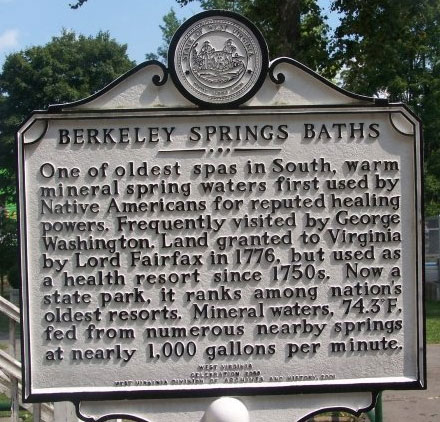
Hi everyone! ?We wanted to announce plans for a raw food picnic / potluck / meetup next Saturday, September 19th, at noon, in Berkeley Springs, WV at Berkeley Springs State Park (link to map), a wonderful natural healing destination about half-way between Pittsburgh and D.C. Wendi was just talking with Rawbin from the Capital Area (D.C.) raw food meetup and we all thought that a combo Pittsburgh / D.C. meetup might be fun. So, we all planned something right on the spot!
Berkeley Springs is a really nice (but small) public park in West Virginia about half-way between Pittsburgh and D.C.I traveled there a few weeks back with Melissa, Dave, Ella, and Bethany on the way to Raw Spririt East. We had a super time soaking in the spring water and checking out all of the cool alternative shops. (I did a write-up here on Pure Jeevan a few weeks ago and posted some video of the place).