Know Any Literary Animal Lovers?

Hi there PureJeevan readers! We wanted to let you know that Jim's new novel CHROO is available on Amazon. It's a crazy adventure involving a billionaire heiress, her Chihuahua BFF ("Chroo") and a host of human and animal characters. Find out more on Amazon! Here are some links:
Sad Update: Our friend Michelle Pierson, interviewed here, passed away in July 2016 after a kayak accident in Hawaii.
We've spent the past three days focusing on the core subject of critical importance in the raw food lifestyle -- the FOOD! However, as most people will agree, it's also about so more than "just the food." Here at Pure Jeevan, we've always made a point to stress the holistic nature of our philosophy (mind, body, spirit, emotions), and we'll certainly continue to do that.
The Raw Spirit Festivals also do a magnificent job of illustrating this point. While they do offer *spectacular* raw foods and presentations centered around raw foods, you'll also find music, dancing, yoga, and other uplifting recreational activities all day long!


Our friend Kevin Gianni is turning 30 this weekend. When you do the math, that means he was born December 7, 1978, which was pretty much the apex of the disco era in America.It's no wonder the man struck the above pose in our back yard; dude's got the Village People in his blood! So, it would be really nice if you boogied down to his site, www.RenegadeHealth.com, and wished him a happy birthday. He's also on Twitter -- cast a shoutout to: @KevinGianni.
Read more: Hey, What Happened to the "Know Your Food" Series?

Today is Wendi's Birthday, so please join me in wishing her all the best for the coming year! Since this was our first year in Portland, just an hour-and-a-half's drive to the Pacific, I'd known for ages what we were going to do to celebrate Wendi's birthday -- a picnic at the beach, of course!
A few days ago, the weather reports for the central Oregon coast cities unanimously agreed: Rain! ?But, after living here for a few months, one learns that a forecast of rain *never* means that it's going to rain all day long. Rather, it just means that it'll likely rain at some point, or at many points, in a given day. The rest of the time, it could very well be perfectly sunny outside!
Read more: What Are Negative Ions, And Are They Beneficial to Human Health?

Today I am thankful for the small things in life that often go overlooked. I'm thankful Jim made some sweet dessert last night when I wanted it. I'm thankful KDcat is having a fun time with some of her friends right now. I'm thankful that: the trash collectors just picked up the garbage (we don't produce a whole lot since going raw); the older woman across the street has started smiling and being nice to KDcat; the sun is out and the snow is melting; I have another computer job to work on for some income.

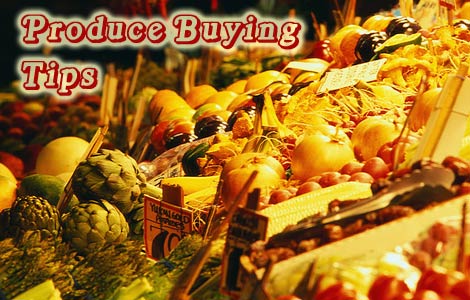
Jim here... I'd like to mainly talk about organics today, but thought I'd wrap that subject into a longer, rather quirky piece on ranking produce on some sort of a scale that would indicate how awesome (or awful) it is. See what you think...
Have you ever thought of arranging produce into a sort of "heirarchy of quality"? Well, I'm not going to attempt to do that here, but I would like to discuss the concept for a moment in order to at least explain what I'm getting at. While I've not yet attempted to do this exercise, I nonetheless occasionally envision a large chart or something that conveys my feelings about how I personally rank the quality of fruits and vegetables I put into my body. This all probably sounds vague, so let me share some examples.
Read more: Pure Jeevan's "Produce Buying Tips" Series, #2: Buying Organics
Beginning today and running all through next week (and even spilling into the following week!), we'll be running videos from the Raw Spirit Festival (RSF East 2009) held in Upper Marlboro, MD, last weekend. If you've never attended a RSF event, you absolutely must. They're the best ever!

Below are two variations of the same issue: I'm too tired and don't have enough time to be healthy. The irony, of course, is that the more raw foods you eat, the more energy (and therefore time) you have!
By the end of the day I am so exhausted I'd rather not eat than go in the kitchen & try making something raw.How do I stay raw with all the food prep and my lack of time and life's pressures

Welcome to Pure Jeevan's "Juice-a-Day Jamboree"! You're probably wondering, "What IS Pure Jeevan's Juice-a-Day Jamboree, anyway "? Well, it's simple:? It's an ongoing, informal, loosely organized "event" centered around juicing. Think of it as an interim step between (1) any kind of diet or lifestyle, from SAD to full-on raw, that does not include much regular juice, and (2) an all out juice feast where that's ALL you'd consume for a period of time. Basically, we're saying, "Let's just make this simple and accessible for everyone. Let's just make a goal to simply drink more fresh juice!"
Wendi and I have been thinking a lot about incorporating more juicing into our lives lately (which is something we've done off and on over the years but never stuck with long-term). One thing holding us back from doing it more often is the time requirement. When we juice, it usually takes a half hour or so from start to finish. I know it doesn't seem that complicated, but I suppose it's just the whole process of setting up the juicer, washing and peeling the produce, juicing it, setting the juice aside while we clean the juicer, doling out the juice into glasses, cleaning up the mini-mess that makes, and then sitting down to actually enjoy the juice.
Can you believe it's mid-October already ? Here in Pittsburgh, for those lucky few who may have fig trees, that means harvest time! Well, almost. Take a look at this video we made about figs!
As stated in the video, we did a previous installment on figs in our Know Your Food series (which will definitely be returning once we finally sell our home and become full-time raw food inspiration providers!). Please visit that link for nutrition and other information on figs.

A while ago, I received an email asking whether I had any thoughts on how old or young a person needs to be in order to benefit from a raw food diet. Yes. Yes, I do have thoughts on that! Lots of thoughts! ... Here goes:
The easy answer, of course, is that people of ALL ages can (and should) benefit from raw foods. I can assert with confidence that, for most people, increasing your intake of raw fruits and vegetables will likely bring about positive changes to your health, regardless of your age, dietary habits, or current state of health. (Naturally, reducing or eliminating the "bad" things is also paramount.)

Today we welcome an up-and-coming raw chef, Sam, from DebbieDoesRaw for the first of Pure Jeevan's new Makin' It Monday "Guest Raw Chef" editions. Sam will demonstrate how to make a simple Peach Pudding, which she tells us is the invention of her very good friend Anthony from Rawmodel.com. We think Sam did a super job! Don't you ! Sam, you're welcome to guest-host on our blog any time you like.
Read more: Makin' It Monday "Guest Raw Chef" Edition Welcomes Sam!