Know Any Literary Animal Lovers?

Hi there PureJeevan readers! We wanted to let you know that Jim's new novel CHROO is available on Amazon. It's a crazy adventure involving a billionaire heiress, her Chihuahua BFF ("Chroo") and a host of human and animal characters. Find out more on Amazon! Here are some links:
Jim here... Whether you've had the pleasure of knowing Wendi for decades as I have, or have only recently met her, I think you'll be absolutely stunned by this inspirational video. It demonstrates, in undeniable pictures, the power of raw and living foods -- and not only the physical healing that takes place when you adopt this lifestyle, but also the height to which this lifestyle helps lift your spirit.
Read more: Wendi Dee's Raw Food Weight Loss Transformation Video

Pizza Delivery at Pure Jeevan s home ! Yep, and it s not raw pizza, either. Maybe sometime in the not-so-distant future we ll be able to order delicious, life-giving raw pizzas for delivery to our home, but that time hasn t come. Even if it was possible today, I have a feeling we d still be ordering the greasy pizza that s going to be arriving here later today.
 You see, today is KDcat s 14th birthday. As much as she knows about health, nutrition, and the harms of consuming dairy, she has made a decision that she wants to order a pizza for her birthday and have it delivered. When she told me of her birthday wish, a very big part of me wanted to review how unhealthy such food is, but the other part didn t want to bring guilt to her decision of eating pizza on her birthday. I know she completely understands about foods and health, especially about how harmful dairy can be for her body. She was determined to have pizza, so I d rather she enjoy it than to eat while feeling guilty about it the entire time.
This recipe is an adaptation of one from "Rawvolution", by Matt Amsden. As of this point in time, "Rawvolution" is my favorite recipe book. Most of the recipes are high in sodium and fat, but very satisfying for those who are used to eating cooked foods.
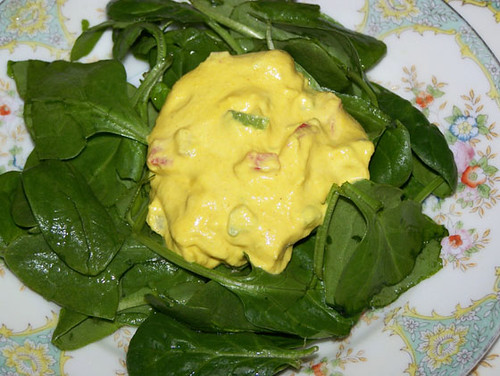
Egg-less Egg Salad

Last night I dreamed of meandering through an unfamiliar cityscape, following some lonely sidewalk next to a river at night, feeling particularly sad and miserable beneath dim yellow street lights. I wore a black suit, carried a highball glass, and was absolutely drunk!
Having crossed the river, I soon realized (even in my dream-drunken state) that I'd been wandering aimlessly. Feeling rather pathetic, I decided to walk back across the river and sober up in a casino that I knew was there. Drunk and depressed, I figured I'd just sit in front of a slot machine for a few hours.

?
In this video, Wendi talks with Leela Mata about the different branches of yoga and how diet and raw foods affect the practice of yoga. Of all the branches of yoga, Hatha Yoga is the most popular in the United States.Mata Ji explains that it is through the practice of Hatha Yoga, strengthening the body through the asanas (poses), that you awaken on a deeper level. You will become more open to connecting with your spiritual nature, to realizing more about yourself.
Short post today... We're currently dealing w with a pesky kitchen drain issue that's wreaking havoc in our household. Fortunately, a very talented and power-tool-weilding local plumber just fixed the problem. In the process, he seems to have applied those power tools to our bank account -- $175 for less than one hour's work!? (Ouch!) And the kicker is that the current state of our kitchen is "absolutely atrocious."? I'm serious... we're at like DefCon 5 in terms of the disastrous nature of that room -- and as you well know, for a raw household, that's probably 10 times more frustrating than it is for others. (I smell a whole post coming soon on this topic ...)
Today, we mainly just wanted to say that, at the end of our post yesterday, we briefly asked what you would like to see more of here at Pure Jeevan. We have received some great comments and emails in return, and have decided to devote tomorrow's post to responding to / addressing some of the suggestions we received. So, if you have any further thoughts to share about raw foods content you'd like to see more or less of, please let us know either by commenting below, or by email. Wendi is at WendiDee [at] Pure Jeevan.com. Jim is at Rawdiant [at] gmail.com.
This experiment isn't looking so great, right now. I'm gaining weight.

I've cut fat out of my diet until my evening meal. Here's what I've eaten over the past few days:
Some of you who are new to raw foods may be happy to learn that there are festivals for individuals interested in the raw foods lifestyle! They are a fantastic opportunity to meet like-minded friends. For those of you who attended the Raw Spirit Festival in 2008, seeing images from that event may stir the magical memories you collected while there.
Below is part one of a two-part guest piece by Rawbin Anderson, in which she recounts her 2008 Raw Spirit Festival J.O.B. experiences of working in the kitchen. Rawbin is now the Raw Spirit Festival East Coast Manager and can be reached at Rawbin [at] rawspirit.com.
?
Read more: A J.O.B. (Joy of Being) at the Raw Spirit Festival (Part 1 of 2)

There is a certain irony that takes place when you launch a raw foods web site because, no matter how much you love and believe in what you do, no matter how solid the proof may be that the information you're providing is true and accurate, no matter how clearly it can be demonstrated by analyses of blood tests or tons of "before and after" photos that this lifestyle heals the human body, you're still pretty much bound by legal best practices to include a full disclaimer on your site. And, as much as you just write it once and kind of forget about it, it's always there. For practical reasons, of course we understand all of that. But beyond all of that, there's an implied message that "only a medical doctor" really knows what's best for you.
Well, in fact, we DO recommend working with a competent health professional. But what we do not endorse here is simply accepting whatever that professional has to say without question. So, the operative word would be "competent" in that recommendation.

Today we'd like to introduce you to one of the sweetest, most creative, and passionate raw foodists we know. She's petite, pretty, pleasant, powerful! She continually shares her knowledge about the raw food lifestyle with others and educates many individuals about our human rights when it comes to the foods we grow and consume. She's up on the latest regulatory activities relating to health and diet issues going on within the US government, and speaks out when our rights are in jeopardy of being taken away.
Take the Time to Meet... Rhio!

What's Valentine's Day without a little "Smooth Love," right ??Here's how we created this simple, creamy delicious, smoothie:
- Start with the water and flesh of one young coconut. We had one left over, still nice and fresh, from our recent trip to the Florida Keys (more raw food videos and posts coming soon from that trip!).
- Add three to four oranges, peeled (and de-seeded if necessary)
- Add two to three large bananas
- Add 12 ounces of frozen strawberries (or to taste)
- Add a small handful of raw almonds
- Add a bit of raw agave nectar or a few dates, if you have them.
Blend in your high-speed blender until smooth ... and share with a loved one! Happy Valentines Day, everyone!