Know Any Literary Animal Lovers?

Hi there PureJeevan readers! We wanted to let you know that Jim's new novel CHROO is available on Amazon. It's a crazy adventure involving a billionaire heiress, her Chihuahua BFF ("Chroo") and a host of human and animal characters. Find out more on Amazon! Here are some links:

I realize we keep teasing everyone with vague yet bold talk of some new rawsome health frontier we're pursuing. We'll definitely get to discussing all of that later this year sometime. ?In the mean time, though, we may occasionally run an article or two that reflects a bit of our experimentation.
Lately, Wendi and I have been drawn to a similar style of eating -- although for different reasons. ?You see, we've both been on a real kick to simplify lately. For Wendi, this reflects more of an intuitive response to her diet. For me, it's more of a response to all of the experimentation I spoke of.

Today we're running another installment of our "Thankful Thursday" series. This time, we're especially thankful ... for YOU, the Pure Jeevan family! Who'd have thought, less than two years ago when launching this blog, that we'd make thousands of connections with others looking for inspiration on their raw food journey !!? It's simply astounding -- and we're still actually "just getting started."
As always, we're thrilled to provide information and inspiration. It's counter-intuitive, when you really consider it; "raw foods" may be just two simple words, yet there always seems to be more and more to talk about, more people to interview, more success stories to highlight, more recipes to contribute, more tips and tricks to share, more personal reflections to offer.
Read more: Thankful Thursday: Pure Jeevan Asks for Your Help!

This is Part II of a two-parter on raw food restaurants. Yesterday, we listed a half-dozen challenges that one might face when opening a raw restaurant. Today, we're focusing in on the more enjoyable side -- the potential advantages that opening raw restaurants offer over their cooked-food counterparts.
Let's dive into it... Here are six things we believe are advantages!
Read more: Some Thoughts on Opening a Raw Foods Restaurant -- Part II of II!
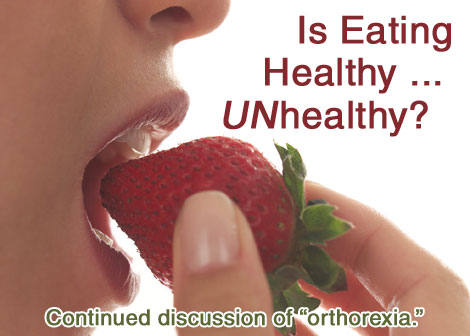
We ve covered this in the past here on the Pure Jeevan blog, but it s something that s being discussed again online in major news feeds. Since many people read and learn from such sources, especially Yahoo! News, there is potential for a lot of damage and misinformation to be ?learned? by many individuals. In a recent article on Yahoo!, we re informed in the ?Health Experts Main/HealthLine? category that consuming only healthy foods is an eating disorder. Those who desire a healthy body by consuming healthy (as opposed to unhealthy) foods are labeled as having ?orthorexia,? a supposed eating disorder that can be cured with cognitive behavioral therapy.
What does that mean, really? If we desire a healthy body, and all the vibrant energy that comes with it, then we are psychologically unbalanced? [Sarcasm to follow ] However, if we eat those same healthy foods, but also consume things like Kentucky Fried Chicken, McDonald s burgers, Wendy s French fries, or Skittles candies then we are balanced individuals and deemed psychologically healthy? What if we consume no healthy foods, preferring instead the Standard American Diet of fast foods, heavy meats and gravies, that includes few fruits or vegetables? Well, that s considered normal and of no concern in the least bit ? there is no eating disorder when consuming a diet like that. You can require caffeinated beverages to have enough energy to get through the day and that s normal, too. Die of a heart attack from such a diet and that s normal, too.
Read more: Is Eating Healthy Unhealthy? Orthorexia Discussion
Do you need to be 100% raw to release excess weight and regain your health There's no difinitive answer for that question because we are all unique. Sure, our bodies function pretty much the same way, but there are still enough differences that make it difficult to answer a question like that for it to be true for every single individual.
Most of us have heard of, or know, someone who doesn't eat a healthy diet, who smokes cigarettes and/or drinks alcohol, doesn't get enough rest, and also lives a stressful life---yet that person still has a healthy body and is over 80 years old. People like that seem to have resiliency built into their genes. Sure, who knows how long a person with such resilient genes could live or how vibrant a life that person could enjoy with a healtheir lifestyle. But, the fact remains that it seems no matter what a person's lifestyle is like, if you are born with resilient genes you are pretty much invincible to most illnesses.
A majority of the population isn't born with such impressively hardy genes, however. Most bodies can withstand the stresses of an unhealthy lifestyle until middle age. At that point, however, the body begins to show signs of ill health (excess weight gain, aches and pains, and the start of many diseases such as diabetes or high blood pressure). For a majority of those individuals, some healthy lifestyle changes can make a huge difference. Many individuals regain their health simply by changing their diets to include less fat and more vegetables, and by increasing their amount of exercise. Sure, it's a bit of work to make such changes, but if many people are committed to improving their health those simple changes can make a drastic difference in their lives.

In our Mnemonics for the ?Clean 15? ? Or, ?Conventional? Produce That Tests Lowest for Residual Pesticides blog post last week, we put an asterisk next to "sweet corn" and took it off our list of foods to eat. Even though sweet corn tests relatively low for pesticides, Pure Jeevan still feels the vegetable isn't a safe choice for a healthy diet. There are primarily two reasons for our decision to completely remove corn from our diets. First, of all the vegetables that have undergone genetic modification (GM), GM corn is one that has been proven to cross-pollinate with non-GM corn. Second, since corn is so plentiful and easy to grow, it has been modified to become all sorts of flavors, sweeteners, fillers, etc., in food products and many individuals have developed sensitivities to it.
Read more: Is Corn Safe to Eat? No, and Neither is Most Papaya!
As you read this, calming violins open a familiar tune and that sweet mellifluous voice of Etta James soon enters your mind: "At laaaaaaaaassssst. My looooove has come along....." Great tune, right ! Well, it's appropriate here because, at LAST, here's the long-awaited Episode #9 of Know Your Food! That's right, friends, today we're going to explore the wondrous FIG in all of its sweet, soothing glory. One taste and happiness blossoms within you, washing over your entire being... We only wish that the following video was as professionally rendered as this paragraph of evocative prose... (but, we promise we'll get there one day).
In case you missed the actual nutrition info in that video (what little there was, LOL), here's the transcript:
Well, we've finally done it -- made the move westward to our new hometown, Portland, Oregon! It's been nothing but the kind of high adventure befitting such a move, not the least of which was a wheel literally flying off of our car while driving (don't worry, no one was hurt) just days before we were scheduled to leave. And, of course, everything during the past few weeks wound up costing about 10x what we'd planned. ?But, we're here! ?And, we're beginning to get settled.
As always, we've got some great things on deck for this blog in the coming near term, including many interesting articles and some fun video experiments we did involving live blood and electrical grounding. We also have some new exciting web site features to roll out, one completely new raw food site to unleash upon the raw foods community, and a whole new Pure Jeevan web site design to launch. For now, though, we'll probably remain off-line for a bit longer, as we organize and unpack things.
Our Pittsburgh home remains for sale. Naturally, we'd hoped to have sold it before making this move. But, we realized that we didn't necessarily have to wait for it to sell in order to move to Portland. So, we took the great leap of faith and moved here without that step completed. (It'll certainly be a happy day when that lovely home finds its new owners and caretakers!).
Read more: Greetings from PDX, Pure Jeevan's New HQ!! (Post #756)

Wow, who knew so much work goes into meeting up with people all across the country ! It's going to all be worth it, though, to meet so many of you!! Below are the definite meetups happening. There are more being planned that we'll share once things are finalized. If you don't see your town/city here, but it's on our list of places we'll be visiting, maybe you'd like to help us put together a little gathering If so, just let us know! We'll be updating later next week with a more finalized plan for the trip and various meetups taking place.
Read more: Meetups Across the Country: Want to Meet Wendi in Your Town/City?
As promised, here's our interview with Leigh Crizoe, Rhio's partner and co-host of the Hooked on Raw Internet radio program. We think you'll love this interview, as it shows another perspective on raw foods and also gets into an interesting detox program that you may not have heard about. After 9/11, the New York City residents and workers close to ground zero breathed in highly toxic particulate matter for a long span of time. Rhio and Leigh live just blocks from the site, and both experienced respiratory troubles as a result -- especially Leigh, whose sweat began to stain his white t-shirts black! (Yep, you read that right: You'd actually sweat black! This happened to many ground zero workers, in fact.)
Who had the detox answer for them ?... Would you believe L. Ron Hubbard and Tom Cruise ? Apparently, detoxification was an area of high interest to Hubbard, the founder of scientology, who developed an intense regimen of saunas, vitamin supplements, and oils, all specifically for the purpose of ridding the body of toxins. According to Leigh, Tom Cruise personally funded and co-founded the New York program (which has proven highly successful!) after 9/11. (The official site for that detox program is here.)? Super-interesting stuff -- be sure to watch the video.
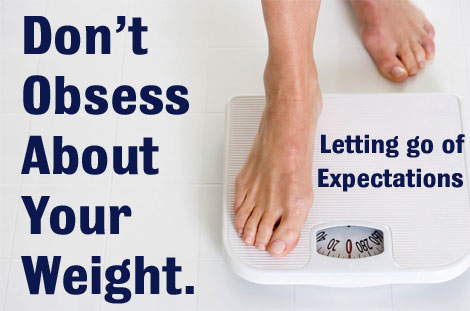
Jim here... While browsing a thrift shop for a smaller belt yesterday, I was reminded to make a few quick points here at our blog about the raw food diet and weight loss.
Many people are initially drawn to raw foods for the weight loss aspect of this lifestyle. Where most other diets ultimately fail in this area, raw foods usually brings wild success. So, for anyone considering a raw foods diet specifically for the purpose of weight loss, here are a few quick tips centered around the theme of "letting go of your expectations."? You may be wondering, "Why should I let go of my expectations for weight loss " Well, here are two big reasons:
Read more: Letting Go of Expectations For Raw Food Weight Loss