Know Any Literary Animal Lovers?

Hi there PureJeevan readers! We wanted to let you know that Jim's new novel CHROO is available on Amazon. It's a crazy adventure involving a billionaire heiress, her Chihuahua BFF ("Chroo") and a host of human and animal characters. Find out more on Amazon! Here are some links:
***** DISCLAIMER: As with all of our posts here at Pure Jeevan, and particularly those tagged with a new term, "Nadi Balance, please refer to the disclaimer that runs at the bottom of all Pure Jeevan pages. Wendi and Jim are health researchers, educators, and extreme self-experimenters, not doctors. ******

Yesterday, we talked about live blood being a fantastic indication of overall health and well-being.Wendi's initial live blood review didn't show the extent of the Lyme disease. But, it did show an indication that something was going on (while Jim's blood showed overall health).
Read more: Nadi Balance: Exploring Fats and What Finally Healed Wendi

For my Fun-Filled Friday and this entire weekend, I'm going to do something fun that I rarely get to do. What is it? It's nothing...literally NOTHING! What's the fun in doing nothing? Well, to be honest I think it's impossible to do nothing. If you decide to stay in bed all weekend, doing nothing, you are really doing something--staying in bed all weekend. Right?
So, what will my nothing include? Who knows! That's the beauty of doing nothing---I have no preset plans, no expectations of myself or others, nothing at all! I have lots of things to do, of course, but I'm not doing any of them this weekend (no working on Pure Jeevan activities, no cleaning the house or doing laundry, no working on the computer, no organizing future plans/activities, no fancy meal preparations, etc.).

We're into soft foods and treats these days, because Jim recently had a wisdom tooth extracted (KDcat insists he is less wise for having done so). We've been having a lot of fruit smoothies! I made a big mistake and created a smoothie with a grapefruit for the juicy part (I normally only use oranges). I don't care for grapefruit, because the bitter part just isn't appealing to me. However, I thought for sure that bananas and frozen berries would override the bitter taste of the grapefruit. It didn't, so I added some agave to the mixture and blended it again. Nope--still bitter. So, I asked Jim to taste it (he LOVES grapefruit) and he thought it was fantastic. He consumed the entire pitcher of the bitter concoction.

Jim here...Well, something awful happened today at Pure Jeevan, something utterly shocking to any raw foodie on the planet -- our Vitamix container broke! I know, I know... breathe with me: Deep breath in... deep breath out. There, that's better. It's going to be okay, I just know it!
Here's what happened:? The agitator assembly (the metal part at the bottom that connects to the blades inside the container) wore out. It blew some kind of bearing or something, lost its internal oil, and started making an infernal noise when we blended our morning smoothie. It was pretty clear we'd blended up our last elixir in that container.
This has been floating around the web for a day or two, but for those who haven't seen it, here's former President Bill Clinton talking about his plant-based diet, and what he hopes to gain through it. How amazing to see an *American president* discussing this sort of thing!! Who'd have ever imagined this (considering the strength of the beef and dairy lobbies in this country)?
Stories like this give me hope that the world will become more health conscious -- and will begin to understand that things like irradiation, GMO technology, pesticides, and all of the scary discussion floating around about the "Codex" are all unnatural, unsustainable, and unhealthy for us and for the planet. All you need is love -- and delicious organic foods! Glad to see Bill Clinton advocating this.
Read more: Bill Clinton Shares Details of His Plant-Based Diet, Cites the China Study!
Here it is...the Queen of all Juices! It's cooling, cleansing, light, easy, delicious, pretty, promotes weight loss, energizing, vibrant, and FUN!
Can one simple juice really be so wonderful for your body? Yes!! Following is the recipe, as well as some highlights about the ingredients and why it's so great for your body.
Cooling and Cleansing Juice
(Serves 1)4 medium apples
Let's take a quick look at a few dessert pictures, then compare and contrast, shall we First up is a small slice of some normal pastry:
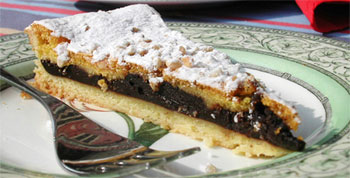
Looks sinful, right It seems to proudly display its bready crust, its gooey chocolate center, some sort of butter-rich top layer coated with lovable little bits and bobs, and a liberal sprinkling of confectioner's sugar to make the whole thing cute as a wintry scene from one of those holiday specials hosted by the claymation likeness of Burl Ives. I'm sure it's delightfully rich, too. A tad small, though, eh ? It's probably all anyone can take of such decadence without worrying about clogged arteries or putting in extra time on the tread mill for the next three days.
All this week we're continuing to feature a variety of answers to the question "Are Raw Foodists Crazy " from various friends of Pure Jeevan. If you're just now tuning in, please read the back story and introduction to this, as posted on Monday.But, for now, let's continue with posting the rest of the excellent responses sent in! Enjoy!! :-)

To keep all of you inspired while we are away, we've asked some
remarkable individuals to share their raw food stories with you. Enjoy!
On this page, we'd like to share some information about vegetable juicers. There are a number of different kinds, and we'll try to offer some background on many of the leading ones. We're affiliates for some, so if you're in the market for one of the ones we discuss, please follow the links we provide (or click the juicer pics) and you'll help support Pure Jeevan. But, either way, we certainly encourage you to consume fresh, delicious, nourishing veggie juices regularly!
The Jay Kordich Juicer -- The PowerGrind
 The PowerGrind Pro is a juicer put out by Jay Kordich, commonly known as the "father of juicing" by many in the raw food / living food world. In fact, our very first juicer was a "JuiceMan" model, purchased back in the early 1990s! But this is an entirely new machine, retooled from the ground up recently. At $289, it's a fairly high-end juicer (as compared with, say, department store models). However, it's certainly got the power and features to back up that level of investment. ?Head on over to the Jay Kordich web site for full details on the latest models.
The Hurom Slow Juicer
 A year or two ago, when we still lived in Pittsburgh, we hosted the Monarch's (Matt & Angela) during one of their speaking tours. I remember Angela firing up their juicer in the morning and I thought (or possibly even said), "Wow, your juicer is broken!" I swore that something was wrong because it didn't sound like anything I'd heard before. But they then told us about what was then the newest juicer on the market -- the Hurom Slow juicer. It's garnered a lot of positive testimonials over the past few years, from quite a lot of juicing enthusiasts. While many of the features are nice, we imagine the the most important potential benefit would be the slower speed, which theoretically means less oxidation, less processing, and thus healthier juice. If we were in the market today, I've no doubt we'd try one of these, too (even at $359)! These juicers are available through our good friends at Natural Zing!

And you thought Apple Cider Vinegar was tough to pin down ? Ever come across the whole fluoride controversy
A Google search on "fluoride" returns 6,300,000 results.A Google search on "fluoride toothpaste" returns 246,000 results.