Know Any Literary Animal Lovers?

Hi there PureJeevan readers! We wanted to let you know that Jim's new novel CHROO is available on Amazon. It's a crazy adventure involving a billionaire heiress, her Chihuahua BFF ("Chroo") and a host of human and animal characters. Find out more on Amazon! Here are some links:

Wow, could this really mark 800 raw food blog posts ! ?We must be obsessive orthorexic raw foodies to have achieved that level of focused health editorial journalism! Post #800 deserves to be something really useful (not that the others aren't or do not deserve this), so we'd like to pass along a fun idea. I guess all of that talk of Donald Trump yesterday got me thinking about making deals. We make deals with others, of course, but I think we also sometimes can make them with ourselves.
I'm so glad to be out of the corporate business world these days, but I did pay attention while there, and perhaps even learned a thing or two. Today's post is related to that in a way. You see, I was once at a sales training seminar when the speaker advised following a "this job / next job" strategy with clients. What that means in business is that, when you're in the middle of one job working for someone -- say, for example, you're a printer working on a brochure for a company -- you would make a point of saying something like, "Hey, this brochure is going great. I was wondering what else is coming in the near term so that we can make sure to be ready for it."
We all know what "greens" are in general. For example, no one questions whether lettuce, kale, spinach, or chard are greens. But on the other hand, all of those items *are* also clearly green in color. With that in mind, what would you make of the following two questions I (Jim) recently pondered -- tagged as "reader questions" so they're easily found in the future by other equally inquisitive people ;-) -- that seem bizarre, but are really quite interesting?
1. Are non-green greens (e.g., purple kale) still considered greens2. Are vegetables with green skins (e.g., cukes, zucchini) considered greens? (After all, they're green!)

Finally, some super news to share!? On Monday, after a l-o-n-g wait, Wendi finally had her appointment with a actual LLMD. (That stands for "Lyme Literate Medical Doctor."? If this and the news of Wendi's Lyme Disease is new to you, check out this post.)
I'll cut straight to the good part: Her prognosis is excellent! Yes, she's still in a world of pain and misery at the moment, but he believes (based on her blood work and her symptoms) that we've caught this early enought to fully eradicate the Lyme. (At least, that's how I understand it. I'm actually not clear on whether Lyme is ever 100% eradicated, or if it's just forced into dormancy or irrelevancy. Perhaps Wendi can clear that point up later.)
Correction: I said "Lenuria" a number of times in this video, but it's actually Lunaria! In any case, we wanted to share some additional description for this plant. Here's a quick paragraph from Wikipedia:
Lunaria is a genus of flowering plants in the family Brassicaceae, native to central and southern Europe. It includes two species, Perennial honesty and Annual honesty. They are widely grown as ornamental plants in gardens, and have become naturalised in many temperate areas away from their native habitat. In the language of flowers, it means Sincerity and Forgetfulness. ...The common name "Honesty" arose in the 16th century, and it may be due to the translucent seed-pods which are like flattened pea-pods and borne on the plant through winter. In South-East Asia, it is called the "Money Plant," and in the United States as "Silver dollars," because its seed pods have the appearance of silver coins.


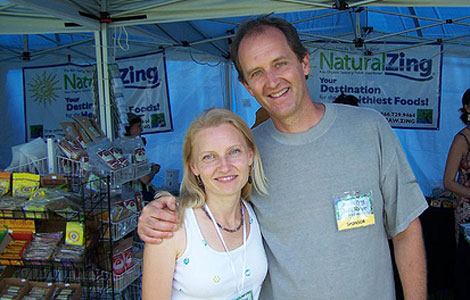
... just a quick interruption of "Crazy Week" to do two things:
1. Congratulate Natural Zing on their 8th year in business!
Wow, what a strange episode we have for you tonight! As you'll see, it was a really bizarre day here at Pure Jeevan. Wendi's out of town with her friends Rawbin and Jeff (owner of NaturalZing) helping NaturalZing with their booth at the Green Festival in Washington, DC. Too bad she's away; she missed opening the mail today and seeing a highly unusual letter from the Department of Homeland Security! The topic? Well, it turns out Pure Jeevan is under governmental surveillance -- and our chief surveillor, one "Larry Ferguson," actually decided to introduce himself and make some comments about our Bananas episode (which we hadn't even released yet!). Sounds highly unusual, I know. But, he was actually doing us a favor. Take a look (vid shows me reading part of his letter, then the banana episode proper):
As you heard, Larry writes: "I believe your viewers deserve to know, for example, that bananas have roughly 100 calories each, are high in Vitamin C, and fiber. You might also want to mention that they contain considerable levels of B6, which is good for metabolic functions as well as nervous and immune systems. B6 also helps you produce antibodies to fight diseases and plays a strong role in brain function and even maintaining hormonal balance. Your body can't store B6, btw, so you need to get it every day. Of course, most people will know already about the great potassium levels in bananas. Potassium is great for controlling blood pressure and certainly reduces risks of heart problems. Bananas also contain manganese, which your viewers probably already know about after your persimmons video."


Our weekend is going to be filled with Spring cleaning. Many may not think of any type of cleaning as fun, but there's something special about Spring cleaning. Maybe it's because when we do Spring cleaning in our home, we tend to make it a family event. When we do things together as a family, even though there may be a little bickering here and there, but for the most part we have fun. There's something truly rewarding about working together as a team for something that is going to benefit everyone.

Continuing with our week of ways to keep a sharp mind, let's focus on the one widely accepted indicator for dementia or alzheimer's: heart disease. If one wants to dramatically reduce the chances of brain degredation, the first step to take is keeping the heart healthy.
The key advice most health specialists agree on when it comes to a healthy heart is the reduction (ideally eliminatain) of unhealthy fats in the diet. The unhealthy fats are usually seen as solid fats, like butter, margerine, and shortening. However, it's important to not overlook the fats that are also found in meats. By substituting unhealthy fats with something healthier for your heart (like extra virgin, cold-pressed olive oil), as well as transitioning to leaner meats if you are a meat eater, you will be taking some important steps in keeping your heart healthy, as well as your mind.
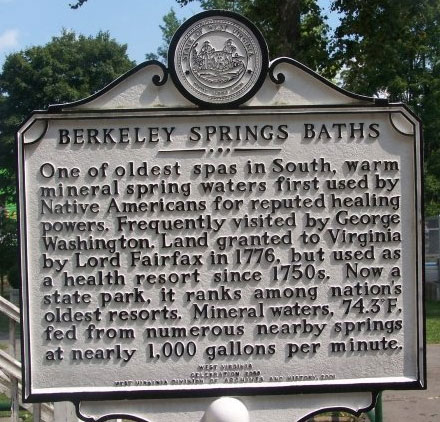
Hi everyone! ?We wanted to announce plans for a raw food picnic / potluck / meetup next Saturday, September 19th, at noon, in Berkeley Springs, WV at Berkeley Springs State Park (link to map), a wonderful natural healing destination about half-way between Pittsburgh and D.C. Wendi was just talking with Rawbin from the Capital Area (D.C.) raw food meetup and we all thought that a combo Pittsburgh / D.C. meetup might be fun. So, we all planned something right on the spot!
Berkeley Springs is a really nice (but small) public park in West Virginia about half-way between Pittsburgh and D.C.I traveled there a few weeks back with Melissa, Dave, Ella, and Bethany on the way to Raw Spririt East. We had a super time soaking in the spring water and checking out all of the cool alternative shops. (I did a write-up here on Pure Jeevan a few weeks ago and posted some video of the place).
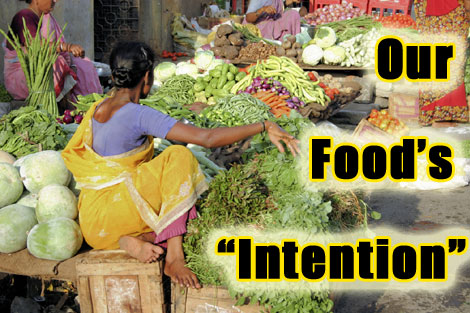
Jim here... During one of our marathon sessions at a Border's book store, I recall reading somewhere about the notion of a fruit's "intention" to be eaten. It's been a few years since I've read that, but I immediately resonated with the notion that many fruits, nuts, vegetables, and seeds are actually evolved to be eaten by other living beings and, therefore, to consume them (or their fruits and seeds) is to participate in a wonderfully nonviolent act that is in perfect harmony with a kind of primordial Earthen symbiosis. Whether these plants, vines, trees, etc. feel a conscious intention to have their fruit eaten by others is a matter of metaphysical conjecture. But, within the context of discussing vegetarianism, the argument is certainly relevant and fairly strong.
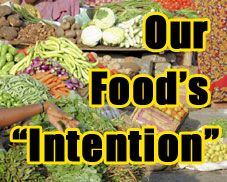 If you walk up to a farm animal, it may be impossible to estimate what's going through its mind, but I feel intuitively that it isn't, "Please kill me and eat my flesh." In other words, there's no "intention" present in that scenario. On the other hand, it's very easy to imagine that a tree produces fruit, knowingly or not, in order to produce offspring. Throughout the entire evolution of that tree, part of that reproductive process has involved animals (including humans) eating the fruit and then "redistributing" (which is a nice way of putting it, I suppose) the seeds naturally.