Know Any Literary Animal Lovers?

Hi there PureJeevan readers! We wanted to let you know that Jim's new novel CHROO is available on Amazon. It's a crazy adventure involving a billionaire heiress, her Chihuahua BFF ("Chroo") and a host of human and animal characters. Find out more on Amazon! Here are some links:
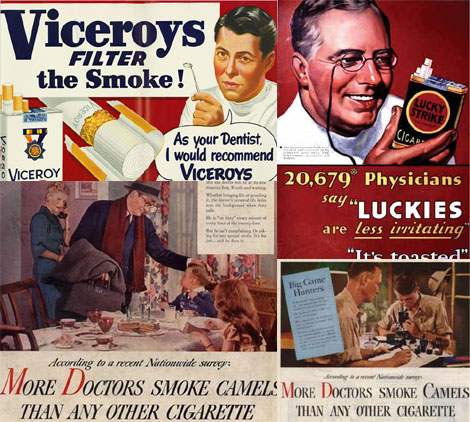
Jim here again... What do you think of that montage of vintage cigarette advertisements ! Knowing what we now know about cigarettes, it's tough to believe that such ads could have existed only 50 years ago, but the campaigns were real. Did doctors actually see no harm in cigarettes? Were there no pulmonary specialists back then who thought that habitually inhaling smoke might not be such a healthy idea Who knows... ?As I like to believe when it comes to doctors, even though they're quite oblivious to the harmful effects that chemicals have on our bodies, they do seem to mean well (in their own deluded ways). So, I don't hold it against them so much as I now hold it against individuals to think for themselves and challenge healthcare practitioners.
In any case, whether or not there is an advertising campaign attached to a new consumer product, it stands to reason that when a product is introduced into the marketplace, manufacturers should have a responsibility to ensure that the product is safe, and consumers should likewise have a reasonable expectation that the product is safe. Only, it doesn't always work that way, does it?

Hey everyone!? Just one long weekend left for Wendi and KDcat to (frantically) pack for their cross-country roadtrip. Yep, Monday night I'm dropping them on that midnight train to Portland. Wait until you see the spread of trip-snacks they're taking along. (We took some pictures of the raw foods smorgasbord sent by our generous snack sponsor, Natural Zing).
Today, since it's fun-filled Friday, I thought I'd share a little tale of frustration (although meant in kind of a funny way) relating to my own diet. You may have read my mini-manifesto a few weeks ago about my recent quest for simplicity. Well, Wendi and I have both largely maintained that kind of existence for a while now -- especially when it comes to the breakfast smoothies (pineapples galore!) and lunch salads. I have to admit that my energy seems to be trending upward very nicely!
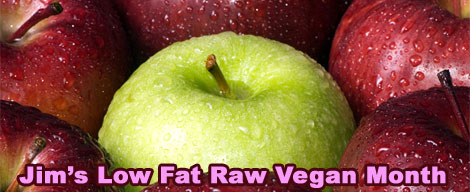
Jim here... Exactly one month ago today, I announced my intention to do a month-long trial of a low-fat raw vegan protocol largely based on the well-known 80-10-10 diet. I posted a half-way point update on May 15th, and now here we are at June 1st already. So, are you ready for the thrilling conclusion
As I've stated before, I went into this experiment rather hard-core, with one full week of zero overt fats, and then gradually introducing a few richer ingredients (although keeping within the 10% fat ceiling). I found much of the past month to be an exercise in restraint and self-control, similar to the issue many people face when going raw while the rest of the family is still eating cooked foods.However, it got significantly easier as time passed.
Read more: Jim's Low-Fat Raw Vegan Month Concludes. Now What?!
?
Jim here... A few months ago, I'd posted an article here on the topic of Cognitive Dissonance. This theme seems to crop up from time to time in questions people ask about the raw foods lifestyle. For example, one new raw fooder recently posted a question in a raw foods forum asking whether other raw foodies had reached a place in their lives at which things changed so much that they felt as though they were living a contradiction. Because this struck home for me, I'd like to reiterate my response, somewhat edited, below.

Is cacao dangerous or is it a super food? Anyone who's been learning about raw foods knows about raw cacao (check out a recent episode of Know Your Food: Cacao). It's raw chocolate without all the processing and additives normally included in the chocolate bars many buy from standard grocery stores. In its raw form, cacao has different nutritional components than typical processed chocolate. Many claim that raw chocolate is filled with mega doses of nutrients, making it a super food, and therefore extremely healthy for the human body. Others claim that even in its raw state, cacao is a stimulant that taxes the human body and cacao is more like a poison than a food. I've heard murmurs about negative effects of cacao for many years, but that was always subdued by the vociferous praise of cacao.
Recently, my friend Kevin Gianni (The Renegade Health Show) spoke out about cacao and his experiences with it. Kevin is well known in the raw food community, so his words came as a shock to many people. He explained in his video (below) that he developed a rash on his stomach. After much investigating and diet changes, he came to the conclusion that cacao was causing the rash (eliminating the cacao caused his skin to clear). He also stated that cacao had been stripping his body of vital minerals. Kevin pointed out that he was simply sharing his own experience with cacao, possibly shedding some light on a subject that may need to be further investigated. He advised others to take a look at their own reactions to the food, to see if they are experiencing any problems.
Here's an older post, from August 2008, about modifying one's diet to experiment with attaining even greater health. ?I know the before/after pics, alone, are inspirational enough to live a raw vegan lifestyle!
*blows kisses to everyone*
========================
Some of you have noticed that we've seemed a bit silent, or asleep, here at Pure Jeevan. We haven't abandoned our blog or our readers, though! For the next two weeks, it may continue to look like we are sleeping, but in reality we are doing anything but that! :-)
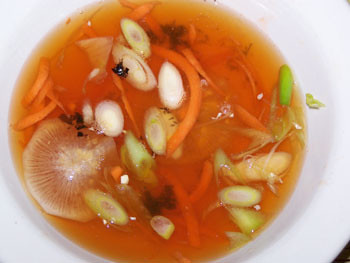
Here are some pictures of some recent meals we've been testing in our kitchen...

To help keep all of you inspired, we ve asked some remarkable individuals to share their raw food stories with you. Enjoy! (Today's "My Raw Story" is also a special installment for our Diabetes Awareness Week!)


It's not much longer before I'll be serving all kinds of delicious foods to those attending the 3-Day Raw Food Spiritual Ashram Retreat! I've been working on the recipes and taking pictures to include with the bound materials going home with everyone attending the retreat.
Pardon the video quality there. A.J. and I shot that video at night and, although it looked decent on the camera's preview screen, the actual video came out almost totally black!? However, with a bit of video processing, we were able to salvage it. It's not optimal video, but it's at least watchable (and, hey, also conveys a little of that nighttime festival feeling).
A quick note about veganism before I share some additional info... As we've stated here many times, Pure Jeevan advocates a raw vegan lifestyle. What do we intend that to mean, exactly? Well, strictly speaking, veganism excludes all animal products, both in terms of diet and lifestyle.
We have something special for today s Makin? It Monday! Remember Terilynn, the brilliant chef behind The Daily Raw Caf , whom we introduced you to not long ago? Well, this weekend she posted a recipe challenge open to anyone willing to participate. We here at Pure Jeevan are always up for an adventure, so thanks for the challenge, Terilynn!
The rules were simple: Use the list of possible ingredients, create a raw vegan food dish, and send pictures and information about your dish to The Daily Raw Caf . Here s the list for the challenge, with the items we didn t have available crossed out: