Know Any Literary Animal Lovers?

Hi there PureJeevan readers! We wanted to let you know that Jim's new novel CHROO is available on Amazon. It's a crazy adventure involving a billionaire heiress, her Chihuahua BFF ("Chroo") and a host of human and animal characters. Find out more on Amazon! Here are some links:
As we said yesterday, we have some fantastic videos to share from RSF East last weekend. To launch a series of interviews, we want to reiterate that Pure Jeevan has always been a holistic site, meaning that we like to focus on all aspects of a human being's optimal existence (mind, body, spirit, and emotions). While it's not always "all about the food" here, it's also fair to say that it all really does start with the food -- super-nourishing 100% raw living foods! So, it's only appropriate that we begin this series of interviews with a raw food chef.
RawDawg Rory was a huge pleasure to meet and hang out with. The man exudes happiness, and it's quite infectious! We had a great time talking, and of course talked a lot about tasty raw foods. In this video, RawDawg shares a delicious dessert recipe. Here it is:
 As we promised yesterday, we're featuring a wonderful (and LONG!) video interview today with the incredible John Kohler of Santa Rosa, CA. You may be familiar with John from some of his popular web sites, most notably his "Living and Raw Foods" community site at www.RawFoods.com. Below are parts one, two, and three of Wendi's interview. They're roughly 10 minutes each. (That's a lot of time, I realize, but at least check out Part 1 if you're short on time, as it offers an amazing look at John's front yard.)
Wendi said she was at a loss for words when interviewing John at his home (and you'll soon see why!), because what he has done on his 1/10th of an acre lot is *phenomenal*. He told Wendi off the video that it's all a matter of trial and error--finding what grows easily and well, and working with those plants the most. If something takes a lot of effort, or is difficult to easily grown, he skips it and focuses on what can give the most yield for the least work. Almost everything grown on John's land is edible!
PART TWO:
PART THREE:
The video of John's garden and the pictures (see yesterday's post) are enough to inspire ANYONE to plant even a small garden for themselves! WOW!
John has a lot going on, including a monthly potluck. Wendi and KDcat happened to be in town on the night of the March potluck, so Wendi was invited to speak at the event. It was a nice, laid-back group of people, Wendi said, and they sat at a long table talking about the raw lifestyle, health issues / concerns, what children are fed in school, and so much more -- a really nice group of people, Wendi said, noting she'd love to visit them all again. To connect with John Kohler is pretty easy. He's on the internet at:
- RawFoods.com -- John's main community site
- GrowingYourGreens.com -- John's YouTube channel
- BeRaw.com -- Santa Rosa Meetup Group
- RawHealthExpo.com -- Annual Raw Foods Conference
Once again, we d love to thank our generous trip snack sponsor, Natural Zing, for helping us to make this possible on our budget!

Original Comments
Below, we have included the original comments from this blog post. Additional comments may be made via Facebook, below.
On March 19, 2010, wrote:
fantastic, thank you so much Wendi, very informative, what a guy and energy bomb he is, hope you are well again, you seem so
love to you

Q: How Long Do Smoothies Last?
I responded to a similar question a while ago in an online forum. This issue comes up a lot, acually, so I figured I'd provide our response here on the blog rather than simply through an email reply. Here's that response, reworked a bit for our blog:
Optimally, I suppose we'd all just eat things whole, most of the time, instead of blending/juicing ...
In a recent post we announced that we were interviewed by Rhio for her Hooked on Raw with Rhio radio show that airs on NY Talk Radio (formerly known as Tribeca Radio). Rhio is an amazingly talented woman; we encourage you to check out her Rhio's Raw Energy site that has a lot of helpful information about the raw and living foods lifestyle.
Rhio talked with us about all of the projects we've been working on. She was particularly fond of the All Raw Directory, but she was also thrilled about our cross-country raw food tour and the raw food publishing company that we'll be starting in the near future. She asked us about our successes with the raw food diet, about our daughter, and so much more. If you have the time, we'd love for you to listen to the interview and let us know what you think! It was our first professional interview and we enjoyed it!
Here's a link to check out interviews that Rhio has conducted: Hooked on Raw with Rhio/NY Talk Radio.
Read more: Podcast Available: Rhio's Interview of Wendi and Jim Dee

Announcing: Pure Jeevan's Halloween Raw Pot Luck - A Costume Party for All Ages!!
When:? October 31, 2009, 6:00 p.m. - ? ?
Read more: Pure Jeevan's Raw Halloween Bash -- You're Invited!
I thought I'd put another fun week together here at Pure Jeevan while Wendi is away (although, actually, ALL of our weeks are fun-filled here!). This week, I thought I'd discuss herbs, spices, and essential oils. Of course, I can't cover those enormously important (and huge) subjects in-depth over the course of just one week, so I created that little banner (above) so that we can re-use it from time to time.
Herbs are fascinating, aren't they? Sometimes, you don't even consciously know why you use the ones you do but, invariably, there's a reason. Sure, sometimes recipes call for a specific flavor. But, often, there are other reasons as well -- such as to support digestion, or to provide a warming or cooling sensaiton. This type of thing is critical in ayurvedic principles, as we touched on recently on this blog, where the spices could be present for digestive or medicinal purposes, or of course as a preservative.
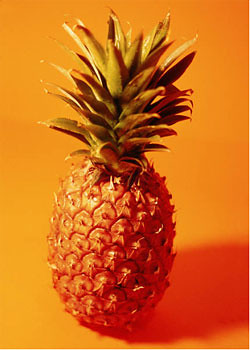
Eating only mono meals is going pretty well. I'm on my third food, so far, and have ended day two. This evening I've started my third fruit: Pineapples!

In one daily newsletter that Wendi and I subscribe to, there was a discourse recently about being right -- but being right for the wrong reason. I've long been interested in that concept; it's fascinating, when you really think about it -- like getting credit on a test for an answer you guessed at, or knowing how to say something in another language but not knowing what it means. Along those lines, I'd like to share some personal opinion with you.
One of the common pro-raw arguments is that it's a calorie-restrictive diet and thus healthy because it limits our caloric intake (a regimen widely associated with extended lifespans in scientific literature).If you consider that a pound of greens or veggies has about 100 calories (generally speaking) and a pound of fruit has 300-400, imagine the incredible amounts of food you could ingest daily and still be considered calorie-restricted (as compared with the recommended number of calories for your build and lifestyle)!

What's Valentine's Day without a little "Smooth Love," right ??Here's how we created this simple, creamy delicious, smoothie:
- Start with the water and flesh of one young coconut. We had one left over, still nice and fresh, from our recent trip to the Florida Keys (more raw food videos and posts coming soon from that trip!).
- Add three to four oranges, peeled (and de-seeded if necessary)
- Add two to three large bananas
- Add 12 ounces of frozen strawberries (or to taste)
- Add a small handful of raw almonds
- Add a bit of raw agave nectar or a few dates, if you have them.
Blend in your high-speed blender until smooth ... and share with a loved one! Happy Valentines Day, everyone!

 Day 8:
Let's focus on creativity for a bit. This is an area where many men have been comfortable expressing a feminine quality, especially when done through art and music. I say many, because we all know at least a few men who were raised to believe that a strong, powerful man doesn't spend his time with such frivolous things. Instead, he works hard to earn an income to support his family. In the past, and still sometimes today, creative men were viewed as weaker and less masculine, not practical and in control. The feminine quality of creativity was, however, encouraged in women who were afforded more time for such "frivolity."
Jim here again... So, instead of Episode 1 of "Know Your Food," we present Episode 0.5, which documents the high drama of launching a video blog. Quite intense, my friends... Recall yesterday's installement -- when we captured the initial moment of inspiration in our library? Well, today's installment is a "confession cam" one, just like you see on every reality TV show ever produced.
The question is: Will we EVER actually launch our nutritional web show? Stay tuned...
Read more: Pure Jeevan Nearly Launches New Series. See Episode 0.5.