Know Any Literary Animal Lovers?

Hi there PureJeevan readers! We wanted to let you know that Jim's new novel CHROO is available on Amazon. It's a crazy adventure involving a billionaire heiress, her Chihuahua BFF ("Chroo") and a host of human and animal characters. Find out more on Amazon! Here are some links:


This is the first installment of a new series that we plan to run occasionally here on the Pure Jeevan blog. The series is called "Raw Foods 101" (the same name as our free eBook that has now been read by more than 5,000 people around the world!). Raw Foods 101 will become the latest addition to our category list (available along the right side of our sidebar). In time, clicking on Raw Foods 101 will deliver a plethora of raw food tidbits.
So, where should we start? ... How about the topic of soaking nuts and seeds ! This is a question that comes up repeatedly in emails sent to Pure Jeevan.
Read more: Raw Foods 101: Why Should You Soak Nuts Before Eating Them?

Every week I introduce you to some companies or individuals I think may be interesting to you. This time, I want to intoduce you to some handy calculators that will help you monitor your daily intake of nutrients.
Take the time to meet...


In all of our discussion of immune-building lately, we remembered today that we left out one enormously important item that should be present in anyone's "healing toolbox." That item is, of course, laughter. What better time than a "Fun-Filled Friday" to celebrate the healing power of humor!
 Years ago, we'd heard a remarkable story about a man who had cured himself of a terrible disease using laughter as his "medicine." According to the story we heard, the man checked himself into a hotel and just watched Marx Brothers comedies for hours on end, and was eventually cured.

For today's Makin' It Monday, we're not really making something, but rather sprouting something! We tend to go through periods of time when we are sprouting a lot, consuming sprouts on salads, sandwiches, and inside whatever dishes we can add them to at the time. It seems appropriate for this time of year to start sprouting, again.
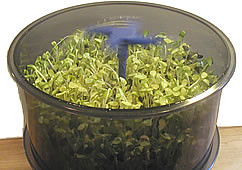
Have you ever sprouted seeds? The first time I ever sprouted, I used a nut milk bag that I kept dangling over the kitchen sink. I put some seeds into it, let them soak overnight in a bowl of water, and then rinsed them in the morning. Every time I was in the kitchen, I rinsed them again and let them drip into the sink until the next rinsing. It's important to keep the seeds moist and rinsed. It was thrilling to see the tiny little sprouts when they first began emerging from the seeds!

In this special five-part series, Joanna Steven uncovers where some top vegetarian athletes get their protein. Here's part four, focusing on Brendan Brazier's take on this issue.
GREEN LEAFIES
Brendan Brazier is one of only a few professional athletes in the world whose diet is 100% plant-based. He s a professional Ironman triathlete, bestselling author on performance nutrition, and the creator of an award-winning line of whole food nutritional products called Vega. He is also a two-time Canadian 50km Ultra Marathon Champion.
Read more: Vegetarian Athletes Share: Top 5 Sources for Animal-free Protein (Part 4 of 5)
Jim here... Here's a compilation of vids from my little Flip camera, all taken over our weekend roadtrip to Washington, D.C. It's not all strictly raw-food related, but does include some raw tips. First up, you'll see our rawsomely packed food coolers. Between using ice and frozen fruits, everything kept cool just fine.
Early in the video, Wendi shares a handy tip for keeping your smoothies cool on the road. If you're going to drink your smoothies right away, you might have little concern for keeping a drink cold. However, we had eaten breakfast already and knew we wouldn't want to get into our smoothies for another hour or so after leaving. Frozen berries to the rescue! (Just make sure to hunt down a large glass bottle with an opening large enough to pour frozen berries into.)

Jim here... I'm back from Raw Spirit Festival East with roughly 4 Gigs of pictures and videos to sort through, as well as 17 pages of handwritten notes about my rawsome experiences. So, tomorrow, I'll begin the task of sorting through it all and posting all sorts of fun stuff (photos, videos, and tales of adventures).
For now, all I'll say is that Rawbin Anderson, RSF East Manager, did a spectacular job in orchestrating the whole event. Here's Rawbin:
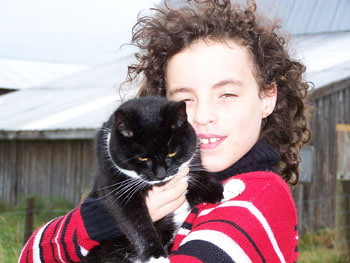
You rarely hear us talk about our daughter here on the blog. Some of you have noticed and asked questions about her through email. I'd like to tell you why we don't write about her very much, because there's something to be learned from it.
First, I usually don't like to write about people unless I get their permission. This is especially true when my daughter is concerned. I respect her privacy if she chooses for me to not share things about her life. Years ago when I knew I wanted to create the Pure Jeevan site, I talked with Jim and our daughter about it. I said it was something I felt drawn to do, that I felt it could help a lot of people, but I wanted it to be a family site if it's something they were interested in doing along with me. Jim agreed to help me at the time, but didn't fully embrace Pure Jeevan himself (now, however, he has become a very active part of this site and all of our projects). Our daughter, however, said from the very beginning that she didn't want any part of it.

To keep all of you inspired while we are away, we've asked some
remarkable individuals to share their raw food stories with you. Enjoy!
Today we thought we'd introduce you to a common wild edible known as Purple Deadnettle (or, more dramatically, the Purple Archangel). Watch the video and let us know if it grows in your area, and if you've tasted it!