Know Any Literary Animal Lovers?

Hi there PureJeevan readers! We wanted to let you know that Jim's new novel CHROO is available on Amazon. It's a crazy adventure involving a billionaire heiress, her Chihuahua BFF ("Chroo") and a host of human and animal characters. Find out more on Amazon! Here are some links:
Jim here... It's been nearly half a year since we posted a long meditation on living patiently, noting the unique, sometimes-at-odds dovetail that exists between (1) experiencing the zen of patience and (2) living the electrically charged life of raw foods. While we're STILL living with the same patience we talked about, I have to admit there have been times when we've been in not-so pleasant touch with some real frustration about getting our home sold and finally moving on to all of the exciting stuff we have planned for us and for you.
Wendi and I are absolutely ecstatic about taking our raw foods message to the next level -- and not just "next level" meaning more a few more blog posts and videos, but a true quantum leap in terms of our immersion into this world and commitment to advocating the lifestyle. It just gets a little tough, even when practicing patience, to be kind of stuck in the starting gate.
Read more: Pure Jeevan Heads Out of Town: Raw Roadtripping Vids to Come!
Recently I've been to three potlucks in the span of four days. They've all been wonderful for different reasons -- one was a birthday party for a lovely young woman, Bethany, another was part of a women's circle that my friend, Melissa, invited me to attend, and the other was at my home as a meetup when Kevin and Annmarie Gianni were here visiting. Lots of fun, connecting with people, and raw foods to eat.
Sounds perfect, right? Well, something's been happening with me and raw foods over the past year. It became even more evident after eating at three different potlucks over four days. I've noticed more and more that when I don't eat something that I've created, I many times have reactions to the foods I've eaten. The reactions have ranged from flushed facial skin, slight headaches, hives, full-blown headaches, upset stomach, water retention, achy joints, etc. All signs of being sensitive to something I'm eating, right? I've narrowed it down to a few things, but it doesn't seem to be an exact science to knowing what's going to cause the reaction.
At home I know that I feel better if I don't consume garlic even though I love the taste and smell of it. When I eat too much of it I experience headaches and sometimes flushed cheeks. I gave up raw vinegar a long time ago because it makes my joints ache. Recently I noticed that whenever I eat Nama Shoyu I get a headache, flushed cheeks, and sometimes some hives. So, at home I can control my reactions to foods -- I simply avoid eating the things that sometimes trigger problems for me. I feel great most of the time because I eat more simply and my body doesn't experience any problems.
Read more: Something Has Been Happening With Me and Raw Foods


This weekend is all about having fun! We'll be working on the menu for the upcoming 3-Day Raw Food Spiritual Ashram Retreat that I've organized for the end of May. What does it mean to work on the menu? Well, it means I'll be making and sampling all kinds of gourmet raw food dishes this weekend!

To help keep all of you inspired, we ve asked some
remarkable individuals to share their raw food stories with you. Enjoy!
Today we talk about ways to lessen one's chances of developing dementia, aside from dietary changes. Other than eliminating foods from our diet that may hinder brain function, or adding foods that enhance brain function, what can we do to keep our minds sharp as we age?
The first action step you can take to keep your mind healthy is to physically exercise the rest of the body. By keeping our limbs and muscles active, we are not only enhancing the flow of oxygen throughout our bodies, we're continually working our brains, as well. Every move you make requires a message from your brain to be sent to your muscles. So, the more you move, the more you're exercising that part of your brain.

Jim here... Wow, it's May 1st already! May is an exciting month for me because that's usually when my running kicks in more regularly. There's nothing like hitting the pavement and being in motion, MP3 player in hand. Whether it's an intense half hour of intervals powered by the Foo Fighters, or a longer moving-meditative outing accompanied by Michael Hedges, I do enjoy being out there (even if I'm distracted now and again when my canine running companion? -- aka "the Jooge" -- chases after something she shouldn't)!
But, as I was getting at:? Ever since I lost the weight, I simply can't abide cold. I've heard many raw foodies talk about this phenomenon, and have heard numerous explanations for it. My suspicion is that all of the "why raw foodies are always cold" theories are partly correct -- or, better put, that the theories cumulatively contribute to our slightly lowered body temperature.
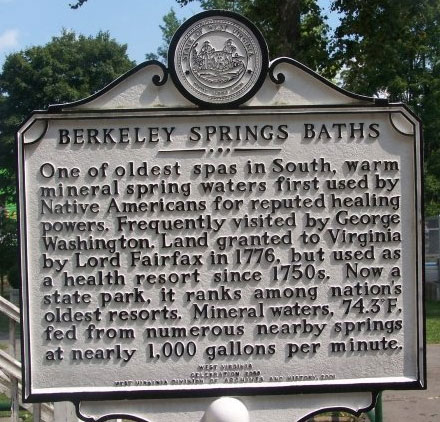
Hi everyone! ?We wanted to announce plans for a raw food picnic / potluck / meetup next Saturday, September 19th, at noon, in Berkeley Springs, WV at Berkeley Springs State Park (link to map), a wonderful natural healing destination about half-way between Pittsburgh and D.C. Wendi was just talking with Rawbin from the Capital Area (D.C.) raw food meetup and we all thought that a combo Pittsburgh / D.C. meetup might be fun. So, we all planned something right on the spot!
Berkeley Springs is a really nice (but small) public park in West Virginia about half-way between Pittsburgh and D.C.I traveled there a few weeks back with Melissa, Dave, Ella, and Bethany on the way to Raw Spririt East. We had a super time soaking in the spring water and checking out all of the cool alternative shops. (I did a write-up here on Pure Jeevan a few weeks ago and posted some video of the place).

According to Mike Adams of NewsTarget.com:
"Many Florida oranges are actually dipped in an artificial orange dye in order to make them more visually appealing. It's the same dye that's been banned for use in foods because of cancer risk."

We had a wonderful weekend that started with a raw food potluck in our home (through the Pittsburgh Raw Food Meetup group). There were about twenty people and so many lovely raw food dishes! I haven't checked the camera, yet, but I hope someone remembered to capture some pictures of the food and guests. It was all very yummy, including the beet pasta I made with a cream sauce. I also made some carob peppermint sweets that KDcat formed into bite-sized balls and arranged them on a platter. A friend of mine told me that the people who show up for raw food potlucks tend to be genuinely nice people, and she was right. It was a pleasure meeting everyone and I look forward to next month's meetup.
The rest of our weekend was spent with our guest, Devaki, who just left a few minutes ago to return to the ashram. She played some beautiful music on the harmonium and she and some other lovely guests filled our home with the beauty and energy of Kirtan chanting. Some of the chants were in English, too. I thought I wouldn't like them as much, but they were just as beautiful as the Indian ones. One of my close friends who was here for the Kirtan told me that I was glowing after the chanting! I love the blissful feeling that comes from chanting and meditation.

It's nice to meet new people, isn't it? For today's Take the Time Tuesday, I'd love for you to meet someone who's really helping to make a difference in the raw food world in an exciting way.
Take the time to meet...
For my Fun-Filled Friday and this entire weekend, I'm going to do something fun that I rarely get to do. What is it? It's nothing...literally NOTHING! What's the fun in doing nothing? Well, to be honest I think it's impossible to do nothing. If you decide to stay in bed all weekend, doing nothing, you are really doing something--staying in bed all weekend. Right?
So, what will my nothing include? Who knows! That's the beauty of doing nothing---I have no preset plans, no expectations of myself or others, nothing at all! I have lots of things to do, of course, but I'm not doing any of them this weekend (no working on Pure Jeevan activities, no cleaning the house or doing laundry, no working on the computer, no organizing future plans/activities, no fancy meal preparations, etc.).