Know Any Literary Animal Lovers?

Hi there PureJeevan readers! We wanted to let you know that Jim's new novel CHROO is available on Amazon. It's a crazy adventure involving a billionaire heiress, her Chihuahua BFF ("Chroo") and a host of human and animal characters. Find out more on Amazon! Here are some links:

What's Valentine's Day without a little "Smooth Love," right ??Here's how we created this simple, creamy delicious, smoothie:
- Start with the water and flesh of one young coconut. We had one left over, still nice and fresh, from our recent trip to the Florida Keys (more raw food videos and posts coming soon from that trip!).
- Add three to four oranges, peeled (and de-seeded if necessary)
- Add two to three large bananas
- Add 12 ounces of frozen strawberries (or to taste)
- Add a small handful of raw almonds
- Add a bit of raw agave nectar or a few dates, if you have them.
Blend in your high-speed blender until smooth ... and share with a loved one! Happy Valentines Day, everyone!
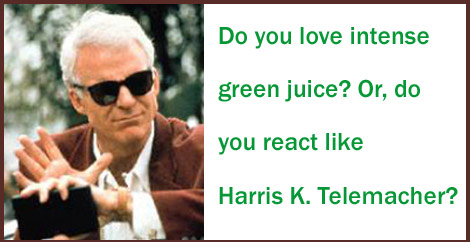
In the comedy film, L.A. Story, there's a scene in which weatherman Harris K. Telemacher (Steve Martin) visits a friend and is asked to taste a *very* green-looking juice. He does, and then proclaims it's "exactly like licking a shag carpet." ?Funny how some people adore intense greens while others experience the polar-opposite reaction. (There are numerous funny food- and health-related jokes in that movie, by the way!)
Yesterday, we discussed some unusual considerations with respect to greens, ultimately leading to a brief discussion of chlorophyll (the green pigment within almost all plants that plays a key role in photosynthesis).

Driving to work today, we noticed that McDonald's has launched its latest product aimed at the health-conscious demographic. In case you haven't heard, you can now purchase fruit smoothies at Mickey D's! Sounds like real progress, right? Well, let's take a closer look and see if they're really as healthy as they sound.
McDonald's is not exactly known as a healthfood destination. After all, a typical lunch at the Golden Arches these days might well include something like an Angus Bacon & Cheese, Large Fries, and a Large Coke. ?Together, that's 1,600 calories, 64 grams of fat, and 2,400 mg of sodium, 99% of which is from highly cooked, highly processed, non-organic, factory-farmed, nutrition-barren source materials . (Add on another 75 calories and 550 more mg of sodium if you plan to go through, say, five packets of ketchup along with those fries.) (Source) And, some people eat that daily!
Read more: The Anatomy of a McSmoothie & Pure Jeevan Calls for New Term for "Smoothie"

Just a quick post on what may or may not be considered "weird" for our inaugural "Weird Wednesday" post. According to a few web sites I checked, around 3% of the population (and I'm assuming this means U.S. population) is vegetarian. It looks like maybe 1% (possibly a little more) is vegan. Of every 100 vegans, how many do you suppose are raw foodists? (Actually, I'm asking; I didn't find any solid answer to that.) Maybe 1 of every 100 vegans? What do you think?
Here's a painfully unscientific, yet still slightly educated guess:
As a follow-up to yesterday's McDonald's-bashing post, I thought I'd post another perspective -- namely, that not all chain smoothies are bad. I can't claim to have tried them all, but I can report with confidence that, for raw most foodists, a trip to Jamba Juice can be awesome!

In a previous Take the Time Tuesday entry, we introduced you to three fantastic raw food snack companies who have offered to donate samples of their products for our upcoming retreat. If you haven't heard about the 3-Day Raw Food Spiritual Retreat, yet, there is still some space for you to join us from May 23-25, 2008! We ve set this retreat up so that it s as affordable as possible. There s a significant savings if you sign up early, too, so be sure to check it out!
Each individual attending the retreat will receive a gift basket filled with delicious raw food treats from some truly fantastic companies. Keep an eye on the retreat page to see other companies that will be sharing delicious raw food snacks with those attending the retreat! Today, we'd like you to...


When we found out that there was a raw foods restaurant in Key West, we knew we'd visit for sure. So, after a wonderful lunch of some of their raw staples (raw tacos and peanut noodles), it was no surprise to us that we found ourselves drifting back toward Help Yourself after the sunset celebration at Mallory Square (the main nightly Key West sunset viewing celebration). When we arrived, we asked to interview the owner, Charlie Wilson. She'd just left after working a very long day at the restaurant. But, an emplyee called her anyway and she graciously agreed to come talk with us! So, here's a bit of that conversation:
Read more: The Key West Raw Scene: Pure Jeevan Gets Up-Close and Personal with Charlie Wilson!

Thank you, thank you, thank you! Today for Thankful Thursday, we wanted to say a special THANK YOU to our readers. It means so much to us that you come to visit our blog. With every new comment (both here on the blog and through email) it fills us with great happiness!
Is there something you'd like to see more of here on our blog? Something you'd like us to discuss? We know you are looking for more recipes, since you've told us (be sure to check out our recent posts where we've linked to some fantastic sites offering recipes!). What else would you like to read about or have us share with you?

Sixteen years ago today, our beautiful KDcat (now called Bailey) was born!! Happy, happy birthday to Bailey. We hope ALL your wishes come true and you continue to shine your bright light and express your creative talents for the rest of us to enjoy!

If you ve been a Pure Jeevan family member for a while, you know we don t always focus on food in regards to health. Health isn t only about the food you put into your body; it s about so much more. We are mental, spiritual, emotional, physical beings who thrive best when we have a balance in all those areas of our lives. Humans are, for the most part, social beings. If we lack something as vital as social interaction, we become out of balance. As young children, our primary social interaction is through direct contact with our parents and close family members. As we mature, almost all of us develop friendships with individuals outside of our family s social circle. Friendship is essential in helping us maintain a healthy balanced life.
How we meet friends, and how we interact with them, has been changing over the years as online social media communities have been created. For those living a raw food lifestyle and using the Internet to connect with like-minded others, you have no doubt realized there is a strong and growing virtual raw food community online. It s a large tribe, of sorts, where we are able to wander from website to website, meeting others and creating friendships together. (Be sure to join Pure Jeevan s Facebook page to connect with other Pure Jeevan family members.)

I'm still doing my nine-day mono meals for Navratri. Since it's Makin' It Monday, instead of actually makin' a recipe, I'm dreamin' about it! After talking with my sweet friend Melissa, I thought I wanted to eat spinach pie when I end my mono meals. She was talking about it, shared how she was going to create it, and my mind was filling with the image of spinach pie, the smell and taste of it, and I wanted it right then.But, we don't have any spinach in the house right now. Since I end my mono meals after tomorrow's lunch, and don't have time to buy spinach at the food co-op, I decided to dream some more about what I'll be eating for tomorrow's dinner.
Then it came to me. I want beet pasta! Not just any beet pasta, but beet pasta topped with a creamy alfredo sauce! I picture it in my mind; I can imagine the taste of it, the texture, and it's so delicious. I think I want something green with it, too. Perhaps I'll start with a small salad. Ooh! Yes, that's what I'll do!