Know Any Literary Animal Lovers?

Hi there PureJeevan readers! We wanted to let you know that Jim's new novel CHROO is available on Amazon. It's a crazy adventure involving a billionaire heiress, her Chihuahua BFF ("Chroo") and a host of human and animal characters. Find out more on Amazon! Here are some links:
Jim here... Today is April 25, 2009 -- Wendi Dee's Birthday!!? She's asleep now. It's 1:30 in the morning & I've been up for hours assembling something stunningly amazing to share with you. You see, this year, I asked some friends, family, and foodies to take a page of a sketchbook and offer Wendi some Happy Birthday wishes -- and then send it back to me so I could bind it all into a large book!? WOW!!! WOW!!! WOW!!! Check out the response from 40+ people from around the globe. It's a little overwhelming to see this much positive energy in one place. What a momentous day she's in for in another 5 hours or so when she gets up and is greeted by such a surprise! If you'd like to say Happy Birthday, just leave a comment here! Thanks to everyone!
Clarifications: (1) Yes, as some of you may have guessed, Wendi's body has circled the sun more than 25 times. If you visit the site, I explain what the "25th" birthday means a little more. It's basically about the amazing power of raw foods. (2) No, I didn't send messages to David Wolfe, Gabriel Cousens, Woody Harrelson, or other raw food celebrities Wendi isn't friends with. However, if they are huge fans of Wendi's, they are more than welcome to contribute via email or comments! LOL ;-)
Original Comments
Below, we have included the original comments from this blog post. Additional comments may be made via Facebook, below.
On April 25, 2009, wrote:
Happy 25th Birthday Gypsy!!!
I so wish to be there with you celebrating this amazing day, but as I can't, I send you lotsof e-love.
*hugs tightly*
I LOVE YOU!!!
On April 25, 2009, wrote:
Happy Happy Birthday Wendi.............wishing you al the happiness your heart can hold, on this special day of birth and always...........you inspire so many!!!!!
On April 25, 2009, wrote:
Happy Birthday Wendi!
I had posed this question in another post on this site, can't remember where now!
But I will post it here too
On my birthday I like to look back to last year's birthday to see what about me has changed!
What about you Wendi? What has changed about you
Hope there are lots of ovely surprises in store for your big day!
Sheryl Miller
Austrlaia
On April 25, 2009, wrote:
wishing much peace, love and joy to you on this special day... Happy Birthday, Wendi!
On April 25, 2009, wrote:
Happy Happy Birthday, Miss Wendi Dee! I hope your day is a joyous as ever. ;)
On April 25, 2009, wrote:
Very, very Happiest of Birthdays, Dearest Wendi. You give so much of your essence and touch many souls. I wish you a day that is beyond beautiful and filled with joy and blessings as you embark on another wonderful adventure around the sun. And love LOVE love abound...always. xo
Blaq Berry
On April 25, 2009, wrote:
Happy Birthday lovely lady!!! I'm sure you'll be glowing all day! :)
On April 25, 2009, wrote:
Seesmic video reply from Disqus.
On April 25, 2009, wrote:
That is the best present ever!
And Wendi, if you did not know it before, I think you now are sure....
You Are Loved!!!!!!!!!
Happy 25, can't wait for your 24th next year!!!
love love love deb
On April 25, 2009, wrote:
Happy Birthday Wendi. Thank you for being such a light in the world.
On April 25, 2009, wrote:
Happy Birthday Wendi!
What a beautiful book!!! I am so happy to be part of it, and thanks Jim for posting the whole thing! It is just beautiful.
We love you!
~ Melissa
On April 25, 2009, wrote:
Hey Girl! Happy, happy day to you and thank you Jim for inviting Bo and I to be a part of this special day!
Revvell
On April 25, 2009, wrote:
Hey Girl! Happy, happy day to you and thank you Jim for inviting Bo and I to be a part of this special day!
Revvell
(Did this twice since I had to figure out the system)
On April 25, 2009, wrote:
Happy Birthday Wendi GIRL!!!
Have lots of fun in this, your 25th year. Blessing and love all around. Kisses riding on the wind for you.
Much love!
P. Lis
On April 25, 2009, wrote:
Have a wonderful amazing Day of Incarnation, the sweetness of your eternal spirit always shows!
XOXO!!!
Jill
p.s. thank you to Jim for being such an awesome partner :)
On April 25, 2009, wrote:
I'm glad to know Wendi's birthday was as special as she and her family are. And I love the phrase "Wendi s body has circled the sun more than 25 times." I'm gonna try to remember that one for birthdays!!
On April 25, 2009, wrote:
Not even having met you, Wendi, I can always feel your love for others online. Thank you so much for all you do for others. You are a true jewel in this world!!
Much love and birthday hugs,
Jenny
On April 25, 2009, wrote:
May this be the beginning of the happiest birthdays of your life.
love joy and peace
fatima
On April 25, 2009, wrote:
Happy Birthday, Wendi!!
Best wishes!!!
Keep shining!!!
On April 26, 2009, wrote:
Happy Birthday, Wendi! Thanks for all the gifts you've given us!! XOXOXOX
On April 26, 2009, wrote:
Hi Wendi ~ I'm sending HUGE birthday wishes all the way from Washington State! I hope you have a wonderful day!
Debbie *�*
On April 26, 2009, wrote:
Wendi have a blessed day as you have so blessed others.Because you have sown so
much enjoy the returns! Have many more circles around the sun, Love Diane
On April 26, 2009, wrote:
let your light shine and radiate in every nook and corner of our beloved planet and beyond, and let me whisper happy birthday in your ears,thank you for being here
On April 26, 2009, wrote:
Happy Happy Birthday Wendi!!!!
On April 26, 2009, wrote:
Happy, happy, happy birthday Wendi Dee!
hugs from Florida where the coconut grows :)
love
sheila
On April 26, 2009, wrote:
One happy birthday is never enough, here is another one :) <3
I will add to the notebook! I was afraid to sign the real thing, in case it got lost in transit after sending it back :(( I would have felt so awful. I hope you're having an amazing week!
On April 26, 2009, wrote:
Wendi,
So Happy Birthday.I had no idea it was your birthday.I was gone for a few days off computer.BUSY! And still wanted to wish you a Happy belated Birthday! Bye Dianne (DianneRawGirl)
On April 27, 2009, wrote:
Happy Birthday beautiful Wendi!!
You are such a light in this world....I hope your day was filled with light and joy and wonder!
Hugs, Tina
On April 27, 2009, wrote:
Ulol, my love!!! *blows kisses*
This birthday was THE BEST EVER! Even though you weren't physically here with me, it was extra special because I had your special contribution to my birthday book! It made me cry so much to see your page in the book. It was VERY special to me!
I miss you so very much! Thanks for stopping by the blog and leaving a comment, but most of all for always sharing your love and friendship with me.
I love you, too!
Wendi
XOXOXO
On April 27, 2009, wrote:
Thank you so very much, Mary!! It was THE BEST birthday EVER!!
I'm so happy that I can inspire others--all of you have given me so much love in return and that has meant the world to me!
Lots of love to you,
Wendi
XOXOXO
On April 27, 2009, wrote:
Thanks, Sheryl!
I responded to your original question a few minutes ago on the other blog post. :-)
Thanks, again!!!
Lots of love to you,
Wendi
XOXOXO
On April 27, 2009, wrote:
Thanks so much, Carlos!! Thanks for being a special part of my birthday gift, and for saying Happy Birthday to me on your blog, too!
I love you!
Wendi
XOXOXO
On April 27, 2009, wrote:
Thanks so much, WendiLou!!! It was The BEST birthday EVER!!
Lots of love to you,
Wendi
XOXOXO
On April 27, 2009, wrote:
Blaq Berry!!! You are always so loving to me. *hugs* Thanks for your sweet comment. :-) Thanks for being such a special part of my birthday gift!
I love you!
Wendi
XOXOXO
On April 27, 2009, wrote:
I've been glowing all weekend, Rawbin!! It was THE BEST birthday EVER!! It lasted all weekend and continues through today as I read and respond to all of the love-filled comments that have been shared with me. :-)
I love you!
Wendi
XOXOXO
On April 27, 2009, wrote:
My first video reply on the blog!!! I LOVE IT! I LOVE YOU!!
*blows kisses*
XOXOXO
On April 27, 2009, wrote:
It really IS the BEST PRESENT EVER!!! Jim says he's screwed for next year--no way to top this one! ;-)
I think you know me so very well. Yes, I didn't truly realize how much everyone does love and care for me. After this, how can I ever doubt? I am blissfully blessed.
Thank you so very much for being a part of my special gift, Debbie!
I love you!
Wendi
XOXOXO
On April 27, 2009, wrote:
Elizabeth!
Thanks so much! I had THE BEST birthday EVER!!
Lots of love to you,
Wendi
XOXOXO
On April 27, 2009, wrote:
Thanks so much, Melissa! Thanks for making my birthday celebration continue through Sunday, also! You are such a dear friend to me.
I love you!
Wendi
XOXOXO
On April 27, 2009, wrote:
Thank you, Revvell and Bo!! I LOVE that you were both a part of my gift! It has been THE BEST birthday EVER! It's one I'll NEVER forget!
I love you both!
Wendi
XOXOXO
On April 27, 2009, wrote:
Thanks so much, P. Lis!! Thanks for being a part of my gift, also. Jim said he was impressed with your artwork--he hasn't seen your paintings, yet, I told him! You are truly gifted!
Lots of love to you,
Wendi
XOXOXO
On April 27, 2009, wrote:
Jill! Thanks for such a sweet comment. It was THE BEST birthday EVER! I can't even imagine a better one in another incarnation! :-)
Lots of love to you,
Wendi
XOXOXO
On April 27, 2009, wrote:
Oh, it WAS!! It was so very special Allison!! Thanks for being a part of my gift!
Lots of love to you,
Wendi
XOXOXO
On April 27, 2009, wrote:
Thanks so much for your sweet comment, Jenny! You are very welcome--I love helping others.
I hope to one day meet you in person--maybe while we are on our cross-country tour!
Lots of love to you,
Wendi
XOXOXO
On April 27, 2009, wrote:
Fatima! This was definitely the happiest and BEST birthday, ever!! Thanks so much!
Lots of love to you,
Wendi
XOXOXO
On April 27, 2009, wrote:
Thanks, R_Eli! I had a fabulous birthday!!
Lots of love to you,
Wendi
XOXOXO
On April 27, 2009, wrote:
Thanks, Jacki!
You are very welcome for all of the gifts! I love giving to others!
Lots of love to you,
Wendi
XOXOXO
On April 27, 2009, wrote:
More birthday wishes from Debbie! Thanks so much!!
*blows kisses*
Wendi
XOXOXO
On April 27, 2009, wrote:
Thanks so much, Diane! It was surely a blessed day for me!
Lots of love to you,
Wendi
XOXOXO
On April 27, 2009, wrote:
Anasha! Thanks so much for your beautiful birthday wish!!
Lots of love to you,
Wendi
XOXOXO
On April 27, 2009, wrote:
Thanks, Vebanmimi! I had a wonderful day!!
Lots of love to you,
Wendi
XOXOXO
On April 27, 2009, wrote:
Sheila! Thanks so much! I had the BEST birthday EVER!!
Lots of love to you,
Wendi
XOXOXO
On April 27, 2009, wrote:
Thanks for all of the birthday wishes, Joanna!
Yes, please add to the special notebook. I welcome a page from anyone who wants to contribute. It is such a special gift to me; it's one that I will always cherish!
Lots of love to you,
Wendi
XOXOXO
On April 27, 2009, wrote:
Thanks, Dianne! It was a fantastic birthday!!
Lots of love to you,
Wendi
XOXOXO
On April 27, 2009, wrote:
Thanks so much, Tina, for your sweet comment!
Yes, my day was absolutely filled with light and joy and wonder!! It was THE BEST birthday EVER!!
Lots of love to you,
Wendi
XOXOXO
On April 27, 2009, wrote:
The pleasure was all mine, I hope you pass that Birthday love down to all the future generations.. are you listening Kat ??
love you too!
Deb xoxoxo
PS Sam had fun with her drawing too, lest you think I drew that!!!!!hee hee
On April 29, 2009, wrote:
You're very welcome. It was our pleasure and what a GREAT idea Jim had!


It's not much longer before I'll be serving all kinds of delicious foods to those attending the 3-Day Raw Food Spiritual Ashram Retreat! I've been working on the recipes and taking pictures to include with the bound materials going home with everyone attending the retreat.
 Jim here... Wow, what a great week it's been here at Pure Jeevan, focusing on diabetes for five straight days!? To cap it off, I have some fun news to share:? Tomorrow is Wendi's birthday!? And, guess what ? When I asked her what she wanted to do to celebrate this year, she said she'd like to devote her special day to spreading the word about the Movement ot Reverse Diabetes Naturally. So, we made some calls and sent out some press releases.
A few venues were enthusiastically receptive, so we're hitting the streets tomorrow -- celebrating Wendi's birthday by handing out diabetes awareness literature! Here's the press release I sent to the media, which tells where we'll be. If you're from Pittsburgh, we hope you'll stop by to say hello and/or ask questions about natural diabetes reversal and of course raw foods!
= = = = = = = = = =
Aren't these videos wonderful? Today we have yet another special Raw Spirit interview for you -- the mega-talented Markus Rothkranz. What can I say about Markus? He's a true inspiration, a man who truly lives by his heart and inspires thousands of others on a daily basis. He's actually very tough to interview because he's so interesting and self-actualized, you really just want to hang and chat with him (but then you remember that you're on film and you should probably get back to asking questions that people will appreciate).
Jim here... Recently, a commenter on this blog, Lannette, mentioned being a cardiac rehab nurse. For some reason, reading this set my wheels spinning in various directions, among them onto the topic of meat consumption in the world. To begin, I'd like to recap something I'd said in response to her:
... it *astounds* me how people joke about heart health where I work. People around here routinely return from medical exams and actually adopt rather mischievous grins when they reveal how high their bad cholesterol levels are. It's like they're saying, "I know meat and dairy are bad for me, but I'm going to keep on eating it anyway. Isn't that funny ??!!!" Ummm, no. It's sad. They laugh it off as though there could be no possible future reckoning for them. It's reminiscent, IMHO, of Dr. Viktor Frankl's book "Man's Search for Meaning," in which he describes a psychological phenomenon he termed the "delusion of reprieve." For anyone unfamiliar w/ that, the term describes the phenomenon via which those faced with certain death (or near certain death) mentally construct some way out of it. They are deluded into believing that they'll have a reprieve from the inevitable. So, it's exactly the same to me -- these people see the heart attacks coming. They simply refuse to do anything about it, refuse to change their habits, deny what their blood work says to them. Why? Because they think "I'll be okay. Sure, this leads to heart disease in most people, but not in *me* because I'm a strong guy, I'm macho, I'm not as fat as some other person here, etc." Mostly, it's the meat, I think. It's got a powerful hold on our society...
So, today I wanted to write a little bit on the topic of meat consumption. This is an enormous issue, in my opinion. If you're reading this, it likely means you're already at least a vegetarian, so I do not need to quote you any saddening statistics on the horrors of the meat industry. In fact, before writing this, I decided to visit the PETA web site quickly in order to glean a few slaughterhouse facts. But, in no time, I became markedly depressed, so I'll largely avoid focusing on specific negative imagery here.

Jim here... Certainly, we're all familiar with the old saw, "You can lead a horse to water, but you can't make him drink," right ? So often, the life of a raw foodie is perfectly captured by that saying. We are, of course, the ones leading our equine brothers and sisters to the sweet trough of raw foods, just as others coaxed us into the barn for our first drink.
Have You Been Led To This Post ??
So, what is this post It's a big old horse trough to which, if you're a raw foodie, you can lead others. Or, if you're someone unfamiliar with raw foods, and have been sent here by another, what you'll find below is the water. No one can make you drink it. And, please don't be offended at my comparing you to a horse because (1) we're all horses, (2) this is all just my strange opinion, and (3) horses are beautiful, magical beings! Being compared to a horse is a compliment!
Pardon the video quality there. A.J. and I shot that video at night and, although it looked decent on the camera's preview screen, the actual video came out almost totally black!? However, with a bit of video processing, we were able to salvage it. It's not optimal video, but it's at least watchable (and, hey, also conveys a little of that nighttime festival feeling).
A quick note about veganism before I share some additional info... As we've stated here many times, Pure Jeevan advocates a raw vegan lifestyle. What do we intend that to mean, exactly? Well, strictly speaking, veganism excludes all animal products, both in terms of diet and lifestyle.
I was standing in line at the grocery store the other day and plopped a package of chicken wings up onto the conveyor belt. The cashier made some sort of smalltalk -- I think she asked whether I liked wings -- which prompted me to say, "Oh, the chicken is for my dog, Julia."
She looked at me, eyebrows raised. "For your dog "
-

- The Lovely Rhio
Original Comments
Below, we have included the original comments from this blog post. Additional comments may be made via Facebook, below.
On January 21, 2009, wrote:
Can't wait to hear your interview on iTunes!
Read more: Wendi and Jim Interviewed by Rhio on NY Talk Radio
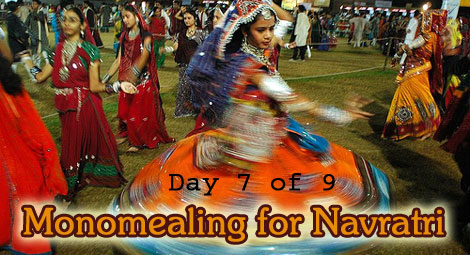
Day 7: Happy Navratri! It's the final three days, and today begins the special day of focusing on the attributes of Goddess Saraswati, recognizing those same feminine qualities within ourselves, and drawing inspiration to continue growing and changing in the most wonderful ways.
 Saraswati has always held a place of honor in our home. When we traveled to India a very long time ago(*), we purchased a batik wall hanging of Goddess Saraswati and framed it. It's quite large and we've always hung it in places where we wanted to focus on the energy that she represents to Hindus: creativity (particularly in the areas of music and art) and knowledge/intelligence (usually linked with education and literature).

To keep all of you inspired while we are away, we've asked some
remarkable individuals to share their raw food stories with you. Enjoy!