Know Any Literary Animal Lovers?

Hi there PureJeevan readers! We wanted to let you know that Jim's new novel CHROO is available on Amazon. It's a crazy adventure involving a billionaire heiress, her Chihuahua BFF ("Chroo") and a host of human and animal characters. Find out more on Amazon! Here are some links:

Today we'd like to introduce you to one of the sweetest, most creative, and passionate raw foodists we know. She's petite, pretty, pleasant, powerful! She continually shares her knowledge about the raw food lifestyle with others and educates many individuals about our human rights when it comes to the foods we grow and consume. She's up on the latest regulatory activities relating to health and diet issues going on within the US government, and speaks out when our rights are in jeopardy of being taken away.
Take the Time to Meet... Rhio!

Wow, with literally years of raw food coverage under our belts here at Pure Jeevan, we don't think we've ever devoted an entire post to fermented foods. Well it's high time we do, don't you think ? Check out the video and then we'll discuss it further...

Jim here... An unusual occurrence prompted this post, and I'm unsure as to whether it's significant. I've talked about some of my favorite non-raw items before -- things that were tough to leave behind as I embarked upon this raw foods journey. I think I covered pizza in a relatively recent post.
Corn chips were another. In fact, after Wendi went 100% raw and I more or less began to follow her dietary choices, I clung to corn chips for dear life for quite a long time. I began eating a LOT of salsa in those days. Sometimes, that would be all I'd eat for lunch -- just an entire jar of salsa and a bag of corn chips (though, by then, I'd at least usually buy the organic ones and, quite often, a baked variety of chips as well).
When I finally decided I'd be better off transitioning to an all raw lifestyle, I figured my love affair with corn chips had come to an end. Farewell beautiful chips, I thought. I'll never forget our delicious crunchy time together. And that was that. I never looked back.
But then, at a local raw foods pot luck, I met a raw chef who had more or less perfected a raw corn chip recipe. Could it be , I thought. Has this delicacy returned to me after all, as though via some sweet culinary destiny? Ahh, my friends, that was a glorious day. Chips and salsa had returned to me in an enlightened raw form. I could enjoy them once again, guilt free. And enjoy them I did -- usually using a local shop's "Peruvian Purple Corn" (a living, sproutable, dried corn product).
Alas, fate stepped in once again. "Thou may partake of these crisps any time thou wishest," fate boomed. "Yet, in order to do so, thou must prepare them thine self using thine Vitamix and requiring an enormous flax-sticky mess with extended clean-up time, and thou must have parchment paper available at all times, and thou must exercise great care and patience in using your Excalibur, for these chips must dry for many an hour before ready."
Yeah, it was a bit of a chore to produce them. So, as the novelty of chip making and eating wore off, I slowly decreased the frequency of going through the messy, time-consuming hassle of preparing them. Until yesterday, it had been literally months since I made a batch. But... we'd ordered a few pounds of the corn from Natural Zing lately, and I found myself with some extra time the other night. So...
Now, I'm going to pause for a minute for a tangent on digestion. I know a great majority of people, it seems, complain of various digestive disorders. As a result, we have many raw foodie specialists schooled in the nuances of food combining. Oddly, I never paid much attention to these discussions, nor offered input on these matters, because they simply weren't relevant to me.
In fact, I likened my own digestive system to some kind of nuclear powered garbage disposal. It didn't matter what I ate; digestion wasn't a problem for me. So, for example, I'd routinely finish off heavy meals, and then follow them with a huge slice of juicy watermelon (a major no-no according to common wisdom). It just never bothered me.I always joked that, even though I'd been raw for ages, I could still probably go eat a Big Mac (not that I would) and be unaffected by it.
So powerful was my stomach acid that, admittedly, I sometimes privately *worried* whether this might mean something was wrong with me. I mean, shouldn't some of the things I was eating make me sick? Was it "good" to not be made sick by what is generally regarded as poor food combining choices? Do people commonly suffer from problems of efficiency as well as deficiency ? I still do not really know the answer to these questions, and suspect the answer is rather complicated, anyway. Fortunately, it doesn't matter now because...
Something finally made me sick!? I'm laughing now about that, but I spent most of the evening in terrible stomach pain after having over-indulged in some of those (in)famous raw purple corn chips.
So, what happened ? That's an interesting question for me. Here are some possibilities: (1) Perhaps my hyper-active digestive system *was* in fact a problem, and now it's beginning to normalize. Perhaps, had I been healthier all along, I would have been made sick by some of my food choices, but now my health is improving!? (2) Perhaps it's a fluke and I simply shouldn't have eaten mass quantities of corn and flax so late at night. (3) Perhaps my body is improving in its ability to communicate with me, and/or that I'm getting better at listening, and that the message here is that corn is not something my body gains nourishment from -- at least, not in this dried-reprocessed-redried form. After all, some leading raw food authorities, like Gabriel Cousens, aren't fans of corn (even fresh corn!).
Oh sure, there may be other explanations (e.g., "a bad batch of corn"). But, I'm actually most interested in #3, above. Even though this is an extreme example (more intense than it needed to be), I'd like to think that I'm getting better at knowing what I'm being nourished from and what I am not. I'd like to think that this is a latent sense that can be developed, much like our ability to know things by feeling and intuition rather via pure rationality all the time.
But, with food, I think it's a matter of inventorying your physical sensations head to toe, and also as a whole. How is the food you're eating making you feel? Do you feel satisfied or still hungry? Do you feel light or is the food sitting kind of heavily? Do you feel energized or dragged down? How's your mental clarity? Do you feel spacey or more grounded? Do you feel noticeably happier or more sad than before? How are all of these things mapping out over time? Is your weight moving in a positive direction for you? Are your illnesses improving? Food is medicine, after all; it has all of these effects and many more!
For now, I think I can safely check purple corn off of my own personal list of foods that make me feel good. I suspect my old assertion about "being able to eat a Big Mac without any side effects" no longer applies -- and maybe this is a good thing. I think perhaps it signals some progress in my journey toward optimal health.
In any case, I think this kind of purposeful introspection is healthy, and something we should all strive to do more often.How about you? Had any similar experiences? What have you learned from them?
Original Comments
Below, we have included the original comments from this blog post. Additional comments may be made via Facebook, below.
On April 15, 2009, wrote:
The diets of raw foodists are as varied as those of individuals consuming the Standard American Diet. The majority of raw foodists are either: 1) gourmet raw foodists, who consume dishes that are usually heavy in fat from nuts (Pure Jeevan started out this way); 2) basics raw foodists, who don't process their fruits and veggies in blenders, food processors, or dehydrators; 3) mono raw foodists, who consume single foods for each meal (i.e., a meal of only apples for breakfast, romaine lettuce for lunch); 4) low fat raw foodists, who consume processed meals at times, but prefer to keep their fat intake below 20% of their calories (Pure Jeevan is working toward this); and
Take the time to meet #5 ...
This is my version of a beanless hummus. One of my close friends adores the taste of Israeli Hummus and she thinks this tastes just like it. So, try it for yourself and let me know! Jim will eat this if he doesn't see me using the zucchini (he doesn't like the idea of eating zucchini for some reason). :-P
Hummus
3 cups of zucchini (peeled and chopped)

Continuing with our week of ways to keep a sharp mind, let's focus on the one widely accepted indicator for dementia or alzheimer's: heart disease. If one wants to dramatically reduce the chances of brain degredation, the first step to take is keeping the heart healthy.
The key advice most health specialists agree on when it comes to a healthy heart is the reduction (ideally eliminatain) of unhealthy fats in the diet. The unhealthy fats are usually seen as solid fats, like butter, margerine, and shortening. However, it's important to not overlook the fats that are also found in meats. By substituting unhealthy fats with something healthier for your heart (like extra virgin, cold-pressed olive oil), as well as transitioning to leaner meats if you are a meat eater, you will be taking some important steps in keeping your heart healthy, as well as your mind.

Wendi tells a funny story sometimes about a woman she'd met who was considering undergoing gastric bypass surgery to help her lose weight. When Wendi asked the woman whether she'd consider changing her diet to a raw foods regimen, she responded with something like, "Oh, no, that's too radical."
This is really what it's come to in society; having part of your digestive system surgically altered (in a profound, irreversible, dangerous, and invasive way) is no more than some nonchalant, consequence-free elective decision ... while eating more salads is viewed as "radical."
in-tu-i-tion n. 1.a. The act or faculty of knowing or sensing without the use of rational processes; immediate cognition. b. Knowledge gained by the use of this faculty; a perceptive insight. 2. A sense of something not evident or deducible; an impression.
FASCINATING!? While out to dinner with our friend Debbie, she brought up the topic of intuitive food preparation. This is really amazing, groundbreaking stuff that probably few people have ever seriously attempted. Now, Wendi has discussed intuitive eating many times here on the blog in the past. Intuitive eating is basically when you get in touch with those "perceptive insights" mentioned above -- a kind of communication with your own body in which you just "know" that you should eat a certain food. Ever, say, walk past a large display of apples and simply know that eating one would make you feel good? That's intuition.

Today is Wendi's Birthday, so please join me in wishing her all the best for the coming year! Since this was our first year in Portland, just an hour-and-a-half's drive to the Pacific, I'd known for ages what we were going to do to celebrate Wendi's birthday -- a picnic at the beach, of course!
A few days ago, the weather reports for the central Oregon coast cities unanimously agreed: Rain! ?But, after living here for a few months, one learns that a forecast of rain *never* means that it's going to rain all day long. Rather, it just means that it'll likely rain at some point, or at many points, in a given day. The rest of the time, it could very well be perfectly sunny outside!
Read more: What Are Negative Ions, And Are They Beneficial to Human Health?

Today, and every day, I am thankful for lovely Mother Earth. Where would we be without Mother? May we always care for her in a gentle and loving way.
====================
If you like raw cauliflower and fresh mint, I recommend you try this dish! Jim and KDcat don't like raw cauliflower much, so this dish wasn't a big hit with them. I, however, consumed the entire dish before the end of the day! I LOVED it!
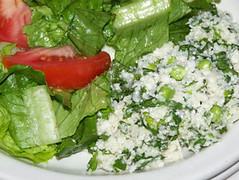
Read more: Makin' It Monday: Refreshing Cauliflower Mint Salad