Know Any Literary Animal Lovers?

Hi there PureJeevan readers! We wanted to let you know that Jim's new novel CHROO is available on Amazon. It's a crazy adventure involving a billionaire heiress, her Chihuahua BFF ("Chroo") and a host of human and animal characters. Find out more on Amazon! Here are some links:

What a fun weekend we'll be having! We leave later today to visit some friends in Virginia. Sweet little Rhia (a niece's daughter) will be turning one year old and there will be a huge party for her. I'll be wearing a sari, there will be lots of Indian food to tempt me back to the cooked side of life (but, never fear, I am strong!), and we'll be staying up very late enjoying the party Saturday evening.
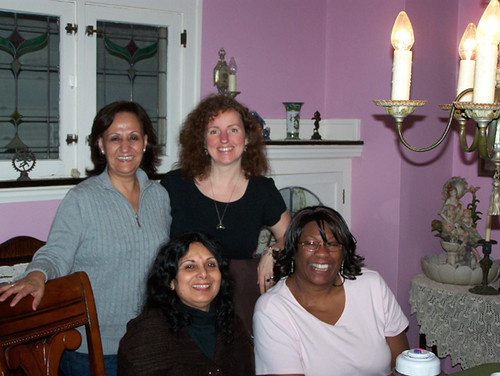
Mohtarama, Wendi, Mamta, Deborah

I'm excited about something that one of my friends has been working on. Melissa is gifted in so many areas, one of which is wild edible identification. She recently told me she was working on something that would help a lot of people and I was excited about her new project. Well, now it's ready to be shared with everyone!
Take the time to meet...

Jim here... Whenever I want to learn how to do something new, here's how I go about it:
>>> I practice. <<<

It's been an interesting week for us here. We've looked at a handful of ways that people may either become obese, or sustain an obese body -- all largely for reasons outside of dietary intake. The three situations we looked at included maintaining weight as a defense mechanism (Tuesday), becoming obese through worrying about becoming obese (Wednesday), and obesity as basically a physical manifestation of a non-physical longing (Thursday).
Without a doubt, these are just three out of hundreds of possible non-physical contributors to poor health. The idea was merely to start a thread on these things, opening people's minds to possibilities that perhaps they'd never seriously considered.
All this week on the Pure Jeevan blog, we'll be focusing on diabetes and the movement to naturally reverse it. We're working up to April 25th (my birthday!), which has been selected as the official Reversing Diabetes Naturally Day.
A warm, intelligent, and loving individual named Dr. Gabriel Cousens has been doing ground-breaking work and research on diabetes and diet. What he has found is so surprising that many people dismiss what he is saying, believing it to be false. But, I (along with many others in the natural health movement) am here to tell you that what Dr. Cousens has discovered is TRUE! You probably already know what he has discovered, of course: a change in diet (particulary including raw foods) can reverse diabetes!
Dr. Cousens did a small study on some diabetic individuals, documenting his work and findings. The resulting documentary is remarkable. We hosted a viewing of the movie at our home and the room was packed. Everyone sat silently, absorbing the truth of what they were seeing: diet CAN make a difference in a disease that is thought to be permanent and debilitating. Many of us had tears silently streaming down our faces, touched by the moving stories that were shared in the documentary. We were filled with a sense of excitement that there IS hope for those with diabetes!
Read more: Our Focus This Week: Reversing Diabetes Naturally
?
Jim here... A few months ago, I'd posted an article here on the topic of Cognitive Dissonance. This theme seems to crop up from time to time in questions people ask about the raw foods lifestyle. For example, one new raw fooder recently posted a question in a raw foods forum asking whether other raw foodies had reached a place in their lives at which things changed so much that they felt as though they were living a contradiction. Because this struck home for me, I'd like to reiterate my response, somewhat edited, below.


Wow, with literally years of raw food coverage under our belts here at Pure Jeevan, we don't think we've ever devoted an entire post to fermented foods. Well it's high time we do, don't you think ? Check out the video and then we'll discuss it further...

To help keep all of you inspired, we ve asked some
remarkable individuals to share their raw food stories with you. Enjoy!

We may never fully comprehend the mysteries of life and death. One thing is for certain, however, with both we experience tremendous amounts of emotion.
At this moment, we are experiencing extreme sorrow after the still birth of our niece, Elizabeth Marie. She was named after my mother who died a few years ago. During this period of tremendous grief, we will be spending time with my dear sister and her family, offering our love and support.
Here's a video demonstrating a technique for making super-fast, vibrantly beautiful, tasty salads! If you frequently find yourself in a rush, but also want a healthy meal, definitely check out this mandoline technique. (Further commentary below, after the video...)

A Pure Jeevan family members asks:
How do I eat dandelions? I heard they are good for me, but I tasted one and they are so bitter. I don't know how I could ever eat them, even if they are supposed to be so good for me. Can you help
First, congratulations on being so open-minded when it comes to trying new things! Too many people never move far away from their comfort zones, especially when it comes to diet, and they miss out on a lot. So, good for you to at least consider and then try dandelion greens!