Know Any Literary Animal Lovers?

Hi there PureJeevan readers! We wanted to let you know that Jim's new novel CHROO is available on Amazon. It's a crazy adventure involving a billionaire heiress, her Chihuahua BFF ("Chroo") and a host of human and animal characters. Find out more on Amazon! Here are some links:

 EVERYONE LOVES RAW TACOS!!! So, this week, we're going to show you FOUR "Makin' It Monday" videos instead of just one. These were filmed in Berkeley, CA, at our dear friend Carolyn's apartment. We hope you love these recipes. We actually eat raw tacos quite regularly -- especially when tomatoes are in season.
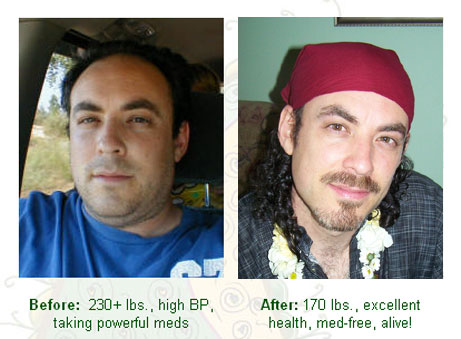
Jim here... Sorry for being away for so long. We've got SO much going on these days, it's mind-boggling! More on that later, as I have something in mind already for today...I should start by clarifying that I've been basically raw for almost 4 years now (high-raw, you might say). During the first nearly-two years, I still ate meat from time to time. Actually, I still ate (and drank) almost everything from time to time -- sugars, processed foods, alcohol, you name it -- only less than I did before, and within the context of a dietary intake consisting of a significantly higher percentage of living foods. In those early years, I'd estimate I was averaging 75-90% raw. Not bad ... I definitely experienced improvements in my health!
 The big change in consciousness didn't follow until two years ago. (This is an interesting point because, as you can see, I wasn't "ready" for a bigger change for two years into eating a lot of raw foods!) I suppose the difference was that, during the early years, I was pretty much raw by default rather than by conscious decision. As Jules said in Pulp Fiction, "... my girlfriend's a vegetarian. ?Which more or less makes me a vegetarian..." Yeah, that was my case back then, too, although I certainly grew into it (and am thankful that I did).
Read more: Reflecting on Two Years of an Exclusively Raw Die
A few of my friends have recently reached some special personal milestones in the raw food world. Congratulations go out to...

Sam: ONE YEAR RAW!!!
EXCITING ANNOUNCEMENT!
Kevin Gianni Wants to Meet
Pittsburgh Raw Foodists This Saturday!
UPDATE: Location is set for my home in the South Hills
Kevin and Annmarie Gianni will be in Pittsburgh for the Steeler's game on Sunday. They'd love to meet Pittsburgh raw foodies while they're here! So, if you can make it to meet up with them, let Wendi Dee know as soon as possible. We'll either be meeting at the East End Food Coop (if I can reserve the space at the last minute) or at my home (South Hills/Brentwood). Please respond by Friday at 5:00 p.m. about your availablity.

Today we welcome Leela Mata from the Peaceful Valley Ashram (www.LeelaMata.com) for another episode of Pure Jeevan's Makin' It Monday "Guest Raw Chef" edition. In this episode, Leela demonstrates how to make a delicious summertime chutney.
Since Marigolds are seasonal, and likely available only in certain areas, please consider them optional. Perhaps substitute another edible flower of your choice (and let us know if you do!). Aside from making this tasty recipe (which we later enjoyed on a salad), Leela also makes some important points about intuitive eating and intuitive recipe creation. Here's the vid:
Read more: Leela Mata Makes Mint Marigold Chutney on Makin' It Monday "Guest Raw Chef" Edition
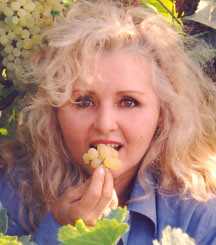
If you are in the Pittsburgh area this weekend, you are in for a real treat! Rhio will be visiting with us and she'll also be meeting with others during her two-part presentation for the Pittsburgh Raw Food Meetup on Saturday.You don't have to be a member of the meetup to enjoy this presentation. Below is information about the event you won't want to miss!
Two-Part Presentation by Rhio includes Dinner

It's day three and all is going okay. I seem to have a bit more energy since it's not all being sapped trying to digest complex meals. The last time I did mono mealing, I received countless emails from Pure Jeevan members who were concerned I was doing something unhealthy. Eating simply for nine days, however, is not unhealthy.
 Did you know the body doesn't need a full range of vitamins and minerals at each and every meal? Somehow many of us were taught that each meal needs to be a complete balance of vitamins, minerals, proteins, fats, carbohydrates and that just isn't the case. What the body needs is a well-rounded diet, overall, to be in a balanced state. If, over the span of a month or two, you've consumed a variety of fruits, vegetables, nuts, seeds, and sprouts you will find that you've met just about all of your nutritional needs.
 Wendi's initial observation about Santa Rosa was that, at first glance, it seemed similar to many of the places they'd visited in Oregon. However, once the sun came out, she said you could feel that California sunshine starting to warm up your body. This is Northern CA, so it's not overly hot; it is, however, much sunnier and a bit warmer than the parts of Oregon they visited.
Wendi and KDcat were hosted by a lovely couple, Shea Lynn Baird and Stephen Barlow (and their adorable dog, Bella, pictured above). You might be familiarwith Shea already, as she and her husband launched the popular Monday Night Live series, broadcast Monday nights from Cafe Gratitude. Shea is a long-term raw foodist, so Wendi interviewed her and asked some questions about what she's been doing. It's a really great, highly interesting interview. Wendi also asked Shea to offer some helpful advice for our Pure Jeevan family members. I think everyone will enjoy the video:
Read more: Santa Rosa with Shea Lynn Baird, Stephen Barlow, and Bella -- And More!
Jim here... Recently, a commenter on this blog, Lannette, mentioned being a cardiac rehab nurse. For some reason, reading this set my wheels spinning in various directions, among them onto the topic of meat consumption in the world. To begin, I'd like to recap something I'd said in response to her:
... it *astounds* me how people joke about heart health where I work. People around here routinely return from medical exams and actually adopt rather mischievous grins when they reveal how high their bad cholesterol levels are. It's like they're saying, "I know meat and dairy are bad for me, but I'm going to keep on eating it anyway. Isn't that funny ??!!!" Ummm, no. It's sad. They laugh it off as though there could be no possible future reckoning for them. It's reminiscent, IMHO, of Dr. Viktor Frankl's book "Man's Search for Meaning," in which he describes a psychological phenomenon he termed the "delusion of reprieve." For anyone unfamiliar w/ that, the term describes the phenomenon via which those faced with certain death (or near certain death) mentally construct some way out of it. They are deluded into believing that they'll have a reprieve from the inevitable. So, it's exactly the same to me -- these people see the heart attacks coming. They simply refuse to do anything about it, refuse to change their habits, deny what their blood work says to them. Why? Because they think "I'll be okay. Sure, this leads to heart disease in most people, but not in *me* because I'm a strong guy, I'm macho, I'm not as fat as some other person here, etc." Mostly, it's the meat, I think. It's got a powerful hold on our society...
So, today I wanted to write a little bit on the topic of meat consumption. This is an enormous issue, in my opinion. If you're reading this, it likely means you're already at least a vegetarian, so I do not need to quote you any saddening statistics on the horrors of the meat industry. In fact, before writing this, I decided to visit the PETA web site quickly in order to glean a few slaughterhouse facts. But, in no time, I became markedly depressed, so I'll largely avoid focusing on specific negative imagery here.
Here's part two of Wendi's travelogue from Sedona:
After leaving ChocolaTree Cafe, and interviewing the lovely Kelly, we went to the famous Sedona Airport vortex spot, but there was no parking, so we drove to the top of the rock/mountain and there was a farmer's market going on. We took a quick video of what was happening up there, to share on the blog. There was a cool musician playing: Vighas Kendzia, who plays piano, native flutes, sax, and more. He's from musicfromthegarden.com and I told him he'd be on our site. So, if you made it here to check out the video, welcome, Vighas! :-)
From there, we headed out to find a vortex spot that Kelly described. I'm not sure if we found the exact spot, but we really enjoyed the place we found. We ate our lunch there and it was DELICIOUS! The water, the trees, the large boulders, the fresh air...it was a very special place. We then drove to one of the more well-known hiking/vortex spots: Bell Rock.The hike in is a bit over a mile, then there is the climbing (which isn't really recommended by the park officials, but it's absolutely necessary to fully experience Sedona!). I gave KDcat some space to explore the area a bit on her own, as this was a very special time for me a few years ago. There is a certain energy and cleansing that happens when visiting Sedona. If any of you are going through changes in your lives, or feel like there is a shift that needs to happen, I highly recommend visiting Sedona for a few days. KDcat felt some powerful personal healing, which didn't surprise me at all. It's a place I'd love to visit every few years, or so, as it definitely holds some sort of healing energy. Maybe it's just the views, or the peacefulness of being away from everything. Whatever it is, I highly recommend visiting Sedona and climbing around on the rocks!
Some of you know about my love of Sedona, AZ, especially those who were following the Pure Jeevan blog a few years ago. It was a visit to Sedona in 2008, for a Raw Spirit Festival, that my life dramatically changed once again. This time it wasn't the food that was healing me, but it was related to the raw food lifestyle. I felt healed on many levels while there in Sedona, surrounded by the beautiful red rocks, cool and sandy earth beneath my bare feet in contrast to the warm sun on my skin, and embraced by a vibrant, loving community of like-minded individuals.
There's a certain magic to Sedona, if you believe in such things (well, I suppose it's there even if you don't believe). ;-) ?For me, I believe that we can many times find scientific reasons to explain much of the magic in this beautiful world, but that doesn't have to diminsh the experiences we have. Sedona is known for its powerful vortex energy, which has a way of stirring up our own energy systems and bringing about healing, balance, awakenings, etc. ?Is this energy measurable through science, or is it more metaphysical in nature? I don't know and to be honest, it doesn't matter to me. There were life-altering changes that took place while I was in Sedona in 2008 which rippled out beyond me and touched the lives of those very close to me, as well.Here's a quick video of a Sedona Farmer's Market and a clip of KDcat and I at an area we claimed to be flowing with vortex energy, even though it wasn't necessarily one of the more touristy vortex destinations.
Read more: Sedona Farmer's Market and Lunch at a Vortex with KDcat
THE TOUR IS COMPLETED! For pictures, videos, and commentary about their adventures, check out the Trip Dashboard!!

For those of you who've been following our plans for a few years, you know we've been preparing for a cross-country tour for a long time. The plans have expanded, contracted, changed dramatically, but the core of the idea has always been there: we plan on relocating to a new city and we need to find the right place for Pure Jeevan to settle. In order to do that, a big cross-country tour is in order. So, the exciting news is that we're leaving in a couple of weeks to check out some of the cities/towns we're thinking might be a perfect fit for Pure Jeevan! The sad news is that all of us can't make the trip. Jim will be holding down the fort here in Pittsburgh (i.e. the house still hasn't sold and he still needs to keep his corporate job so we can pay the mortgage).