Know Any Literary Animal Lovers?

Hi there PureJeevan readers! We wanted to let you know that Jim's new novel CHROO is available on Amazon. It's a crazy adventure involving a billionaire heiress, her Chihuahua BFF ("Chroo") and a host of human and animal characters. Find out more on Amazon! Here are some links:

 Six months ago, we devoted a week's worth of coverage here on Pure Jeevan to diabetes. You'll find diabetes statistics, raw food resources for diabetes, stories of people who have beaten diabetes using a raw foods diet, an audio interview Wendi and I did about diabetes, and more.
We also linked several times to the Movement to Reverse Diabetes Naturally, where people could pick up copies of two amazing DVD documentaries, "Simply Raw: Reversing Diabetes in 30 Days" and "Raw for Life." Through an enormous effort during those weeks back then, the RDN Movement spread the word about raw foods to literally thousands of people!
Read more: "Raw for Life" and "Simply Raw" on Special This Week

To keep all of you inspired while we are away, we've asked some
remarkable individuals to share their raw food stories with you. Enjoy!

Jim here... Yesterday I promised to hypnotize you, so here it is (below). This is something I published elsewhere long ago, slightly modified. Interestingly, in the original version, I'd made reference to various cooked food items -- for example, describing the smell of fresh-baked muffins as comforting. Well, as pleasant as that smell may be to everyone, I just thought it would be odd to include it here on a blog devoted to raw foods.
I think, by the way, that next week I may post a piece on aroma and how it dovetails with raw foods. I'm sure there are interesting things to write about that topic. For now, I'll simply point you to the funny hypnotism picture, below. While it characterizes hypnotism as a sort of mystical power wielded over another's true will, that's definitely not the case. As you'll see, the text below is really just a very innocent, very calming, relaxing suggestion. Read it seriously and see if you aren't relaxed and happy afterward. Have a great weekend!

I'm makin' nothing today, or for the next eight days! Think of all the time I'm saving myself by consuming only mono meals for nine days. What will I end up doing with that extra time? So far, today, I've spent a long time outside soaking up the sun's beautiful rays that I've missed far too much this Winter. I have no idea what the rest of this mono journey is going to be like, but I'm up for the adventure!
I've started a little journal on my desktop to track my nine days of mono meals, so I'll share what I've written from time-to-time. Here's what I have, so far...


When we found out that there was a raw foods restaurant in Key West, we knew we'd visit for sure. So, after a wonderful lunch of some of their raw staples (raw tacos and peanut noodles), it was no surprise to us that we found ourselves drifting back toward Help Yourself after the sunset celebration at Mallory Square (the main nightly Key West sunset viewing celebration). When we arrived, we asked to interview the owner, Charlie Wilson. She'd just left after working a very long day at the restaurant. But, an emplyee called her anyway and she graciously agreed to come talk with us! So, here's a bit of that conversation:
Read more: The Key West Raw Scene: Pure Jeevan Gets Up-Close and Personal with Charlie Wilson!
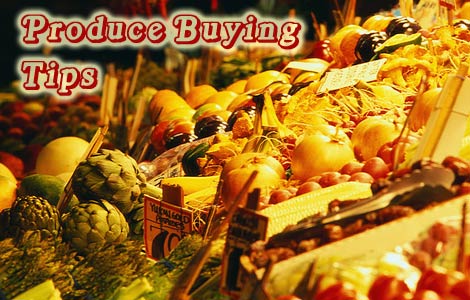
I suppose that, when you buy more produce than the average consumer, you come to observe a thing or two about that produce. We can't say for sure that our assertion is 100% true, but it sure does seem true to us. You see, we've noticed that produce we purchase at farmers' markets tends to keep longer than store-bought. Give it a try yourself, and see if your produce stays fresher longer!
Of course, there are many other benefits to shopping at farmers' markets. Aside from the produce being able to stay fresh longer, you're getting it in a much fresher state than store-bought. So, the things you eat first will be "extra" fresh tasting.
Read more: Produce Buying Tip: Farmers' Market Produce Lasts Longer!
Hi Everyone. It's Friday... Let's have some fun!? For today's blog entry, I thought I'd post my submission to the recent video contest held by the Vita-Mix company. They were looking for a new spokesperson, and offered a $10,000 prize for the best video. I didn't make the final cut, but did have a good deal of fun making this short video. Hope you like it:
Read more: Fun-Filled Friday: Jim's Entry into the Vita-Mix Promotional Contest

 Here it is: Putting it all together. Here you'll see what we use for our taco shells and how we build up our taco. Quite often, we also make a raw sour creme using cashew nuts and lemon juice. But, for these tacos, it'll just be meat, salsa, and guac. Enjoy!
 Jim here... Wow, what a great week it's been here at Pure Jeevan, focusing on diabetes for five straight days!? To cap it off, I have some fun news to share:? Tomorrow is Wendi's birthday!? And, guess what ? When I asked her what she wanted to do to celebrate this year, she said she'd like to devote her special day to spreading the word about the Movement ot Reverse Diabetes Naturally. So, we made some calls and sent out some press releases.
A few venues were enthusiastically receptive, so we're hitting the streets tomorrow -- celebrating Wendi's birthday by handing out diabetes awareness literature! Here's the press release I sent to the media, which tells where we'll be. If you're from Pittsburgh, we hope you'll stop by to say hello and/or ask questions about natural diabetes reversal and of course raw foods!
= = = = = = = = = =
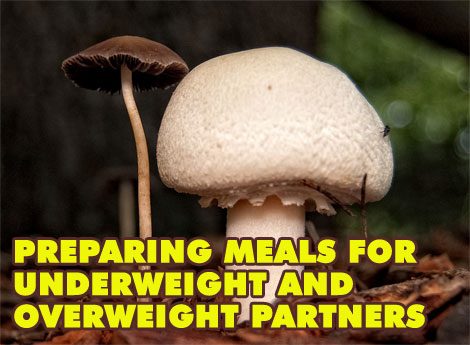
Recently, we were asked how to balance meals when one individual is an under-weight-open-to-raw-semi-carnivore and the other is overweight and feels the need to be on a raw food diet to lose weight and regain health.
Many of you reading this will agree: It's wonderful that the partner is open to the raw food diet! That's going to make life so much easier. Many on the raw food path lack a supportive partner, and that's an issue we've discussed in the past here on the blog and will continue to address in the future.
?
As we'll show over the course of this week, the Raw Spirit Festival is about much more than just delicious, nutritious raw food. In fact, there's usually so many fun things taking place simultaneously while you're there that it's easy to forget about the foods completely!
I'd been there an entire day before realizing that there was a raw food court on site. (Mostly, I'd been dining on fruit I'd brought along and had stored in a cooler in my tent!). Thankfully, I did eventually discover the food court, and it was really something special. To call it a "food court" is almost demeaning, as that phrase brings to mind bland "mall food" restaurants that serve up mostly fast food fare. At the RSF, you're treated with many delicious options, which can make choosing a place to dine rather difficult!