Know Any Literary Animal Lovers?

Hi there PureJeevan readers! We wanted to let you know that Jim's new novel CHROO is available on Amazon. It's a crazy adventure involving a billionaire heiress, her Chihuahua BFF ("Chroo") and a host of human and animal characters. Find out more on Amazon! Here are some links:



Thinking of Writing a "My Raw Story" Piece for Pure Jeevan's Blog
Fantastic! We d love to consider running your raw story to help inspire others. Please know that the "My Raw Story" series isn't only about success with weight loss on the raw food diet. It's about an overall life change that happens when a raw food diet is followed. We want to hear how your life was dramatically changed by adopting a raw food lifestyle. Below are some guidelines to help you submit your story:

A Pure Jeevan family member recently asked us how they can tell if they're consuming too much protein. They felt because they have been eating too many nuts and seeds, because of how quick and filling they are, that perhaps their intake of protein is too high in their diet.
We fully understand the convenience of the quick energy that eating nuts and seeds can bring to one's diet. We also have learned, through experience, that the more we rely on this type of nutrition (high in fat), the less energetic we feel long-term. There's nothing wrong with eating nuts and seeds as a pick-me-up between meals, as long as you're eating a small handful of them and your body does well with fats (not everyone can easily digest fats).
All this week we're continuing to feature a variety of answers to the question "Are Raw Foodists Crazy " from various friends of Pure Jeevan. If you're just now tuning in, please read the back story and introduction to this, as posted on Monday.But, for now, let's continue with posting the rest of the excellent responses sent in! Enjoy!! :-)
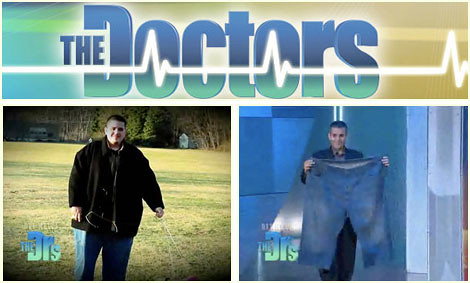
The raw food movement isn't creeping along anymore! Just recently I wrote that Angela Stokes was interviewed by CNN about her miraculous weight loss on the raw food diet. Well, today the shining star for the raw food community is none other than Philip McCluskey! He was a guest on CBS's nationally syndicated show called "The Doctors." Philip, if you don't already know, is down 200 pounds and his entire life has changed on raw foods. Like so many others, he is actively spreading the word about raw foods and health.
I don't watch TV, but we do have a television set for watching occasional DVDs. So, I planned on turning the set on and actually watching TV for the first time in I don't remember how long! However, I turned it on and realized I don't even know on what channel CBS is located. I tried to flip through the channels, but our TV doesn't automatically let you scan through channels for some reason. So, I was manually pressing and entering numbers into the remote control, but never found the correct channel. I'm sure I didn't miss it, however. In this community, we're all about supporting each other and spreading the word about raw foods and health. I am certain that within a few hours there will be a video up on YouTube of Philip's shining moment on CBS. Once it's available, I'll edit this post and include the video!
Read more: Philip McCluskey and Raw Food Diet on CBS's "The Doctors"

This is the first installment of a new series that we plan to run occasionally here on the Pure Jeevan blog. The series is called "Raw Foods 101" (the same name as our free eBook that has now been read by more than 5,000 people around the world!). Raw Foods 101 will become the latest addition to our category list (available along the right side of our sidebar). In time, clicking on Raw Foods 101 will deliver a plethora of raw food tidbits.
So, where should we start? ... How about the topic of soaking nuts and seeds ! This is a question that comes up repeatedly in emails sent to Pure Jeevan.
Read more: Raw Foods 101: Why Should You Soak Nuts Before Eating Them?
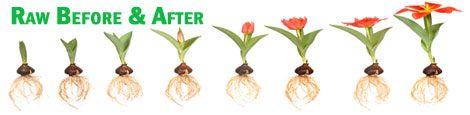
Yesterday, we covered the concept of "unsubscribing" from unhealthy practices. This was of course based on the common Internet practice of subscribing and unsubscribing to various things like newsletters and email lists. I receive quite a few of these each day, many raw foods ones and many non-raw ones. Among the non-raw, one that has been interesting to me lately is called the Art of Non-Conformity, penned by Chris Guillebeau. Basically, Chris' site chronicles his adventures in reaching his personal goal -- to travel to every country in the world! Along the way, he writes about all sorts of out-of-the-box things, as the blog name implies.
Today, he posted something that is remarkably insightful and applicable to our subject matter here, even though his context was completely different. The entry, entitled simply "Before and After," discusses the drinking water problems in much of Africa, focusing for the moment on Liberia. Atop the piece (the "before" picture) is a muddy water hole, the only source of drinking water for one village. The next picture (the "after" shot) shows a different, very happy village obtaining fresh, clean water from a newly installed well. Chris closes his article with the following quote:
Note: This entry is not meant for our regular readers. Search engines are directing people to our page when they enter "mono and headaches" and I want to take this opportunity to reach out to those who may not know about this amazing lifestyle the rest of you already know about! ;-) Plus, I want to help them with their headaches.
Mono and Headaches: Looking for Help
Mononucleosis (Mono) is a common viral illness. When children develop mono, it is usually not obvious since it seems like a normal cold. When teens and adults develop mono, however, the symptoms are much more severe. Most individuals will feel better within about three weeks, but fatigue can continue on for about three months! Who wants to feel ill that long? Who wants to feel tired for MONTHS ! Who wants to suffer from such severe headaches ! Not me, that's for sure.
Read more: Mono and Headaches: This Entry is Not For Our Regular Readers

Jim here... We've always been fans of the Simply Raw people -- or, as I call them, the "Reversing Diabetes Naturally" people. Or ... are they the "Raw for Thirty" people? Seriously, they should probably settle on one name, don't you think? In any case, they emailed us again lately to let us know about a new video promotion they're doing, in which they'll be sharing some great videos from Morgan "Super Size Me" Spurlock, David "Avocado" Wolfe, Mike "Natural News" Adams, and Dr. Joel Fuhrman. (Sorry, I don't have a nickname for Dr. Fuhrman yet.) I haven't yet seen the videos, but I'll be checking them out ASAP to hear what these gents have to say in order to further awareness about this important topic. Here's the link:
Here's Wendi in Portland interviewing Wes Hannah, one of the owners of Blossoming Lotus, a vegan restaurant that also serves a lot of delicious raw foods. Wendi said it's worth a trip to Portland just to eat there!
[Sorry about the video quality there. I was having some trouble editing this on an old machine. Wendi took the good one with her on the trip!]
Read more: Wendi Interviews Wes Hannah of Blossoming Lotus Restaurant
I receive many questions from our readers, and I am very happy to respond. I truly love helping others, but I don't do it just for them.When I was younger, many times I thought I was performing selfless acts of kindness whenever I'd help others. However, now I realize I am experiencing pleasure by helping others. I find it very rewarding, as though I am fulfilling my purpose in life.
Do you know what your life's purpose is? Do you believe there is such a thing These aren't rhetorical questions; I'm really interested in hearing your response. Well, I've known my life's purpose (actually, I have more than one) from a very young age, but it wasn't until recently that I began living it more fully. My purpose in life is to love others---to connect with others through an immensely deep and genuine love.One way I've found for spreading my love and realizing my purpose is by helping others.
When I answer questions for our readers, I speak from my heart. I think it's important to realize, however, that the answers we receive from others are *their* answers to similar questions. Maybe their answers will work for us, but maybe they won't.I've stressed this many times, but it never hurts to repeat it: Listen to others, hear what they have to share, but mostly listen to your own inner voice. We all have the answers deep within ourselves, even if we can't always hear them very well.
Read more: Life's Purpose and Reader Questions: Emotional Eating