Know Any Literary Animal Lovers?

Hi there PureJeevan readers! We wanted to let you know that Jim's new novel CHROO is available on Amazon. It's a crazy adventure involving a billionaire heiress, her Chihuahua BFF ("Chroo") and a host of human and animal characters. Find out more on Amazon! Here are some links:
Is cacao dangerous or is it a super food? Anyone who's been learning about raw foods knows about raw cacao (check out a recent episode of Know Your Food: Cacao). It's raw chocolate without all the processing and additives normally included in the chocolate bars many buy from standard grocery stores. In its raw form, cacao has different nutritional components than typical processed chocolate. Many claim that raw chocolate is filled with mega doses of nutrients, making it a super food, and therefore extremely healthy for the human body. Others claim that even in its raw state, cacao is a stimulant that taxes the human body and cacao is more like a poison than a food. I've heard murmurs about negative effects of cacao for many years, but that was always subdued by the vociferous praise of cacao.
Recently, my friend Kevin Gianni (The Renegade Health Show) spoke out about cacao and his experiences with it. Kevin is well known in the raw food community, so his words came as a shock to many people. He explained in his video (below) that he developed a rash on his stomach. After much investigating and diet changes, he came to the conclusion that cacao was causing the rash (eliminating the cacao caused his skin to clear). He also stated that cacao had been stripping his body of vital minerals. Kevin pointed out that he was simply sharing his own experience with cacao, possibly shedding some light on a subject that may need to be further investigated. He advised others to take a look at their own reactions to the food, to see if they are experiencing any problems.

Jim here with another Weird Wednesday.
Recently, at the store, I came across a little plastic tool, priced at $1.49. It was an orange peeler. I'd never heard of such a thing. As someone who eats about 20 oranges/week, I was intrigued. Do you mean to tell me, I thought, that my days of laboriously de-skinning oranges would disappear (those trips to the company bathroom to remove the orange pulp from my fingernails!)?
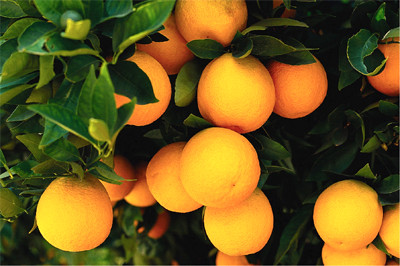
I ordered a case of organic, fresh-picked, perfectly ripe oranges!! Yay! They were shipped in less than 24 hours of my order and they should arrive soon! I asked for some grapefruits in there, too, even though I haven't really liked the taste of them in the past. I'm thinking that fresh ones will taste a lot better--not to mention that I never tried an organic one before. If I still don't like them, Jim and KDcat will eat them. ;-)
If you want to check out the grove from where I ordered them, here's a link: http://www.flnaturalcitrus.com/. I emailed with Dave, who was very nice. It's fun to get to know the people you are getting your food from, isn't it? This past spring, summer, and fall we were members of a CSA (community supported agriculture) farm. The produce was amazing and it was so fun to actually see pictures of the farm workers and hear about the daily ins and outs of life on the farm. If you've never heard about a CSA, maybe you'll want to see if you have one in your local area this coming spring.


To help keep all of you inspired, we ve asked some
remarkable individuals to share their raw food stories with you. Enjoy!
***** DISCLAIMER: As with all of our posts here at Pure Jeevan, and particularly those tagged with a new term, "Nadi Balance," please refer to the disclaimer that runs at the bottom of all Pure Jeevan pages. Wendi and Jim are health researchers, educators, and extreme self-experimenters, not doctors. ******
There are four parts to blood: red blood cells, white blood cells, platelets, and plasma. Using a specialized microscope, one can easily view these parts of the blood. Red blood cells deliver oxygen to, and carbon dioxide from, the body. White blood cells, also known as leukocytes, help defend the body against disease and anything that they see as unnatural or foreign. Platelets help form clots to prevent bleeding. Plasma, comprised of about 90% water, is the fluid that transports all of the above.

Let's stay sharp by learning about brain power! Did you know that the less exercise your brain receives through reading, learning new things (like you do here on our blog!), playing games, and contemplating puzzles the more it is likely to become weak and not serve you well into your centenarian years? Scientists have been trying to figure out ways to improve the brain's function and have learned a lot, but are still uncertain what causes Alzheimer's Disease, or any other form of Dementia.
If you ve ever known someone who suffers with a loss of mental capabilities, you know how sad and sometimes scary that can be. Last week, Jim posted a blog that touched a bit on the subject of Alzheimer s Disease. He wrote in that article, ?I want better than just a small chance that I ll live healthfully for a full lifespan. I want to stack the aging deck in my favor. ?Eating a healthy, raw food diet is something Jim was hoping to use in order to stack the deck in his favor of a life free of memory loss and full of vibrant health.

We've spent some time on this blog talking about how much fun you can have via the meetup.com web site. If you search that site, you can probably find raw food meetups near you!? But, a few readers have asked us some follow-ups, such as What should I bring and What should I do if I'd like to host a raw foods meetup
*Attending* Raw Foods Meetups
Okay, so you signed up for a raw foods meetup group, waited patiently for the next event to come round, and now it's time!? But, wait... this is your first such outing. What should you bring
Read more: Raw Meetups: What to Bring, How to Host Them (Part 1)

It's nice to meet new people, isn't it? For today's Take the Time Tuesday, I'd love for you to meet someone who's really helping to make a difference in the raw food world in an exciting way.
Take the time to meet...

I was just thinking about a particular phenomenon, but don't know what to call it. This is something I used to notice mostly after watching movies, although it's something that happens all the time in life -- and I think it does in fact relate to diet, so I'll share. Here it is:
Ever leave a theater after viewing a particularly uplifting film Recall what it's like for a moment. You walk outside, maybe with friends or family, still filled with that magical feeling of having visited another world, or having been moved beyond words, or being filled with inspiration. There's a glow about you, and the air seems sweeter as you stroll out to your car, absolutely care-free. You spin around as you walk, laughing with your friends, joking and hugging each other, engaging in imaginative conversation all the way home -- and the spell lasts for a good long time thereafter. Oh, I love, love, love great movies!!!
Read more: Pure Jeevan Adds Depth to the Phrase "Watch What You Eat"


When we found out that there was a raw foods restaurant in Key West, we knew we'd visit for sure. So, after a wonderful lunch of some of their raw staples (raw tacos and peanut noodles), it was no surprise to us that we found ourselves drifting back toward Help Yourself after the sunset celebration at Mallory Square (the main nightly Key West sunset viewing celebration). When we arrived, we asked to interview the owner, Charlie Wilson. She'd just left after working a very long day at the restaurant. But, an emplyee called her anyway and she graciously agreed to come talk with us! So, here's a bit of that conversation:
Read more: The Key West Raw Scene: Pure Jeevan Gets Up-Close and Personal with Charlie Wilson!