Know Any Literary Animal Lovers?

Hi there PureJeevan readers! We wanted to let you know that Jim's new novel CHROO is available on Amazon. It's a crazy adventure involving a billionaire heiress, her Chihuahua BFF ("Chroo") and a host of human and animal characters. Find out more on Amazon! Here are some links:
We're super excited to devote the rest to the week to featuring a variety of answers to the question "Are Raw Foodists Crazy " If you're just now tuning in, please read the back story and introduction to this, as posted yesterday. ?But, for now, let's get on with posting a few responses. We have at least 10 different ones to share this week, from a number of friends of Pure Jeevan. Some are short, humorous quips, others longer essays. Enjoy!! :-)
I was standing in line at the grocery store the other day and plopped a package of chicken wings up onto the conveyor belt. The cashier made some sort of smalltalk -- I think she asked whether I liked wings -- which prompted me to say, "Oh, the chicken is for my dog, Julia."
She looked at me, eyebrows raised. "For your dog "
Some of you who are new to raw foods may be happy to learn that there are festivals for individuals interested in the raw foods lifestyle! They are a fantastic opportunity to meet like-minded friends. For those of you who attended the Raw Spirit Festival in 2008, seeing images from that event may stir the magical memories you collected while there.
Below is part two of a two-part guest piece by Rawbin Anderson, in which she recounts her 2008 Raw Spirit Festival J.O.B. experiences of working in the kitchen. Rawbin is now the Raw Spirit Festival East Coast Manager and can be reached at Rawbin [at] rawspirit.com.
?
Read more: A J.O.B. (Joy of Being) at the Raw Spirit Festival (Part 2 of 2)
After so looooong, the much-awaited Episode 6 is here of "Know Your Food"! Aren't you thrilled? Well, WE are. We're fantastically excited to announce that we have SIX thrilling new eipsodes "in the can" (as we film buffs like to say). So, here's the first of those six, in which your humble nutrition researchers reveal the hidden secrets of cacao, that delicious tropical ambrosia that opens your heart like nothing else. So, grab a raw chocolate snack of your choice and curl up in front of your favorite flat screen. Here's the vid:
Whoa, what'd you think of the "Monkey Brains" scene ! Have we finally used EVERY SINGLE hoaky feature of the Windows Movie Maker software? (Don't answer... Those were rhetorical questions.) In case you couldn't read some of the nutritional information, here's a summary of the key components of this delicious bounty from the Earth's equatorial regions. Raw chocolate contains:


I am extremely thankful for sleep. I can't imagine striving to sleep only four hours a night. Jim always says he wishes he didn't have to sleep, that he's wasting his life when he sleeps. For me, I've always loved sleeping. I feel so great after I wake up. Not only that, I thoroughly enjoy dreaming. I wouldn't want to miss out on the amazing dream life I've been able to enjoy while I sleep.
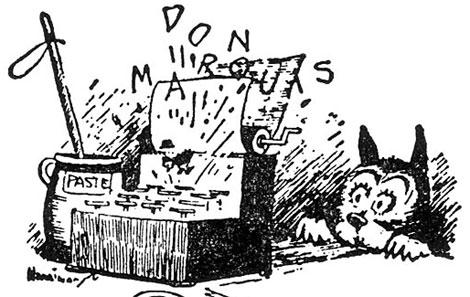
Jim here... I'd like to quote a poem today. It's called "the lesson of the moth" by Don Marquis. It's from his "archy and mehitabel" series, published in the 1920s. If you're unfamiliar with the series, archie is a cockroach who types poems (in all lowercase, without punctuation) by jumping onto the keys of a typewriter. Here's the text:
i was talking to a moth

Sometimes you meet someone and you just know they have tapped into something special, something most of us search for but never quite find. That was the case when I met this lovely woman I'd like the rest of you to meet. There's a centered peace about her, down deep in her core, and yet she's overflowing with an energy that I've never seen matched by anyone else. She's delightfully insightful, intelligent, and playful all at the same time. ?
Take the Time to Meet
Jim here... Okay, the title and graphic, above, may be a bit silly, as are a few of the remarks I made in the video, below. But, within this rather odd piece a few hopefully noble and economical ideas exist -- especially the ridiculously simple and obvious notion about reusing glass beverage bottles. I'm embarrassed to have lived on this planet for so long and not to have adopted this fun and environmentally friendly practice much sooner.
 We really do take things like glass containers for granted, when we probably shouldn't. Their ubiquity aside, it still takes a fair amount of energy and resources to make a single glass bottle. On the mass scale that they're made, they're obviously super cheap. But, if you had to start from scratch, it would take ages to make a single one, so we should at least appreciate them more and do all we can to make their continued existence as sustainable as possible.
Read more: If Keith Richards Is Still Alive, Then Can I Have a Little Tea?
I received some very sad news about the holistic doctor I've been seeing during my raw journey. Dr. Amy Ruth Stine died Saturday after a rock climbing accident. This news breaks my heart. Dr. Stine was an amazing woman and doctor. She was extremely intelligent, acutely in tune with how we are all connected and one, compassionate, loving, thoughtful, and had a gift of really getting to know each patient as an individual and friend.
It was with Dr. Stine's care that I was able to track my progress with the raw food diet. She encouraged me to follow my instincts (which were telling me that raw is the way), cheered me on with the many changes that I was going through (physically, mentally, spiritually, and emotionally) over the years, and told me many times that I inspired her! Imagine how wonderful that made me feel---to be inspiring someone as wonderful as Dr. Stine.
Over the next few months and the coming year, you'll be witnessing the continued growth of Wendi Dee and Pure Jeevan in ways you might not ever have imagined! So, stay connected and let us know your thoughts about the changes that are (and will be!) taking place. We're not here for ourselves, we're here for all of you and for those who don't know about us (yet!). We have a mission: to share our stories and inspire others to fully embrace their lives and be all that they could ever desire (including healthy, happy, and vibrant)!
This is a long post, even though I tried to keep it brief. It's mostly a personal entry, but I wanted to share things so that you know a bit about what's going on with me and Pure Jeevan, now and in the near future. I'll break it up a bit with some more photos from Raw Spirit, the most therapeutic and life-changing event of my life.
======Wendi Dee's Growth======

Q: How Long Do Smoothies Last?
I responded to a similar question a while ago in an online forum. This issue comes up a lot, acually, so I figured I'd provide our response here on the blog rather than simply through an email reply. Here's that response, reworked a bit for our blog:
Optimally, I suppose we'd all just eat things whole, most of the time, instead of blending/juicing ...