Know Any Literary Animal Lovers?

Hi there PureJeevan readers! We wanted to let you know that Jim's new novel CHROO is available on Amazon. It's a crazy adventure involving a billionaire heiress, her Chihuahua BFF ("Chroo") and a host of human and animal characters. Find out more on Amazon! Here are some links:

Finally, some super news to share!? On Monday, after a l-o-n-g wait, Wendi finally had her appointment with a actual LLMD. (That stands for "Lyme Literate Medical Doctor."? If this and the news of Wendi's Lyme Disease is new to you, check out this post.)
I'll cut straight to the good part: Her prognosis is excellent! Yes, she's still in a world of pain and misery at the moment, but he believes (based on her blood work and her symptoms) that we've caught this early enought to fully eradicate the Lyme. (At least, that's how I understand it. I'm actually not clear on whether Lyme is ever 100% eradicated, or if it's just forced into dormancy or irrelevancy. Perhaps Wendi can clear that point up later.)

To help keep all of you inspired, we ve asked some
remarkable individuals to share their raw food stories with you. Enjoy!
Rawbin brings healing laughter and an unusual gift to unwell Wendi Dee.
Are raw foodists invincible to the common cold? I have to admit that I kind of assumed that was the case. If it's true, at what point does the invincibility kick in? I've been raw for over three years (over two at 100%) and yet the past few days have found me overcome with sneezing, sore throat, runny nose, and fatigue.
My first thought, once my throat started to hurt, was: "Did I eat anything different recently that I'm reacting to in a negative way " But, nothing had changed.My diet is relatively clean, with the exception of the times when I consume too much nut dip. So, when the sneezing and runny nose were added to the sore throat, I knew something else was going on. I had to admit it: "I'm not invincible."
Jim here... Today Wendi is busy preparing for a multi-day activity that I'm sure she'll be writing about later this week. So, I thought I'd field a question we received recently (one directed specifically to me). We do receive a good deal of questions at our Raw Food Diet Question In-box (at Questions [at] PureJeevan.com), so feel free to send any in that you may have, and we'll definitely get to them all here in time. In any case, one reader writes:
As drawn as I am to a raw diet, being mostly cooked vegan right now, I can't help but come up against this each time: Since produce is, after all, mostly water, what did you eat while transitioning that didn't lead to shoving in lots of bread, potatoes, etc. Do you just eat lots and lots of, say, oranges, at one go? This has always been my raw downfall. I'm sure the answer is very simple.
Wow, this is a great question, and one with many possible answers! To begin, let's recognize that this isn't a question from a "SAD diet" eater. ?Being a vegan, alone, takes significant learning and (often) self-discipline to accomplish successfully. It's also, in my view, an excellent dietary and lifestyle choice for many people, regardless of whether they ever decide to try a raw foods diet. So, this question is rather advanced.
***** DISCLAIMER: As with all of our posts here at Pure Jeevan, and particularly those coming up over the next week and a half (which will all be tagged with a new term, "Nadi Balance"), please refer to the disclaimer that runs at the bottom of all Pure Jeevan Pages. Wendi and Jim are health researchers, educators, and extreme self-experimenters. ******

Nadi Balance: Part IV...

Greetings, everyone! ?We've been away from regular blogging for what seems an *eternity*. When we left the airwaves, the raw food world was at total peace with itself -- bliss, harmony, sister- and brotherhood. Aside from rare, gentle disagreements among raw vegans on issues such as whether raw chocolate was mineral-rich or potentially taxing to your body's store of minerals, things were pretty much business as usual.
And then we moved away and took a little time off to regroup .. ?and NOW look at the state of the raw food zeitgeist: (1) long-term raw foodists just about everyhwere are now "eating a little bit of cooked food," (2) an enormous schism has emerged after the seemingly improbable development of many long-term vegans returning to meat eating, (3) informational summits and online meetings have been replaced by debates, and (4) let's face it, the supplements being discussed and sold are getting, well, much *weirder* than ever!

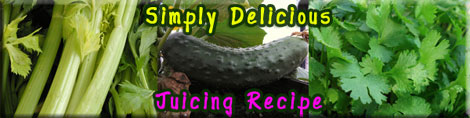
For today's installment of Makin' It Monday, we wanted to share something that we've been making a lot of lately. It's so simple, yet so delicious and refreshing. Here's the recipe:
- 2 cucumbers
- 3 large stalks of celery
- 1 handful of cilantro
That's all!? You might finish with a pinch of your favorite salt (optional).? Also, since the cucumber is an extremely water-heavy veggie, I would advise you to run it through the juicer several times. Here's what I do:
Read more: Makin' It Monday: A Simply Delicious Juice Recipe
Welcome to Episode 4 of Know Your Food. Wow, the PEAR episode is here at last! Aren't you thrilled to know that? Of ALL of the fruits, veggies, nuts, seeds, herbs, etc. in the knon world, we finally got to the wonderful pear. Well, it's no surprise, when you think about it. After all, sweet, mild pears are usually among the first fruits fed to babies. So, chances are, you were fed them, too, as a toddler. So, let's dig in, shall we?
Pears contain water-soluable fiber (pectin), Vitamin A, Vitamin B1, Vitamin B2, Vitamin C, Vitamin E, Copper, Potassium, Posphorous, Folic Acid, Niacin, Iron, Magnesium, Sodium, Sulphur, Calcium, and more! They lower your blood pressure, releive inflammation, lower cholesterol via pectin, calm the stomach, cool the body, prevent cancer via anti-oxidants, boost your energy via the fructose/glucose, reduce inflammation, help your bones/calcium levels, aid in pregnancies via the folate, and much more. Pears are GREAT for you, so eat them regularly!
Just a quick update for those in the Pittsburgh area:
My dear friend Melissa has planned some fun raw food gatherings that you may be interested in checking out. The first is a raw food dinner and demo, the second is a wild herb walk.
Raw Foods Demo and Dinner?

Continuing with our week of ways to keep a sharp mind, let's focus on the one widely accepted indicator for dementia or alzheimer's: heart disease. If one wants to dramatically reduce the chances of brain degredation, the first step to take is keeping the heart healthy.
The key advice most health specialists agree on when it comes to a healthy heart is the reduction (ideally eliminatain) of unhealthy fats in the diet. The unhealthy fats are usually seen as solid fats, like butter, margerine, and shortening. However, it's important to not overlook the fats that are also found in meats. By substituting unhealthy fats with something healthier for your heart (like extra virgin, cold-pressed olive oil), as well as transitioning to leaner meats if you are a meat eater, you will be taking some important steps in keeping your heart healthy, as well as your mind.