Know Any Literary Animal Lovers?

Hi there PureJeevan readers! We wanted to let you know that Jim's new novel CHROO is available on Amazon. It's a crazy adventure involving a billionaire heiress, her Chihuahua BFF ("Chroo") and a host of human and animal characters. Find out more on Amazon! Here are some links:
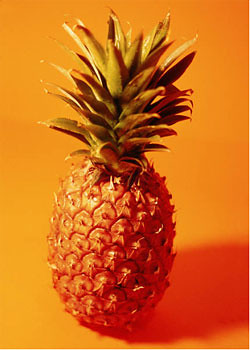
Eating only mono meals is going pretty well. I'm on my third food, so far, and have ended day two. This evening I've started my third fruit: Pineapples!
***** DISCLAIMER: As with all of our posts here at Pure Jeevan, and particularly those tagged with a new term, "Nadi Balance," please refer to the disclaimer that runs at the bottom of all Pure Jeevan pages. Wendi and Jim are health researchers, educators, and extreme self-experimenters, not doctors. ******

There are four parts to blood: red blood cells, white blood cells, platelets, and plasma. Using a specialized microscope, one can easily view these parts of the blood. Red blood cells deliver oxygen to, and carbon dioxide from, the body. White blood cells, also known as leukocytes, help defend the body against disease and anything that they see as unnatural or foreign. Platelets help form clots to prevent bleeding. Plasma, comprised of about 90% water, is the fluid that transports all of the above.
I was standing in line at the grocery store the other day and plopped a package of chicken wings up onto the conveyor belt. The cashier made some sort of smalltalk -- I think she asked whether I liked wings -- which prompted me to say, "Oh, the chicken is for my dog, Julia."
She looked at me, eyebrows raised. "For your dog "
In this special five-part series, Joanna Steven uncovers where some top vegetarian athletes get their protein. Here's part four, focusing on Brendan Brazier's take on this issue.
GREEN LEAFIES
Brendan Brazier is one of only a few professional athletes in the world whose diet is 100% plant-based. He s a professional Ironman triathlete, bestselling author on performance nutrition, and the creator of an award-winning line of whole food nutritional products called Vega. He is also a two-time Canadian 50km Ultra Marathon Champion.
Read more: Vegetarian Athletes Share: Top 5 Sources for Animal-free Protein (Part 4 of 5)

To help keep all of you inspired, we ve asked some
remarkable individuals to share their raw food stories with you. Enjoy!

This is Part II of a two-parter on raw food restaurants. Yesterday, we listed a half-dozen challenges that one might face when opening a raw restaurant. Today, we're focusing in on the more enjoyable side -- the potential advantages that opening raw restaurants offer over their cooked-food counterparts.
Let's dive into it... Here are six things we believe are advantages!
Read more: Some Thoughts on Opening a Raw Foods Restaurant -- Part II of II!
Okay, so here's a recipe that may make you raise an eyebrow. "Baked " "Rice " Well, it's not really baked and there isn't really rice in it, but it tastes like a baked rice and veggies dish! I created this one day by mistake and we all loved it.
Baked Rice and Veggies
2 cups pureed sunflower seeds

Last week for Take the Time Tuesday, I introduced you to a resource for meeting others in your local community. Today, I'd like to introduce you to an amazing place to meet others all over the world who are interested in raw foods!
Take the time to meet...

A few days ago, we'd mentioned that Wendi had done a five-day water fast as part of her early dealings with Lyme disease. This was the first time I can recall in our household anyone fasting for more than a day or so, although there may have been the odd juice fast now and again for a few days.
Thinking back, I can tell you that, all while I kew Wendi (and especially during her cooked years), such an extended fasting would never have happened because she used to get wicked headaches any time she went without food for more than a normal time period between meals. This makes perfect sense, of course, as you really do have to be in fairly good health to successfully fast -- and, during those "cooked" years, we were both extremely unhealthy! (More on the reasons for all that later, as Wendi will likely do a write-up on fasting at some point.)

When you're young and learning the letters of the alphabet, anything that starts with the same letter as your name becomes really special. Well, ever since I was a child and saw a Winnebago RV with the giant "W" on the side, I've been enchanted with the idea of one day owning one and traveling the world (at that age, I didn't realize I'd have to cross oceans to see everything).
If you've been following us for a while, you'll know that I was bringing that vision to life. It took years of convincing, but Jim was finally ready for such an adventure and together we began making plans. For more than two years we've been preparing to tour the country, while teaching about raw foods along the way. Our lives changed so dramatically when we found a way to heal our bodies (and more), a way that can also help others, and we just couldn't sit still. We feel called to spread the word about the raw food diet so others can at least hear that there's another way, that there's something different to try in their quest for health. I knew that crossing the country in an RV, planting the seeds about a raw food diet along the way, would be an efficient way of spreading the word.
EXCITING ANNOUNCEMENT!
Kevin Gianni Wants to Meet
Pittsburgh Raw Foodists This Saturday!
UPDATE: Location is set for my home in the South Hills
Kevin and Annmarie Gianni will be in Pittsburgh for the Steeler's game on Sunday. They'd love to meet Pittsburgh raw foodies while they're here! So, if you can make it to meet up with them, let Wendi Dee know as soon as possible. We'll either be meeting at the East End Food Coop (if I can reserve the space at the last minute) or at my home (South Hills/Brentwood). Please respond by Friday at 5:00 p.m. about your availablity.