Know Any Literary Animal Lovers?

Hi there PureJeevan readers! We wanted to let you know that Jim's new novel CHROO is available on Amazon. It's a crazy adventure involving a billionaire heiress, her Chihuahua BFF ("Chroo") and a host of human and animal characters. Find out more on Amazon! Here are some links:

For today's Makin' It Monday, we're not really making something, but rather sprouting something! We tend to go through periods of time when we are sprouting a lot, consuming sprouts on salads, sandwiches, and inside whatever dishes we can add them to at the time. It seems appropriate for this time of year to start sprouting, again.
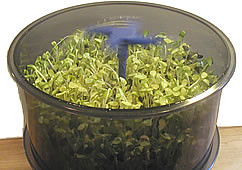
Have you ever sprouted seeds? The first time I ever sprouted, I used a nut milk bag that I kept dangling over the kitchen sink. I put some seeds into it, let them soak overnight in a bowl of water, and then rinsed them in the morning. Every time I was in the kitchen, I rinsed them again and let them drip into the sink until the next rinsing. It's important to keep the seeds moist and rinsed. It was thrilling to see the tiny little sprouts when they first began emerging from the seeds!
Happy Summer Solstice!
Well, it's officially summer here! This time of the year is extra special to us now that we're healthier. Not only is there an abundance of fresh, local organics to eat, but the sun also shows itself to us a lot more (Pittsbugh is ranked as one of the places experiencing the least amount of sunshine per year). The sun actually used to make me feel physically ill (I wrote a bit about that in an earlier post), but ever since I've switched to a raw vegan diet I find myself drawn to the healing sunshine.
Before switching to a raw lifestyle, we used to go on a lot of outings (picnics) and we'd also go camping. I remember a friend voicing concern when my diet was beginning to change to raw foods. She felt I wouldn't be able to go camping anymore and that things like picnics wouldn't be fun for someone eating a raw food diet. She thought I'd need access to a refrigerator in order to keep all my raw foods fresh and a kitchen where I could prepare the delicious foods she had been seeing me eat.
Read more: Summertime Raw (Video): Out the Door in 10 Minutes!

Yesterday we talked about attending raw food meetups / potlucks. Today we'll focus on...
*Hosting* Raw Foods Meetups
There are two main ways to host a raw foods meetup. The first would be through the meetup.com web site. If there is no raw foods meetup in your area, you're going to need to launch one. (See the Meetup web site for details.) If there is a group, you'll need to sign up and get to know the moderator, as you'll need to announce your meetup through that person.
Read more: Raw Meetups: What to Bring, How to Host Them (Part 2)
 Picking up from the previous installment, Wendi and KDcat absolutely loved beautiful Corvallis, but ultimately felt it had too much of a small-town feel for us. So, they decided to take a road trip to the nearest big city, Eugene. KDcat and Stephanie (one of the lovely daughters of our Corvallis hosts) were enjoying their time together, so Stephanie decided to come along.
The trip from Corvallis to Eugene is but one pleasant hour's drive.The group's first stop was the Buffalo Exchange, a new and secondhand clothing store. Everyone loved the store, which offered a great selection of? fun clothes you can t usually find in other stores or thrift shops. A barely worn pair of red hi-top Converse sneakers was the highlight of this stop for KDcat. She's been wanting a pair of these exact shoes for ... well, forever! She immediately began decorating them when she had the chance (after they were disinfected, that is).
From there, they explored greater Eugene, checking out areas others had suggested. There were a lot of cute shops, but they were geographically spread out. It wasn t like the neighborhoods in Portland, where you can walk blocks and blocks with unique stores, restaurants, etc., all in a row. There was a nice vibe to Eugene, Wendi said, but something about it just didn t feel like home for us. Wendi said there weren t as many people out and about as she'd expected, but that could have been because they visited on a Sunday. Here are some pics from around town -- and then we'll talk food.
Read more: Eagerly, Everyone Euphorically Explores Eugene. Editorialization Ensues.
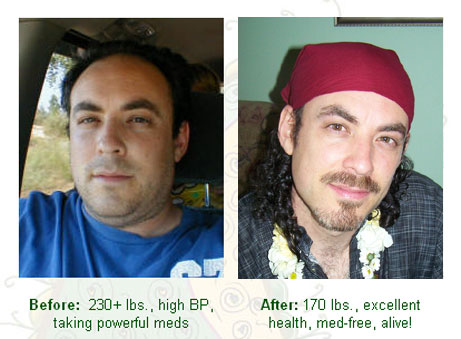
Jim here... Sorry for being away for so long. We've got SO much going on these days, it's mind-boggling! More on that later, as I have something in mind already for today...I should start by clarifying that I've been basically raw for almost 4 years now (high-raw, you might say). During the first nearly-two years, I still ate meat from time to time. Actually, I still ate (and drank) almost everything from time to time -- sugars, processed foods, alcohol, you name it -- only less than I did before, and within the context of a dietary intake consisting of a significantly higher percentage of living foods. In those early years, I'd estimate I was averaging 75-90% raw. Not bad ... I definitely experienced improvements in my health!
 The big change in consciousness didn't follow until two years ago. (This is an interesting point because, as you can see, I wasn't "ready" for a bigger change for two years into eating a lot of raw foods!) I suppose the difference was that, during the early years, I was pretty much raw by default rather than by conscious decision. As Jules said in Pulp Fiction, "... my girlfriend's a vegetarian. ?Which more or less makes me a vegetarian..." Yeah, that was my case back then, too, although I certainly grew into it (and am thankful that I did).
Read more: Reflecting on Two Years of an Exclusively Raw Die

I'm going to be including questions and answers more often on the blog, since we've had a lot of emails from many of you saying you found last week's Q&A helpful and fun to read. I have many questions I've been saving to share with others, and more come in daily. Don't be shy if you have a question about anything that you think I'd possibly be able to help you with. Simply send me an email asking, and I'll reply to you personally. Questions that I feel might have a more general interest may be shared here on the blog (with the questioner being anonymous).
[Please email questions to me, rather than post them here on the blog: WendiDee [at] PureJeevan.com.]
I've already posted the recipe for this, but I wanted to talk about the orange pudding a bit. Since going raw, I've become a mostly intuitive eater. Whatever I feel like eating is what I eat. This usually means I am eating the same food for an extended period of time until I feel drawn to something different. Lately it has been the orange pudding.
I've been starting my mornings with a large bowl of it. If Jim is making lunch then I'll eat the salad or nut dip that he makes, otherwise it's orange pudding again. Then, if I didn't eat a salad during the day I usually have a salad for dinner and...a dessert of--you guessed it!--more orange pudding.
We'd like to welcome the RawFoodRightNow blog readers to our Pure Jeevan blog! We are a new blog (started earlier this month), so we are thrilled that you have already found us and have taken the time to come and meet us!
Our blog is focused on a holistic look at living life as a raw food vegan (we have a holisitc raw-focused newsletter, too). We write posts that cover the body, mind, spirit, and emotions--as well as just random talk straight from our hearts to the blog page.
We update at least five times per week because we have daily blog features (Makin' It Monday, where we share raw recipes we are making; Take the Time Tuesday, where we introduce people or businesses we think may interest you; Weird Wednesay, where Jim shares observations about strange things; Thankful Thursday, where we share what we are thankful for and ask you to share, as well; and Fun-Filled Friday, where we tell you what fun things we have planned for our weekend).
Jim here... As I may have mentioned a while ago, I joined a gym recently. I figured, with Wendi and Bailey living on the other side of the country, I might as well find something healthy to do with my alone time until I'm able to join them soon (aside from my seemingly never-ending quest to rid our household of 13 years of rampant accumulation). I joined on a whim, actually. There's a gym near my home called Planet Fitness. Honestly, I have no idea how they make money. A membership costs just $10/month -- and it's a Wal-Mart-sized place, too, absolutely packed with state of the art machines. (Actually, it's a franchise, so there could very well be one near you.)
In any case, it had been a while since I'd been inside an actual gym. I've certainly remained relatively active, of course. But being in a gym is a little different -- and certainly has its plusses and minuses. On the minus side, I've always kind of felt that, if you add up all of the time it generally takes to get (1) get ready to go to a gym, (2) drive there, and (3) drive home -- say, a half-hour, total, for those things -- then you could probably better invest that time in just going for a run for a half-hour, leaving straight from your home. From a time management standpoint, I'm not crazy about gym memberships (meaning not that physical exercise isn't worth the investment of time, but rather that there are ways to accomplish the same results in much less time).
Read more: Exercise As a Reminder of the Human Body's Amazing Efficiency
We're super excited to devote the rest to the week to featuring a variety of answers to the question "Are Raw Foodists Crazy " If you're just now tuning in, please read the back story and introduction to this, as posted yesterday. ?But, for now, let's get on with posting a few responses. We have at least 10 different ones to share this week, from a number of friends of Pure Jeevan. Some are short, humorous quips, others longer essays. Enjoy!! :-)

We just returned from the East End Food Co-op, where we answered raw food questions for two hours. We were still answering questions on our way out the door, and would have stayed longer but the place was closing. ;-) So, if anyone from this evening stops by our site and you still have questions, just comment here (or send me an email) and I'll be happy to answer them.
I'm more of a one-on-one kind of person, so I was a bit nervous about sitting in front of everyone to answer questions. Jim and KDcat were there to help me, of course, otherwise I probably wouldn't have been there at all. Once people started arriving, I was comfortable. The first people who entered the room were super sweet and I could tell they were genuinely nice people. Then little by little the room filled up, and I was surprisingly comfortable.Maybe in addition to all of the other positive changes in my life, my self confidence is getting better, too!