Know Any Literary Animal Lovers?

Hi there PureJeevan readers! We wanted to let you know that Jim's new novel CHROO is available on Amazon. It's a crazy adventure involving a billionaire heiress, her Chihuahua BFF ("Chroo") and a host of human and animal characters. Find out more on Amazon! Here are some links:

Q. I am trying to go raw and juicing for only two days now and I am soooo hungry and I really don't quite understand what to eat. I went out and bought a bunch of raw vegetables but I am lost on exactly how to prepare the meals and I'm so tired of being fat. Can you direct me to a simple start of book or can you give me some simple recipes or what you did to get started on your first month? Thank you.
Signed,
Frustrated and Fat in Virginia
A. Dear LOVELY BEING,
Over the weekend, we attended a fairy festival in Eugene, OR, called Faerieworlds . ?It was great fun -- loads and loads of interesting shops, festival-goers in costumes ranging in complexity from simple fairy ears to full-on ensembles, and some spectacular tribal bands on the main stage all day long.
What was unexpected, though, was seeing not just one (which, alone, would have been impressive), but *two* food carts dedicated to raw foods. ?The first was called Luminescent Foods:


Jim here... As I may have mentioned a while ago, I joined a gym recently. I figured, with Wendi and Bailey living on the other side of the country, I might as well find something healthy to do with my alone time until I'm able to join them soon (aside from my seemingly never-ending quest to rid our household of 13 years of rampant accumulation). I joined on a whim, actually. There's a gym near my home called Planet Fitness. Honestly, I have no idea how they make money. A membership costs just $10/month -- and it's a Wal-Mart-sized place, too, absolutely packed with state of the art machines. (Actually, it's a franchise, so there could very well be one near you.)
In any case, it had been a while since I'd been inside an actual gym. I've certainly remained relatively active, of course. But being in a gym is a little different -- and certainly has its plusses and minuses. On the minus side, I've always kind of felt that, if you add up all of the time it generally takes to get (1) get ready to go to a gym, (2) drive there, and (3) drive home -- say, a half-hour, total, for those things -- then you could probably better invest that time in just going for a run for a half-hour, leaving straight from your home. From a time management standpoint, I'm not crazy about gym memberships (meaning not that physical exercise isn't worth the investment of time, but rather that there are ways to accomplish the same results in much less time).
Read more: Exercise As a Reminder of the Human Body's Amazing Efficiency
 Jim thought it was important for me to update everyone about my health, especially since so many of you have been sending emails, etc., and I haven't responded.
I do appreciate all the love and concern (thank you all so VERY much!), but it's painful for me to type for very long. This update is going to most likely bring about some more pain, but I don't want you to keep worrying about me and my health. So, I'll share what's been going on.
There's an antibiotic that will decrease the pain temporarily if you have Lyme disease (it won't help the pain if it's caused by anything else), and I was able to obtain some of it. So far, today is day five on it. And here's some great news: The pain started lessening on day three -- the aches completely gone, leaving only sharp pains when I move my joints in certain ways. I'll be on this antibiotic (and possibly some others for "co-infections" that sometimes come with Lyme, but I won't know until more blood tests are done and the Lyme specialist reviews the results).

Yesterday, we covered the concept of "unsubscribing" from unhealthy practices. This was of course based on the common Internet practice of subscribing and unsubscribing to various things like newsletters and email lists. I receive quite a few of these each day, many raw foods ones and many non-raw ones. Among the non-raw, one that has been interesting to me lately is called the Art of Non-Conformity, penned by Chris Guillebeau. Basically, Chris' site chronicles his adventures in reaching his personal goal -- to travel to every country in the world! Along the way, he writes about all sorts of out-of-the-box things, as the blog name implies.
Today, he posted something that is remarkably insightful and applicable to our subject matter here, even though his context was completely different. The entry, entitled simply "Before and After," discusses the drinking water problems in much of Africa, focusing for the moment on Liberia. Atop the piece (the "before" picture) is a muddy water hole, the only source of drinking water for one village. The next picture (the "after" shot) shows a different, very happy village obtaining fresh, clean water from a newly installed well. Chris closes his article with the following quote:
Tomorrow I'll finally be posting about the 3-Day Raw Food Spiritual Ashram Retreat that I organized. I took a few days to myself after the event, and then I needed to catch up on a lot of things (which included formatting an almost 150-page publication). It's hard to believe that two weeks have passed, already, since the retreat ended.
I have a lot of photos from the event! Some of the guests prefer to remain anonymous, however, so I can't share all of them with you. However, there are a lot that I can still post on a public page for you to view! I'm waiting to receive some more images from the ashram's camera. Once I have them, I'll be able to complete the photos pages and share images from that wonderful weekend.
BIG THANKS to one of the guests, Angel, who happily took my camera and captured images that weekend. I am extremely grateful that she did, and I'm also impressed with her creative gift with photography! The image she captured of another guest, Faye, is absolutely beautiful! I'm looking forward to sharing the pics with all of you!
Jim here... Wow, it's Monday, April 27! Let's do something different today: Let's celebrate Monday instead of bemoaning this day that represents the taditional start of the dreaded work week. Why? Because it's our sincere hope that whatever you do in your work week is a labor of love. And, if you're not quite there yet, then celebrate the fact that you WILL be there sometime soon. For us, it means another week of working to inspire you to achieve optimal health -- and that's not "work" at all; it's actually FUN!
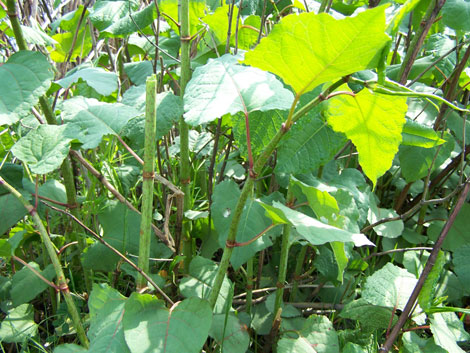
So, without further adieu, let's jump into this week's fun. Our good friends Melissa and Dave Sokulski have launched a site recently called FoodUnderFoot ("unleash the energy of wild edibles"). Even in it's young seedling state, I think it's already a fascinating site, and promises to become an encyclopedic web destination for anyone interested in foraging wild edibles. So, check them out for some informative info and valuable freebies, too!
EDIT: This is NOT an advertisement.
Jim just thought it was interesting how he could easily substitute "raw food" in place of the ROM machine and have their advertisement make sense for the raw food movement.We will NOT be purchasing a machine like this. ;-)
?

Read more: Interesting Link Between ROM Machines and Raw Foods?
Jim here... It's been nearly half a year since we posted a long meditation on living patiently, noting the unique, sometimes-at-odds dovetail that exists between (1) experiencing the zen of patience and (2) living the electrically charged life of raw foods. While we're STILL living with the same patience we talked about, I have to admit there have been times when we've been in not-so pleasant touch with some real frustration about getting our home sold and finally moving on to all of the exciting stuff we have planned for us and for you.
Wendi and I are absolutely ecstatic about taking our raw foods message to the next level -- and not just "next level" meaning more a few more blog posts and videos, but a true quantum leap in terms of our immersion into this world and commitment to advocating the lifestyle. It just gets a little tough, even when practicing patience, to be kind of stuck in the starting gate.
Read more: Pure Jeevan Heads Out of Town: Raw Roadtripping Vids to Come!

I started jumping up and down last night with excitement when I received a call saying that the bellydancing class I've been wanting to take at Khafif Studios has an opening! Yay!!!

(This will be my teacher, Berna!)
Within the raw food community, a controversy seems to have been brewing for the better part of a year! The topic: Agave nectar (also called agave syrup). Surely by now most people know what agave nectar is. For anyone who doesn't, it's a thick liquid sweetener made from, you guessed it, the agave plant.
In general, the production of tasty agave nectar involves heating the plant to a certain temperature (which varies widely according to which manufacturer is making it and which species of agave is used). The extent of this heating constitutes a significant part of the controversy (as most raw foodists believe that heating any food over a certain temperature, usually somewhere between 105 and 118 degrees fahrenheit, renders it "dead").
Read more: Pure Jeevan Explores the Raw Food Community's Agave Nectar Controversy