Know Any Literary Animal Lovers?

Hi there PureJeevan readers! We wanted to let you know that Jim's new novel CHROO is available on Amazon. It's a crazy adventure involving a billionaire heiress, her Chihuahua BFF ("Chroo") and a host of human and animal characters. Find out more on Amazon! Here are some links:
Jim here... Happy Sunday morning, everyone!? We don't normally post on weekends, but we're sharing this video as a special gift for my mom on Mother's Day.As Wendi likes to say, "Every day is mother's day!"? But, I do like to do something a little special for my own wonderful mom. So, check out this video of a recipe Wendi (mostly) and I created for her. If you remember my reaction to the soup we made recently, it may not surprise you to hear me say that this sauce is the "best #$%^&*^%! sauce I've ever tasted!"
We're typing up and formatting this recipe for Pure Jeevan family members (you know, those who subscribe to our mail list). So, once it's ready, we'll be adding it to the queue of mailings we sent out to keep everyone inspired. This recipe is a keeper!

I hear the question all the time: "Don't you miss eating out at restaurants " My answer is always, "No. I prefer the fresher organic foods I can create for myself in my own home. I can pay the same amount for better food if I stay at home to eat." It's true, too. I don't miss eating out at restaurants. Sometimes I miss the convenience of someone else doing my food prep and cleaning up afterward, but as far as the actual food that I consume, I prefer the foods we eat at home. Besides, when you eat out as a raw foodist, your choices are limited to only a salad if you live in an area with no raw food restaurants.
Sometime last year, as a treat for Jim, we went to a restaurant. I got a huge salad that I used to love when I ate cooked foods at that particular restaurant. I remembered the greens were always dark, the onions were nice and flavorful, and the dressing was a simple oil and vinegar with salt. Well, after consuming only fresh foods in our home for quite some time, the salad that I used to think tasted so great now seemed to be lifeless and limp. It wasn't enjoyable to eat, and I sure didn't like paying so much for a nonorganic salad that didn't even taste good to me. So, we didn't eat out again after that.

There is a lovely blanket of quietness covering Pittsburgh.Everything has been cancelled for the evening and people are staying home.Do you ever wonder what others do with their lives, how they spend their time when they are away from the rest of society and closed up in their own homes? I'm always curious---I think people are fascinating!

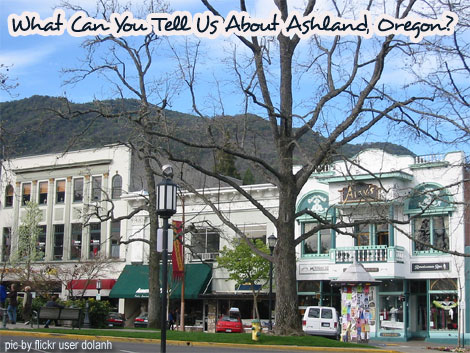
We're still busy researching cities in order to find our future home town!? Our original list of potentials is now more of less narrowed down to a few select areas. That's not to say that we're not still open to further suggestions. (See here for our desires in a new home town.)? At the moment, of the cities/regions remaining on our "active" list, the Ashland, Oregon area is looking fairly attractive. So, we thought we'd take a moment to ask a few questions about Ashland. But first, here's why...
Originally, we felt highly drawn to Corvallis, Oregon. It seemed like the absolute perfect place for us -- a phenomenal homeschooling / unschooling community (which is what first caught our attention), a progressive / artsy atmosphere, affordable land, and super-clean air. Great, right ! ?But then we looked at the amount of sunshine the city received ... hmmm, no improvement whatsoever over Pittsburgh (in fact, Corvallis is, unfortunately, equally as gloomy -- at 44% of the days having sun).
Read more: Moving Update: Some Finalist Towns -- Ashland, Orgeon

To keep all of you inspired while we are away, we've asked some
remarkable individuals to share their raw food stories with you. Enjoy!

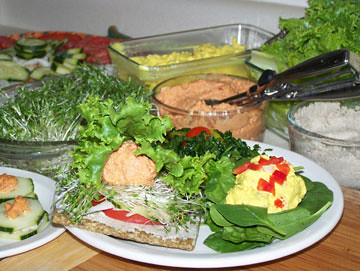
I'm still working on the dishes that will be served at the upcoming 3-Day Raw Food Spiritual Ashram Retreat (only 2 spots left!). Today, I worked on the Sandwich Fixin's that will be served for lunch on one of the retreat days.
I've been holding on to some things to share here on the blog, and today feels like a good day to share this particular inspirational gem, below. I hope it speaks to some of you in a way that brings about a deeper love for yourself. Many times I have a feeling, based on emails I receive, that I love some of you more than you love yourselves (and I deeply love all of you). That's okay, though. Your time will come to blossom into the self-loving individual that you know you are at your core. Perhaps today what I share will trigger a deeper sense of self-love for you, as it did for another friend.
Back in October, a friend in an online raw community sent me a message about how she was having a tough time with cravings. I responded to her, as follows:
... You CAN do it, too! For me, it took finally loving myself to make the change. I had to KNOW that NOTHING was going to stop me from loving myself. And loving myself meant never putting harmful things into my body EVER AGAIN! So, once I made that decision, I moved forward. I'm not saying I didn't have cravings, but I loved myself through them! ...
Many times in the online communities, the messages you share with others will also be read by individuals stopping by the pages of your friends. That was the case with what I wrote, above. I received a lovely message from another friend in that community, who had read the message I left for someone else. Here's what she wrote to me:
Greetings, everyone! ?We've been away from regular blogging for what seems an *eternity*. When we left the airwaves, the raw food world was at total peace with itself -- bliss, harmony, sister- and brotherhood. Aside from rare, gentle disagreements among raw vegans on issues such as whether raw chocolate was mineral-rich or potentially taxing to your body's store of minerals, things were pretty much business as usual.
And then we moved away and took a little time off to regroup .. ?and NOW look at the state of the raw food zeitgeist: (1) long-term raw foodists just about everyhwere are now "eating a little bit of cooked food," (2) an enormous schism has emerged after the seemingly improbable development of many long-term vegans returning to meat eating, (3) informational summits and online meetings have been replaced by debates, and (4) let's face it, the supplements being discussed and sold are getting, well, much *weirder* than ever!
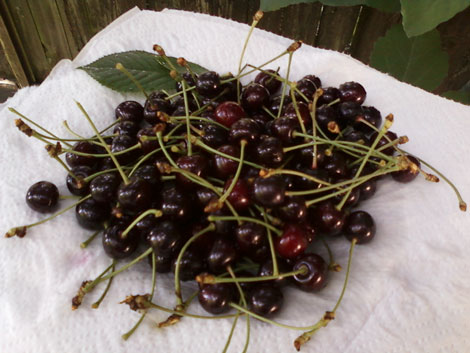
We're extremely busy this week with some home projects, so we figured we'd simply share a few interesting photos each day. Here's today's -- a big plate of freshly picked cherries from our yard! ?These are smaller cherries than you'll find in stores. We believe they're sour cherries, which is a very healthy variety, even though they're not as tasty as Bing's or Ranier's. ?They're reportedly good for pies, though. I've eaten tons of them so far; ?they're at their peak at the moment here.
I tell you... the dangerous thing about cherries is something you'll only discover when you're out there on a ladder, standing on that tip-top rung (which clearly states: "Do NOT stand on this rung!"), and you're reaching higher and higher for that next bunch of nature's goodness. Even in this situation, you find yourself thinking: "If I could just reach a *little bit* higher!" ?Sooner or later, you have to realize that some cherries are there for the birds, squirrels, and raccoons.
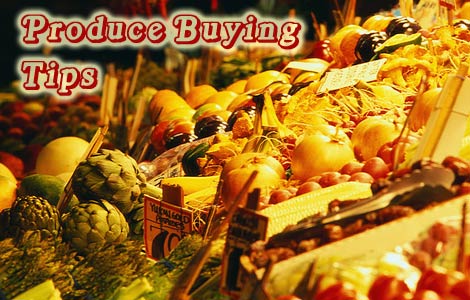
I suppose that, when you buy more produce than the average consumer, you come to observe a thing or two about that produce. We can't say for sure that our assertion is 100% true, but it sure does seem true to us. You see, we've noticed that produce we purchase at farmers' markets tends to keep longer than store-bought. Give it a try yourself, and see if your produce stays fresher longer!
Of course, there are many other benefits to shopping at farmers' markets. Aside from the produce being able to stay fresh longer, you're getting it in a much fresher state than store-bought. So, the things you eat first will be "extra" fresh tasting.
Read more: Produce Buying Tip: Farmers' Market Produce Lasts Longer!

Jim here... Today is April 25, 2009 -- Wendi Dee's Birthday!!? She's asleep now. It's 1:30 in the morning & I've been up for hours assembling something stunningly amazing to share with you. You see, this year, I asked some friends, family, and foodies to take a page of a sketchbook and offer Wendi some Happy Birthday wishes -- and then send it back to me so I could bind it all into a large book!? WOW!!! WOW!!! WOW!!! Check out the response from 40+ people from around the globe. It's a little overwhelming to see this much positive energy in one place. What a momentous day she's in for in another 5 hours or so when she gets up and is greeted by such a surprise! If you'd like to say Happy Birthday, just leave a comment here! Thanks to everyone!
Clarifications: (1) Yes, as some of you may have guessed, Wendi's body has circled the sun more than 25 times. If you visit the site, I explain what the "25th" birthday means a little more. It's basically about the amazing power of raw foods. (2) No, I didn't send messages to David Wolfe, Gabriel Cousens, Woody Harrelson, or other raw food celebrities Wendi isn't friends with. However, if they are huge fans of Wendi's, they are more than welcome to contribute via email or comments! LOL ;-)
Original Comments
Below, we have included the original comments from this blog post. Additional comments may be made via Facebook, below.
On April 25, 2009, wrote:
Happy 25th Birthday Gypsy!!!
I so wish to be there with you celebrating this amazing day, but as I can't, I send you lotsof e-love.
*hugs tightly*
I LOVE YOU!!!
On April 25, 2009, wrote:
Happy Happy Birthday Wendi.............wishing you al the happiness your heart can hold, on this special day of birth and always...........you inspire so many!!!!!
On April 25, 2009, wrote:
Happy Birthday Wendi!
I had posed this question in another post on this site, can't remember where now!
But I will post it here too
On my birthday I like to look back to last year's birthday to see what about me has changed!
What about you Wendi? What has changed about you
Hope there are lots of ovely surprises in store for your big day!
Sheryl Miller
Austrlaia
On April 25, 2009, wrote:
wishing much peace, love and joy to you on this special day... Happy Birthday, Wendi!
On April 25, 2009, wrote:
Happy Happy Birthday, Miss Wendi Dee! I hope your day is a joyous as ever. ;)
On April 25, 2009, wrote:
Very, very Happiest of Birthdays, Dearest Wendi. You give so much of your essence and touch many souls. I wish you a day that is beyond beautiful and filled with joy and blessings as you embark on another wonderful adventure around the sun. And love LOVE love abound...always. xo
Blaq Berry
On April 25, 2009, wrote:
Happy Birthday lovely lady!!! I'm sure you'll be glowing all day! :)
On April 25, 2009, wrote:
Seesmic video reply from Disqus.
On April 25, 2009, wrote:
That is the best present ever!
And Wendi, if you did not know it before, I think you now are sure....
You Are Loved!!!!!!!!!
Happy 25, can't wait for your 24th next year!!!
love love love deb
On April 25, 2009, wrote:
Happy Birthday Wendi. Thank you for being such a light in the world.
On April 25, 2009, wrote:
Happy Birthday Wendi!
What a beautiful book!!! I am so happy to be part of it, and thanks Jim for posting the whole thing! It is just beautiful.
We love you!
~ Melissa
On April 25, 2009, wrote:
Hey Girl! Happy, happy day to you and thank you Jim for inviting Bo and I to be a part of this special day!
Revvell
On April 25, 2009, wrote:
Hey Girl! Happy, happy day to you and thank you Jim for inviting Bo and I to be a part of this special day!
Revvell
(Did this twice since I had to figure out the system)
On April 25, 2009, wrote:
Happy Birthday Wendi GIRL!!!
Have lots of fun in this, your 25th year. Blessing and love all around. Kisses riding on the wind for you.
Much love!
P. Lis
On April 25, 2009, wrote:
Have a wonderful amazing Day of Incarnation, the sweetness of your eternal spirit always shows!
XOXO!!!
Jill
p.s. thank you to Jim for being such an awesome partner :)
On April 25, 2009, wrote:
I'm glad to know Wendi's birthday was as special as she and her family are. And I love the phrase "Wendi s body has circled the sun more than 25 times." I'm gonna try to remember that one for birthdays!!
On April 25, 2009, wrote:
Not even having met you, Wendi, I can always feel your love for others online. Thank you so much for all you do for others. You are a true jewel in this world!!
Much love and birthday hugs,
Jenny
On April 25, 2009, wrote:
May this be the beginning of the happiest birthdays of your life.
love joy and peace
fatima
On April 25, 2009, wrote:
Happy Birthday, Wendi!!
Best wishes!!!
Keep shining!!!
On April 26, 2009, wrote:
Happy Birthday, Wendi! Thanks for all the gifts you've given us!! XOXOXOX
On April 26, 2009, wrote:
Hi Wendi ~ I'm sending HUGE birthday wishes all the way from Washington State! I hope you have a wonderful day!
Debbie *�*
On April 26, 2009, wrote:
Wendi have a blessed day as you have so blessed others.Because you have sown so
much enjoy the returns! Have many more circles around the sun, Love Diane
On April 26, 2009, wrote:
let your light shine and radiate in every nook and corner of our beloved planet and beyond, and let me whisper happy birthday in your ears,thank you for being here
On April 26, 2009, wrote:
Happy Happy Birthday Wendi!!!!
On April 26, 2009, wrote:
Happy, happy, happy birthday Wendi Dee!
hugs from Florida where the coconut grows :)
love
sheila
On April 26, 2009, wrote:
One happy birthday is never enough, here is another one :) <3
I will add to the notebook! I was afraid to sign the real thing, in case it got lost in transit after sending it back :(( I would have felt so awful. I hope you're having an amazing week!
On April 26, 2009, wrote:
Wendi,
So Happy Birthday.I had no idea it was your birthday.I was gone for a few days off computer.BUSY! And still wanted to wish you a Happy belated Birthday! Bye Dianne (DianneRawGirl)
On April 27, 2009, wrote:
Happy Birthday beautiful Wendi!!
You are such a light in this world....I hope your day was filled with light and joy and wonder!
Hugs, Tina
On April 27, 2009, wrote:
Ulol, my love!!! *blows kisses*
This birthday was THE BEST EVER! Even though you weren't physically here with me, it was extra special because I had your special contribution to my birthday book! It made me cry so much to see your page in the book. It was VERY special to me!
I miss you so very much! Thanks for stopping by the blog and leaving a comment, but most of all for always sharing your love and friendship with me.
I love you, too!
Wendi
XOXOXO
On April 27, 2009, wrote:
Thank you so very much, Mary!! It was THE BEST birthday EVER!!
I'm so happy that I can inspire others--all of you have given me so much love in return and that has meant the world to me!
Lots of love to you,
Wendi
XOXOXO
On April 27, 2009, wrote:
Thanks, Sheryl!
I responded to your original question a few minutes ago on the other blog post. :-)
Thanks, again!!!
Lots of love to you,
Wendi
XOXOXO
On April 27, 2009, wrote:
Thanks so much, Carlos!! Thanks for being a special part of my birthday gift, and for saying Happy Birthday to me on your blog, too!
I love you!
Wendi
XOXOXO
On April 27, 2009, wrote:
Thanks so much, WendiLou!!! It was The BEST birthday EVER!!
Lots of love to you,
Wendi
XOXOXO
On April 27, 2009, wrote:
Blaq Berry!!! You are always so loving to me. *hugs* Thanks for your sweet comment. :-) Thanks for being such a special part of my birthday gift!
I love you!
Wendi
XOXOXO
On April 27, 2009, wrote:
I've been glowing all weekend, Rawbin!! It was THE BEST birthday EVER!! It lasted all weekend and continues through today as I read and respond to all of the love-filled comments that have been shared with me. :-)
I love you!
Wendi
XOXOXO
On April 27, 2009, wrote:
My first video reply on the blog!!! I LOVE IT! I LOVE YOU!!
*blows kisses*
XOXOXO
On April 27, 2009, wrote:
It really IS the BEST PRESENT EVER!!! Jim says he's screwed for next year--no way to top this one! ;-)
I think you know me so very well. Yes, I didn't truly realize how much everyone does love and care for me. After this, how can I ever doubt? I am blissfully blessed.
Thank you so very much for being a part of my special gift, Debbie!
I love you!
Wendi
XOXOXO
On April 27, 2009, wrote:
Elizabeth!
Thanks so much! I had THE BEST birthday EVER!!
Lots of love to you,
Wendi
XOXOXO
On April 27, 2009, wrote:
Thanks so much, Melissa! Thanks for making my birthday celebration continue through Sunday, also! You are such a dear friend to me.
I love you!
Wendi
XOXOXO
On April 27, 2009, wrote:
Thank you, Revvell and Bo!! I LOVE that you were both a part of my gift! It has been THE BEST birthday EVER! It's one I'll NEVER forget!
I love you both!
Wendi
XOXOXO
On April 27, 2009, wrote:
Thanks so much, P. Lis!! Thanks for being a part of my gift, also. Jim said he was impressed with your artwork--he hasn't seen your paintings, yet, I told him! You are truly gifted!
Lots of love to you,
Wendi
XOXOXO
On April 27, 2009, wrote:
Jill! Thanks for such a sweet comment. It was THE BEST birthday EVER! I can't even imagine a better one in another incarnation! :-)
Lots of love to you,
Wendi
XOXOXO
On April 27, 2009, wrote:
Oh, it WAS!! It was so very special Allison!! Thanks for being a part of my gift!
Lots of love to you,
Wendi
XOXOXO
On April 27, 2009, wrote:
Thanks so much for your sweet comment, Jenny! You are very welcome--I love helping others.
I hope to one day meet you in person--maybe while we are on our cross-country tour!
Lots of love to you,
Wendi
XOXOXO
On April 27, 2009, wrote:
Fatima! This was definitely the happiest and BEST birthday, ever!! Thanks so much!
Lots of love to you,
Wendi
XOXOXO
On April 27, 2009, wrote:
Thanks, R_Eli! I had a fabulous birthday!!
Lots of love to you,
Wendi
XOXOXO
On April 27, 2009, wrote:
Thanks, Jacki!
You are very welcome for all of the gifts! I love giving to others!
Lots of love to you,
Wendi
XOXOXO
On April 27, 2009, wrote:
More birthday wishes from Debbie! Thanks so much!!
*blows kisses*
Wendi
XOXOXO
On April 27, 2009, wrote:
Thanks so much, Diane! It was surely a blessed day for me!
Lots of love to you,
Wendi
XOXOXO
On April 27, 2009, wrote:
Anasha! Thanks so much for your beautiful birthday wish!!
Lots of love to you,
Wendi
XOXOXO
On April 27, 2009, wrote:
Thanks, Vebanmimi! I had a wonderful day!!
Lots of love to you,
Wendi
XOXOXO
On April 27, 2009, wrote:
Sheila! Thanks so much! I had the BEST birthday EVER!!
Lots of love to you,
Wendi
XOXOXO
On April 27, 2009, wrote:
Thanks for all of the birthday wishes, Joanna!
Yes, please add to the special notebook. I welcome a page from anyone who wants to contribute. It is such a special gift to me; it's one that I will always cherish!
Lots of love to you,
Wendi
XOXOXO
On April 27, 2009, wrote:
Thanks, Dianne! It was a fantastic birthday!!
Lots of love to you,
Wendi
XOXOXO
On April 27, 2009, wrote:
Thanks so much, Tina, for your sweet comment!
Yes, my day was absolutely filled with light and joy and wonder!! It was THE BEST birthday EVER!!
Lots of love to you,
Wendi
XOXOXO
On April 27, 2009, wrote:
The pleasure was all mine, I hope you pass that Birthday love down to all the future generations.. are you listening Kat ??
love you too!
Deb xoxoxo
PS Sam had fun with her drawing too, lest you think I drew that!!!!!hee hee
On April 29, 2009, wrote:
You're very welcome. It was our pleasure and what a GREAT idea Jim had!