Know Any Literary Animal Lovers?

Hi there PureJeevan readers! We wanted to let you know that Jim's new novel CHROO is available on Amazon. It's a crazy adventure involving a billionaire heiress, her Chihuahua BFF ("Chroo") and a host of human and animal characters. Find out more on Amazon! Here are some links:
Rawbin Rescues Turtle
I had a fantastic time at the 2008 Green Festival in Washington, DC. My wonderful friend, Rawbin, picked me up last Thursday and we had a nice drive back to her place in Maryland. She lives in an almost magical setting with wooded areas, horses, a goat, chickens, dogs, and cats! KDcat will not want to leave when she visits Rawbin someday. Above is a video of Rawbin rescuing a turtle that was in the middle of the road near her home.

We all know what "greens" are in general. For example, no one questions whether lettuce, kale, spinach, or chard are greens. But on the other hand, all of those items *are* also clearly green in color. With that in mind, what would you make of the following two questions I (Jim) recently pondered -- tagged as "reader questions" so they're easily found in the future by other equally inquisitive people ;-) -- that seem bizarre, but are really quite interesting?
1. Are non-green greens (e.g., purple kale) still considered greens2. Are vegetables with green skins (e.g., cukes, zucchini) considered greens? (After all, they're green!)
In yesterday's installment, we talked a bit about Salem, Oregon. I inadvertently missed this video in Wendi's batch of uploads. So, here's Wendi interviewing Kerry Matson on her path to raw and some of her favorite raw foods!
Once again, we thank our trip snack sponsor, Natural Zing, for helping us to make this possible on our budget!
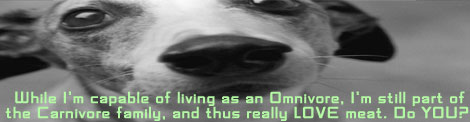
I was standing in line at the grocery store the other day and plopped a package of chicken wings up onto the conveyor belt. The cashier made some sort of smalltalk -- I think she asked whether I liked wings -- which prompted me to say, "Oh, the chicken is for my dog, Julia."
She looked at me, eyebrows raised. "For your dog "
For the most part, I've been eating intuitively from the very start of my raw food journey (which began over two years ago!). I noticed that I was drawn to different foods for blocks of time, and as my interest would wane I'd find myself drawn to another raw food. Anyone who has followed my story to health knows about my love for young Thai coconuts. My entire body would vibrate with physical excitement every time I picked up another case of those life-enhancing baby coconuts. I felt like a child receiving a much-desired gift---giddy with excitement and unable to stand still. I'm not just saying that, either---it was a very strange sensation, feeling such excitement over a food.
Well, my love for the coconuts faded and I found myself drawn to other foods over the past few years. However, none of them ever compared in intensity to my desire for the coconut. I can't recall all of the foods I cycled through, but there were plenty of food cycles I went through. Currently, I'm intuitively drawn to the pineapple. I want to eat it at least once a day, sometimes more. I haven't tired of it in the least bit.


Today, for Take the Time Tuesday, I'd like to introduce you to an online social networking Web site for those with similar interests to get together, meet, and hang out in the physical world. If you haven't already heard about it, check it out!
Take the time to meet....

Thank you, thank you, thank you! Today for Thankful Thursday, we wanted to say a special THANK YOU to our readers. It means so much to us that you come to visit our blog. With every new comment (both here on the blog and through email) it fills us with great happiness!
Is there something you'd like to see more of here on our blog? Something you'd like us to discuss? We know you are looking for more recipes, since you've told us (be sure to check out our recent posts where we've linked to some fantastic sites offering recipes!). What else would you like to read about or have us share with you?
 Well, after three long days of train travel, Wendi and KDcat arrived in Portland. I knew they'd had a rough trip (as I'd posted, Wendi experienced some serious motion sickness!), so I booked them into an awesome Bed & Breakfast, literally across the street from the raw restaurant they were planning to visit. That B&B is called the Lion and the Rose Victorian Bed & Breakfast Inn. Wendi said everyone there was super-nice. (There was a neat synchronicity about it, too, which I'll post in the comments section.)
Thanks to everyone for the motion sickness tips! Wendi's feeling better, but after such a long train ride, she and KDcat still feel the effects on their balance (feeling like they're still moving, slightly dizzy, ears blocked a bit etc.). I suppose train travel takes a little getting used to. But, again, they're feeling much better.
Even though it was a short stay in Portland, they managed to squeeze in a meetup with two Pure Jeevan family members, Ann Chatterton and Tracy Partridge Johnson (as well as Ann's children, Zoe and Zack, and Tracy's son Brandon). They met up at the Blossoming Lotus, an organic/vegan venue that offers some gourmet raw dishes. Here's a slideshow!
Read more: Wendi and KDcat Wonderfully Welcomed to the West (See Slide Show!)

It's Fun-Filled Friday again---that week went by so quickly! So, what fun did you have this past week and what fun have you planned for yourself in the near future? It's very important to make the time for fun. We all know that, right? But, how many of us actually carve out the time to have some special fun without stress, without problems---a time when we can laugh and experience the joys of being alive?

For this Take the Time Tuesday, I'm going to do something different. I'd like to share with you some of my friends and family, people I'd be pleased for you to meet in person some day. They are all beautiful people, filled with love.
Take the time to meet...
Some of Pure Jeevan's Friends and Family!?

The birthday girl, Rhia, asleep on her beautiful Nani?
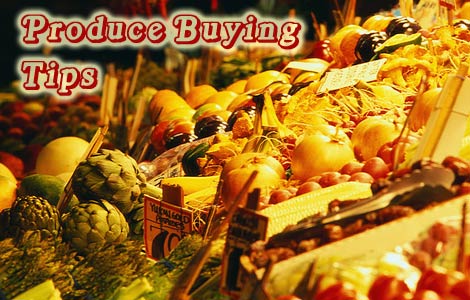
I suppose that, when you buy more produce than the average consumer, you come to observe a thing or two about that produce. We can't say for sure that our assertion is 100% true, but it sure does seem true to us. You see, we've noticed that produce we purchase at farmers' markets tends to keep longer than store-bought. Give it a try yourself, and see if your produce stays fresher longer!
Of course, there are many other benefits to shopping at farmers' markets. Aside from the produce being able to stay fresh longer, you're getting it in a much fresher state than store-bought. So, the things you eat first will be "extra" fresh tasting.
Read more: Produce Buying Tip: Farmers' Market Produce Lasts Longer!