Know Any Literary Animal Lovers?

Hi there PureJeevan readers! We wanted to let you know that Jim's new novel CHROO is available on Amazon. It's a crazy adventure involving a billionaire heiress, her Chihuahua BFF ("Chroo") and a host of human and animal characters. Find out more on Amazon! Here are some links:

I'd like to talk with you about diet and experimenting. I've been learning about natural healing and foods/health since I was a very young woman. Somewhere along the line I knew that what I was eating was either making me feel better, or worse, and that food was related to health (it was more than just to fuel the body). It was with this knowledge that I stepped into the realm of natural healing and stumbled around for most of my life.I've learned about vegetarianism, herbs, the negative effects of dairy on the body, veganism, essential oils, Ayurveda, harmful chemicals in and around our foods, and so very much more. I don't claim to be an expert on any of these topics, they are just part of my overall bank of knowledge and experiences from which I pull to live as healthy as possible.

Day 9: It's the final day of Navratri, often the largest day of celebration. On this day in India new businesses are started, children begin their formal education if they are at the right age, and past regrets (and many times debts) are left behind. It's a new beginning, fresh start, and is celebrated as such. Today, Pure Jeevan is celebrating in a big way, too!
 Yesterday, Jim handed in his resignation where he works. He was closing old books, imagining new ones, and today markes his first step of his new life. He gave the office one month's notice, after which he'll be here in Portland. Our new life has officially begun!
As you read this, calming violins open a familiar tune and that sweet mellifluous voice of Etta James soon enters your mind: "At laaaaaaaaassssst. My looooove has come along....." Great tune, right ! Well, it's appropriate here because, at LAST, here's the long-awaited Episode #9 of Know Your Food! That's right, friends, today we're going to explore the wondrous FIG in all of its sweet, soothing glory. One taste and happiness blossoms within you, washing over your entire being... We only wish that the following video was as professionally rendered as this paragraph of evocative prose... (but, we promise we'll get there one day).
In case you missed the actual nutrition info in that video (what little there was, LOL), here's the transcript:

When you get into raw foods, one thing you're probably going to notice from time to time is that others are "concerned" about your health. This is hugely ironic -- not only because it's likely your own concern about your own health that brought you to raw in the first place, but because you most likely hold the conviction that the raw food diet (or some close variant of it) represents the most healthy dietary regimen available for humans.
Nevertheless, you'll receive a lot of concern. You'll receive it even when you have that "raw glow" and are looking and feeling better than you have in years! The main concerns:
In a recent post, I answered part of a message I received from Violet, one of our blog readers. Below is the continuation of my response to Violet (much briefer than my last one!).
Following my response to Violet is a response to Sarah, who has a fantastic raw food blog that I enjoy reading.
Violet's message continued:
Read more: Reader Questions: Raw Transition Support, Identify Peas
Here's an older post, from August 2008, about modifying one's diet to experiment with attaining even greater health. ?I know the before/after pics, alone, are inspirational enough to live a raw vegan lifestyle!
*blows kisses to everyone*
========================

Jim here with a weird little story for today... I was at a business seminar early this morning and someone I know came up behind me at the buffet and said, "I'm getting in line behind you to see what you eat. You've lost weight and I want to lose weight, too."
"Well, it's no secret," I replied. "Just chow down on all of this great fruit they have." (I'd already piled my plate high with honeydew, cantaloupe, pineapple, and strawberries.)
Today, we thought we'd share another non-diet-oriented explanation of obesity. It's from Rhonda Byrne, author of the international multi-media phenomenon known as "The Secret," which provides readers with in-depth philosophical explanation and instruction with respect to the Law of Attraction.
Wendi and I have The Secret on CD, and often enjoy listening to it. I think, in fairness, we both have a few legitimate criticisms about certain aspects of it (and I'll share one or two, below). However, on the whole, many of the ideas within resonate deeply for us and we find much of the underlying message profoundly uplifting and empowering -- especially (for me) much of the discussion regarding maintaining a healthy, positive, optimistic attitude and practicing gratitude.

In our Mnemonics for the ?Clean 15? ? Or, ?Conventional? Produce That Tests Lowest for Residual Pesticides blog post last week, we put an asterisk next to "sweet corn" and took it off our list of foods to eat. Even though sweet corn tests relatively low for pesticides, Pure Jeevan still feels the vegetable isn't a safe choice for a healthy diet. There are primarily two reasons for our decision to completely remove corn from our diets. First, of all the vegetables that have undergone genetic modification (GM), GM corn is one that has been proven to cross-pollinate with non-GM corn. Second, since corn is so plentiful and easy to grow, it has been modified to become all sorts of flavors, sweeteners, fillers, etc., in food products and many individuals have developed sensitivities to it.
Read more: Is Corn Safe to Eat? No, and Neither is Most Papaya!
This recipe is an adaptation of one from "Rawvolution", by Matt Amsden. As of this point in time, "Rawvolution" is my favorite recipe book. Most of the recipes are high in sodium and fat, but very satisfying for those who are used to eating cooked foods.
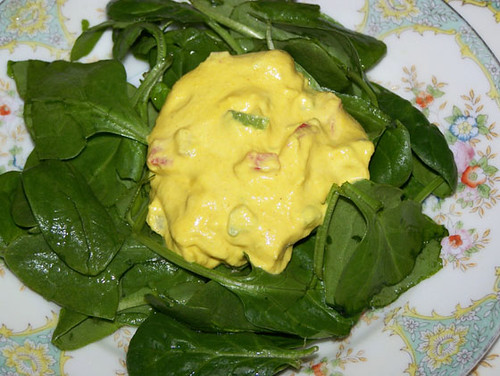
Egg-less Egg Salad
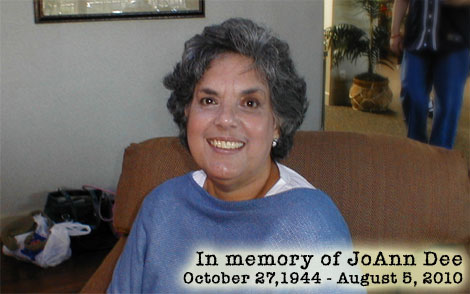
Jim here... As you may have noticed, Pure Jeevan was offline for the past week. I wish this absence had been for some pleasant reason that I could now write about. But, in truth, it was because my mother passed away last Thursday afternoon. It's not easy to write about so soon afterward; we're all painfully unprepared to describe my mother using the past tense. Her passing still just doesn't seem real to me or to anyone who knew her.She was without a doubt a remarkably beautiful, happy, and loving person who, for 65+ years, really made a difference in a lot of people's lives.
Beyond her ties to Wendi, KDcat, and me, she was also known to some Pure Jeevan family members as well as others in the raw food community. She appeared here just a few months ago to share a raw hummus recipe. And, I know she had visited and/or joined a few other raw foods sites during the past two years. She really did have an interest in it, and always loved her veggies and a good salad. In fact, she was one of those people who actually ate fairly healthfully, relatively speaking, yet still faced serious health challenges.