Know Any Literary Animal Lovers?

Hi there PureJeevan readers! We wanted to let you know that Jim's new novel CHROO is available on Amazon. It's a crazy adventure involving a billionaire heiress, her Chihuahua BFF ("Chroo") and a host of human and animal characters. Find out more on Amazon! Here are some links:

Q: How Long Do Smoothies Last?
I responded to a similar question a while ago in an online forum. This issue comes up a lot, acually, so I figured I'd provide our response here on the blog rather than simply through an email reply. Here's that response, reworked a bit for our blog:
Optimally, I suppose we'd all just eat things whole, most of the time, instead of blending/juicing ...

I'm in the mood to eat lemons, so I figured for today's Makin' It Monday I'd search the Net for some lemon recipes. Well, look what I found!


Continuing with our week of ways to keep a sharp mind, let's focus on the one widely accepted indicator for dementia or alzheimer's: heart disease. If one wants to dramatically reduce the chances of brain degredation, the first step to take is keeping the heart healthy.
The key advice most health specialists agree on when it comes to a healthy heart is the reduction (ideally eliminatain) of unhealthy fats in the diet. The unhealthy fats are usually seen as solid fats, like butter, margerine, and shortening. However, it's important to not overlook the fats that are also found in meats. By substituting unhealthy fats with something healthier for your heart (like extra virgin, cold-pressed olive oil), as well as transitioning to leaner meats if you are a meat eater, you will be taking some important steps in keeping your heart healthy, as well as your mind.


This weekend is all about having fun! We'll be working on the menu for the upcoming 3-Day Raw Food Spiritual Ashram Retreat that I've organized for the end of May. What does it mean to work on the menu? Well, it means I'll be making and sampling all kinds of gourmet raw food dishes this weekend!

Jim here... We've always been fans of the Simply Raw people -- or, as I call them, the "Reversing Diabetes Naturally" people. Or ... are they the "Raw for Thirty" people? Seriously, they should probably settle on one name, don't you think? In any case, they emailed us again lately to let us know about a new video promotion they're doing, in which they'll be sharing some great videos from Morgan "Super Size Me" Spurlock, David "Avocado" Wolfe, Mike "Natural News" Adams, and Dr. Joel Fuhrman. (Sorry, I don't have a nickname for Dr. Fuhrman yet.) I haven't yet seen the videos, but I'll be checking them out ASAP to hear what these gents have to say in order to further awareness about this important topic. Here's the link:
While I was growing up in the Midwest, I had a rich uncle who lived out East in Philadelphia. I didn't know him very well at the time, but would often glean stories via the family grape vines of his business successes. After high school, I attended college in Northeastern Pennsylvania -- Wilkes University -- where, incidentally, I first met Wendi! :-)
Being out there, I got to visit my uncle from time to time, and dine with him and his family. ?Among other things, he was quite the gourmand. I'm not so sure what he'd have thought of raw foods, although I suspect he'd have appreciated the many gourmet efforts.
So, what did you think about there being snow in New Mexico? Were many of you thinking it was more of a consistant hot climate like I used to think?
We left New Mexico, renewed, and headed to Oklahoma. Here's where we left off yesterday:
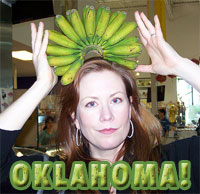
Read more: Visiting Penni Shelton & Russell James in OK: Pics and Vids!
Today, we thought we'd share another non-diet-oriented explanation of obesity. It's from Rhonda Byrne, author of the international multi-media phenomenon known as "The Secret," which provides readers with in-depth philosophical explanation and instruction with respect to the Law of Attraction.
Wendi and I have The Secret on CD, and often enjoy listening to it. I think, in fairness, we both have a few legitimate criticisms about certain aspects of it (and I'll share one or two, below). However, on the whole, many of the ideas within resonate deeply for us and we find much of the underlying message profoundly uplifting and empowering -- especially (for me) much of the discussion regarding maintaining a healthy, positive, optimistic attitude and practicing gratitude.

A while ago, I received an email asking whether I had any thoughts on how old or young a person needs to be in order to benefit from a raw food diet. Yes. Yes, I do have thoughts on that! Lots of thoughts! ... Here goes:
The easy answer, of course, is that people of ALL ages can (and should) benefit from raw foods. I can assert with confidence that, for most people, increasing your intake of raw fruits and vegetables will likely bring about positive changes to your health, regardless of your age, dietary habits, or current state of health. (Naturally, reducing or eliminating the "bad" things is also paramount.)
If you like raw cauliflower and fresh mint, I recommend you try this dish! Jim and KDcat don't like raw cauliflower much, so this dish wasn't a big hit with them. I, however, consumed the entire dish before the end of the day! I LOVED it!
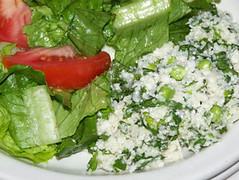
Read more: Makin' It Monday: Refreshing Cauliflower Mint Salad
Jim here... Here's part two of a video of Wendi showing how to make raw pasta. (If you did not view part one yet, click here to go there now.) She, with the help of her friend Melissa (of Food Under Foot), prepared a beautiful platter of pastas and some sauces that we all enjoyed when I returned home yesterday for lunch.
We hope this video shows you even more how fun and delicious eating raw foods can be!