Know Any Literary Animal Lovers?

Hi there PureJeevan readers! We wanted to let you know that Jim's new novel CHROO is available on Amazon. It's a crazy adventure involving a billionaire heiress, her Chihuahua BFF ("Chroo") and a host of human and animal characters. Find out more on Amazon! Here are some links:

We have two events scheduled for this weekend and we are looking forward to both of them! The first is a Raw Food Potluck Meetup. I haven't decided what I'm creating, yet. So far I'm thinking I'll make either an apple pie or some beet noodles with alfredo sauce, but I know how things usually go when it's time for me to prepare something special. I usually feel like I don't want to make what I had planned, and I search around in the fridge to see what pops out at me. I almost always go by what I'm inspired to create at that moment. So, who knows what I'll end up making. I'll try to take pictures of my creation as well as pictures of the other raw food dishes that others bring.
This will be our first raw food potluck. When I first went raw it was something I was doing special for myself, by myself, so I didn't join any of the raw food meetups and didn't want to make it a group activity with my friends.After two years of raw (a little over one at 100%), I've done (and continue to do) what I needed for myself.Now, I'm ready to share my experiences with everyone and to be an active member of the raw food community.So, I'm looking forward to the raw food potluck tomorrow!? You are welcome to join us at the potluck if you are in the area!

The other day, before grocery shopping, I didn't have a lot of food in the house. When that happens, I usually take a look at what I have and then try to come up with something tasty. It's kind of an art form, to create something out of next to nothing. I think I learned the art from my mother, who had to make things stretch on a very minimal budget.
Here's what I created, and it turned out great!

Every Tuesday we introduce an individual or business that may be of interest to our readers. Our introductions vary from those that will help support your body, mind, spirit, or emotions. This Tuesday we are pleased to introduce an individual who brings a holistic view to her work and nourishes your body, mind, spirit, and emotions on all levels.
Take the Time to Meet

As you can see from yesterday's post, Pure Jeevan keeps extremely busy during the year. What's up for 2010? Let's just say... more amazing information, inspiration, education, motivation, and cutting-edge health features! This post will be considerably shorter than last year's counterpart. In January 2009, we ran a 3-part series on looking back and looking ahead. While that was super-productive from a planning perspective, a few important points come to mind as we ponder the same issues once again:
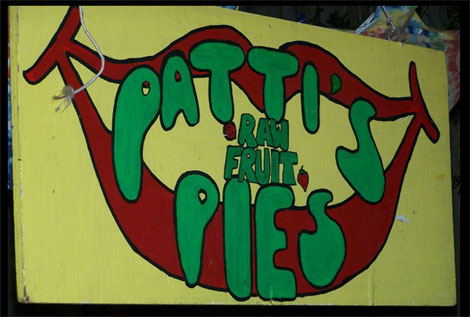
Over the weekend, we visited the spectacular Oregon Country Fair in Eugene and, once again, experienced a joyful and overwhelming sense of recognition that we're living in a place where people are much more accustomed to just being themselves.
Personal expression and nonconformity are so valued here that one becomes quickly enamored of the whole ambiance, which could well explain why more people come to Oregon than leave. The region seems to represent, to many, a chance to finally discover and explore an identity perhaps not completely free from outside influence, but at least free from the undesirable influences that society elsewhere seems to insist upon. Or maybe I'm misreading it all and providing just one of many interpretations.

On this Thankful Thursday I am feeling especially thankful for the Internet. Without the Internet I wouldn't be able to learn as much as I've learned about raw foods in such a short period of time. The Internet has connected me with people from all over the world who are also interested in natural health and raw food living. I am part of a larger community, one that would never exist without the Internet.
So, today I am especially thankful for the Internet. What are you thankful for today?
Just a quick update for those in the Pittsburgh area:
My dear friend Melissa has planned some fun raw food gatherings that you may be interested in checking out. The first is a raw food dinner and demo, the second is a wild herb walk.
Raw Foods Demo and Dinner?

 Day 8:
Let's focus on creativity for a bit. This is an area where many men have been comfortable expressing a feminine quality, especially when done through art and music. I say many, because we all know at least a few men who were raised to believe that a strong, powerful man doesn't spend his time with such frivolous things. Instead, he works hard to earn an income to support his family. In the past, and still sometimes today, creative men were viewed as weaker and less masculine, not practical and in control. The feminine quality of creativity was, however, encouraged in women who were afforded more time for such "frivolity."

One reason I keep going on and on lately about raw desserts and raw ice creams is best conveyed with an example. ?Here are the ingredients in Cool Whip, a commonly available whipped topping:
- water
- hydrogenated vegetable oil (coconut and palm kernel oils)
- high fructose corn syrup
- corn syrup
- skim milk
- light cream
- less than 2% of:
- sodium caseinate
- natural and artificial flavors
- xanthan and guar gums
- polysorbate 60
- sorbitan monostearate
- beta carotene (color)
Wow, I had a chemistry set in 5th grade that had a lot of things that sounded like some of those items. It's actually mind-boggling to envision the industrial processes necessary to produce everything on that list -- not that it's entirely possible to do so. After all, among the list of ingredients are "natural and artificial flavors." Ever wonder what, exactly, those are?
Read more: Natural and Artificial Flavors, and a Raw Whipped Cream Recipe

Thinking of Writing a "My Raw Story" Piece for Pure Jeevan's Blog
Fantastic! We d love to consider running your raw story to help inspire others. Please know that the "My Raw Story" series isn't only about success with weight loss on the raw food diet. It's about an overall life change that happens when a raw food diet is followed. We want to hear how your life was dramatically changed by adopting a raw food lifestyle. Below are some guidelines to help you submit your story:
 Picking up from the previous installment, Wendi and KDcat absolutely loved beautiful Corvallis, but ultimately felt it had too much of a small-town feel for us. So, they decided to take a road trip to the nearest big city, Eugene. KDcat and Stephanie (one of the lovely daughters of our Corvallis hosts) were enjoying their time together, so Stephanie decided to come along.
The trip from Corvallis to Eugene is but one pleasant hour's drive.The group's first stop was the Buffalo Exchange, a new and secondhand clothing store. Everyone loved the store, which offered a great selection of? fun clothes you can t usually find in other stores or thrift shops. A barely worn pair of red hi-top Converse sneakers was the highlight of this stop for KDcat. She's been wanting a pair of these exact shoes for ... well, forever! She immediately began decorating them when she had the chance (after they were disinfected, that is).
From there, they explored greater Eugene, checking out areas others had suggested. There were a lot of cute shops, but they were geographically spread out. It wasn t like the neighborhoods in Portland, where you can walk blocks and blocks with unique stores, restaurants, etc., all in a row. There was a nice vibe to Eugene, Wendi said, but something about it just didn t feel like home for us. Wendi said there weren t as many people out and about as she'd expected, but that could have been because they visited on a Sunday. Here are some pics from around town -- and then we'll talk food.
Read more: Eagerly, Everyone Euphorically Explores Eugene. Editorialization Ensues.