Know Any Literary Animal Lovers?

Hi there PureJeevan readers! We wanted to let you know that Jim's new novel CHROO is available on Amazon. It's a crazy adventure involving a billionaire heiress, her Chihuahua BFF ("Chroo") and a host of human and animal characters. Find out more on Amazon! Here are some links:
We're super excited to devote the rest to the week to featuring a variety of answers to the question "Are Raw Foodists Crazy " If you're just now tuning in, please read the back story and introduction to this, as posted yesterday. ?But, for now, let's get on with posting a few responses. We have at least 10 different ones to share this week, from a number of friends of Pure Jeevan. Some are short, humorous quips, others longer essays. Enjoy!! :-)
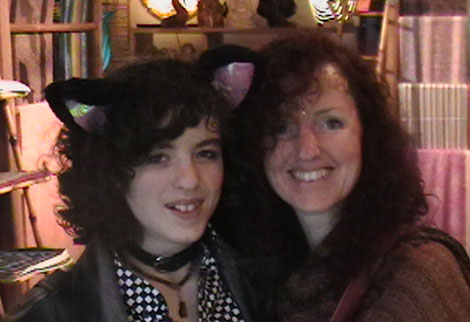
Wow, who knew there would be so much to post here on this blog about Wendi an KDcat's 2010 tour ! Today is March 15, which officially marks the beginning of the second half of the trip -- and we're still talking about Portland! ? Since Portland, Wendi and Kdcat have had adventures in Grants Pass, Santa Rosa, San Francisco, San Luis Obispo, and as I write this there are two more angels in the City of Angels.
But, in the interest of keeping our coverage chronoligical, we'll continue where we left off last week -- Portland! Story, pics, and video all appear below!
Read more: W&K Select Portland as New Pure Jeevan Home, Head South for Further Adventures
 On March 6, Wendi and KDcat arrived around dinner time at their next location, Grants Pass. We've known their hosts as online friends, so it was a real treat to meet them in person. Rebecca Leaverton, her hhusband Dominic, and their twins Aubrey and Sebastian live in a beautiful home in one of the more beautiful places W&K have visited in Oregon (and that's saying something, as EVERY location in Oregon has been absolutely beautiful). Grants Pass is surrounded by the most breathtakingly gorgeous mountains, close and ever-present no matter where you are in the city. If we ever do decide that city living isn't for us, Wendi said she'd love to live in the mountains surrounding Grants Pass!
Here's some video... In the first clip, Wendi shares a raw traveling trick she came up with -- kind of a high-energy, super-fast sandwich. Then Rebecca (aka SuperfoodGirl -- from www.SuperfoodGirl.com) demonstrates one of her favorite pieces of kitchen equipment, the V Slicer. (Wendi loved it and says we need to save up and get one when she returns from the trip.) And then we couldn't resist a few moments of footage of Rebecca's twins out exploring the kale and wheat grass in? theback yard.
Read more: Grants Pass' Great People, Giant Peaks, & General Pleasantry

It's Fun-Filled Friday again---that week went by so quickly! So, what fun did you have this past week and what fun have you planned for yourself in the near future? It's very important to make the time for fun. We all know that, right? But, how many of us actually carve out the time to have some special fun without stress, without problems---a time when we can laugh and experience the joys of being alive?
***** DISCLAIMER: As with all of our posts here at Pure Jeevan, and particularly those coming up over the next week and a half (which will all be tagged with a new term, "Nadi Balance"), please refer to the disclaimer that runs at the bottom of all Pure Jeevan Pages. Wendi and Jim are health researchers, educators, and extreme self-experimenters. ******

Nadi Balance: Part IV...
Today we bring you the last of our personal video interviews conducted while at the Raw Spirit Festival (RSF East 2009). I'll have one other highlight reel to run next week, just to round out this series by showing some of the additional ambience there.
So, we've finally come to the "infamous Viktoras video"! I smiled as I wrote that because it was quite the topic of discussion around our camp site. You see, one of my fellow campers, BH, was with me as we interviewed Viktoras (she filmed the interview, in fact) -- and, well... let's just say he strayed a bit from the expected raw food subject matter. I was worried that poor BH would be scarred for life after witnessing the discussion, but she did seem to get a good laugh out of it, and I suppose she's fully old enough to attend an R-rated movie.
Hey Everyone- Just a quick note, in case you're reading our blog and thinking, "Wow, Wendi and Jim usually update daily! What's up ?!!" We'll get back to it pronto, I promse -- maybe even later today! Turns out it's just a TON of work orchestrating a tour like this, especially across a three-hour time zone. But, now that we're getting used to it, I think we can look for some more timely updates. The latest is from Corvallis, Oregon. But, we're also going to talk about Portland a lot more soon! So, stay tuned! -Jim
Original Comments
Below, we have included the original comments from this blog post. Additional comments may be made via Facebook, below.
On March 4, 2010, wrote:
I hear ya. I do keep checking in though, and I'm looking forward to when you get your groove.
I really feel for you, Jim. Your girls gone, having to keep track of their movement, run a household on your own and still work that stupid job. Poor baby. Just know that I am thinking of you, and sending you love from New Mexico.
And Wendi, AAAaaaaaaaaaaaaaah! I can hardly wait 'til you get here!
Terri
On March 5, 2010, wrote:
We are getting all ready here for W and K! so far we have the following guests for Cru:
Bueller of Bueller's Kitchen, Lori of Inspire2Act, Ingrid of Raw Epicurean, Dianna Harrelson, LA Raw meetup organizer and raw teacher, Puki (friend of Courtney Pool), and a few other folks .. and ME!
xoxoxo deb

Q. I am trying to go raw and juicing for only two days now and I am soooo hungry and I really don't quite understand what to eat. I went out and bought a bunch of raw vegetables but I am lost on exactly how to prepare the meals and I'm so tired of being fat. Can you direct me to a simple start of book or can you give me some simple recipes or what you did to get started on your first month? Thank you.
Signed,
Frustrated and Fat in Virginia
A. Dear LOVELY BEING,
Thanks to everyone who has offered, so far, to help us out with our project (mentioned in yesterday's post). If anyone else thinks they'd like to help, we're looking for as many people as possible! We'll fill you in soon, just be sure to send us your email addresses if you haven't already done so. Thanks!
Here are more pictures of some of the foods we've been eating. Over the past year, we've pretty much been eating simple foods (except for the time I was preparing meals for the Raw Food Retreat). However, recently KDcat has been doing some extreme yo-yo eating between raw foods and packaged/unhealthy cooked foods. The back and forth has been causing her to experience a bit of a tummy upset. So, I've decided to make our meals a bit more exciting for her---so she'll possibly not feel so tempted by all of the colors and artificial flavors of the packaged "foods" she's been eating.
Talk about color...check out this salad I made earlier today:

To keep all of you inspired while we are away, we've asked some
remarkable individuals to share their raw food stories with you. Enjoy!
To keep all of you inspired while we are away, we've asked some
remarkable individuals to share their raw food stories with you. Enjoy!